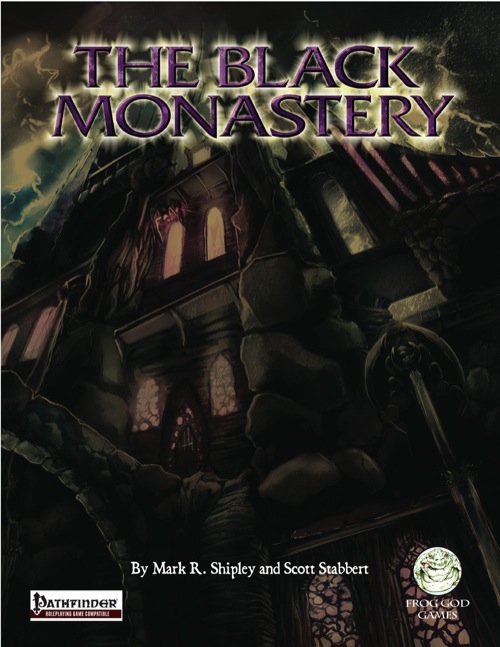
The Legend of the Black Monastery Two centuries have passed since the terrible events associated with the hideous cult known as the Black Brotherhood. Only scholars and story-tellers remember now how the kingdom was nearly laid to waste and the Black Monastery rose to grandeur and fell into haunted ruins. The Brothers first appeared as an order of benevolent priests and humble monks in black robes who followed a creed of kindness to the poor and service to the kingdom. Their rules called for humility and self denial. Other religious orders had no quarrel with their theology or their behavior. Their ranks grew as many commoners and nobles were drawn to the order by its good reputation. The first headquarters for the order was a campsite, located in a forest near the edge of the realm. The Brothers said that their poverty and dedication to service allowed them no resources for more grand accommodations. Members of the Black Brotherhood built chapels in caves or constructed small temples on common land near villages. They said that these rustic shrines allowed them to be near the people they served. Services held by the Brothers at these locations attracted large numbers of common people, who supported the Black Brotherhood with alms. Within 50 years of their first appearance, the Black Brotherhood had a number of larger temples and abbeys around the kingdom. Wealthy patrons endowed them with lands and buildings in order to buy favor and further the work of the Brothers. The lands they gained were slowly expanded as the order’s influence grew. Many merchants willed part of their fortunes to the Black Brotherhood, allowing the order to expand their work even further. The Brothers became bankers, loaning money and becoming partners in trade throughout the kingdom. Within 200 years of their founding, the order was wealthy and influential, with chapters throughout the kingdom and spreading into nearby realms. With their order well-established, the Black Brotherhood received royal permission to build a grand monastery in the hill country north of the kingdom’s center. Their abbot, a cousin of the king, asked for the royal grant of a specific hilltop called the Hill of Mornay. This hill was already crowned by ancient ruins that the monks proposed to clear away. Because it was land not wanted for agriculture, the king was happy to grant the request. He even donated money to build the monastery and encouraged others to contribute. With funds from around the realm, the Brothers completed their new monastery within a decade. It was a grand, sprawling edifice built of black stone and called the Black Monastery. From the very beginning, there were some who said that the Black Brotherhood was not what it seemed. There were always hints of corruption and moral lapses among the Brothers, but no more than any other religious order. There were some who told stories of greed, gluttony and depravity among the monks, but these tales did not weaken the order’s reputation during their early years. All of that changed with the construction of the Black Monastery. Within two decades of the Black Monastery’s completion, locals began to speak of troubling events there. Sometimes, Brothers made strange demands. They began to cheat farmers of their crops. They loaned money at ruinous rates, taking the property of anyone who could not pay. They pressured or even threatened wealthy patrons, extorting money in larger and larger amounts. Everywhere, the Black Brotherhood grew stronger, prouder and more aggressive. And there was more… People began to disappear. The farmers who worked the monastery lands reported that some people who went out at night, or who went off by themselves, did not return. It started with individuals…people without influential families…but soon the terror and loss spread to even to noble households. Some said that the people who disappeared had been taken into the Black Monastery, and the place slowly gained an evil reputation. Tenant farmers began moving away from the region, seeking safety at the loss of their fields. Slowly, even the king began to sense that the night was full of new terrors. Across the kingdom, reports began to come in telling of hauntings and the depredations of monsters. Flocks of dead birds fell from clear skies, onto villages and city streets. Fish died by thousands in their streams. Citizens reported stillborn babies and monstrous births. Crops failed. Fields were full of stunted plants. Crimes of all types grew common as incidents of madness spread everywhere. Word spread that the center of these dark portents was the Black Monastery, where many said the brothers practiced necromancy and human sacrifice. It was feared that the Black Brotherhood no longer worshipped gods of light and had turned to the service of the Dark God. These terrors came to a head when the Black Brotherhood dared to threaten the king himself. Realizing his peril, the king moved to dispossess and disband the Black Brother hood. He ordered their shrines, abbeys and lands seized. He had Brothers arrested for real and imagined crimes. He also ordered investigations into the Black Monastery and the order’s highest ranking members. The Black Brotherhood did not go quietly. Conflict between the order and the crown broke into violence when the Brothers incited their followers to riot across the kingdom. There were disturbances everywhere, including several attempts to assassinate the king by blades and by dark sorcery. It became clear to everyone that the Black Brotherhood was far more than just another religious order. Once knives were drawn, the conflict grew into open war between the crown and the Brothers. The Black Brotherhood had exceeded their grasp. Their followers were crushed in the streets by mounted knights. Brothers were rounded up and arrested. Many of them were executed. Armed supporters of the Black Brotherhood, backed by arcane and divine magic, were defeated and slaughtered. The Brothers were driven back to their final hilltop fortress – the Black Monastery. They were besieged by the king’s army, trapped and waiting for the king’s forces to break in and end the war. The final assault on the Black Monastery ended in victory and disaster. The king’s army took the hilltop, driving the last of the black-robed monks into the monastery itself. The soldiers were met by more than just men. There were monsters and fiends defending the monastery. There was a terrible slaughter on both sides. In many places the dead rose up to fight again. The battle continued from afternoon into night, lit by flames and magical energy. The Black Monastery was never actually taken. The king’s forces drove the last of their foul enemies back inside the monastery gates. Battering rams and war machines were hauled up the hill to crush their way inside. But before the king’s men could take the final stronghold, the Black Brotherhood immolated themselves in magical fire. Green flames roared up from the monastery, engulfing many of the king’s men as well. As survivors watched, the Black Monastery burned away, stones, gates, towers and all. There was a lurid green flare that lit the countryside. There was a scream of torment from a thousand human voices. There was a roar of falling masonry and splitting wood. Smoke and dust obscured the hilltop. The Black Monastery collapsed in upon itself and disappeared. Only ashes drifted down where the great structure had stood. All that was left of the Black Monastery was its foundations and debris-choked dungeons cut into the stones beneath. The war was over. The Black Brotherhood was destroyed. But the Black Monastery was not gone forever. Over nearly two centuries since its destruction, the Black Monastery has returned from time to time to haunt the Hill of Mornay. Impossible as it seems, there have been at least five incidents in which witnesses have reported finding the Hill of Mornay once again crowned with black walls and slate-roofed towers. In every case, the manifestation of this revenant of the Black Monastery has been accompanied by widespread reports of madness, crime and social unrest in the kingdom. Sometimes, the monastery has appeared only for a night. The last two times, the monastery reappeared atop the hill for as long as three months…each appearance longer than the first. There are tales of adventurers daring to enter the Black Monastery. Some went to look for treasure. Others went to battle whatever evil still lived inside. There are stories of lucky and brave explorers who have survived the horrors, returning with riches from the fabled hordes of the Black Brotherhood. It is enough to drive men mad with greed – enough to lure more each time to dare to enter the Black Monastery.

A flock of kenku bandits have discovered the ruined remains of a temple site, and have used it as their hideout while they raid unsuspecting travelers on nearby roads. It's up to the PCs to clear their nest, recover stolen goods, and rescue their hostages. Will the players be bested by these dirty birds? Or will they have the bandits eating crow?
She lay down her sword and wept; her tears are the water. She lay down her body and slept; her bones are the fountain. Atop the mountain, at the war’s end, a place for gods to wonder.

The Godless Depths For the first time in eons, ancient aberrations are emerging from the deep ocean. Driven by some otherworldly fervour, they encroach upon the local villages, searching with beady eyes for anyone linked to the Gods. Even now you hear rumours of kidnap, men and women dragged kicking and screaming into the depths.

Your friend and mentor, the old ranger Norlumin seeks to bring back his beloved, who gave her life to save the realm from a demonic invasion, but at what cost?

Adventures from the Potbellied Kobold provides you with fifteen unique adventures to use as one-shots, additions to your current campaign, or inspiration for a new campaign. We've even included a way to link several of the adventures, allowing you to run a short and quick campaign. The adventures use basic 5E creatures, custom creatures, and several Kobold Press creatures. Each adventure is written for a specific party level, but we've also included suggestions on how to adjust each adventure for a weaker or stronger adventuring party. In addition to fun adventures, you'll also find a few new magic items and NPCs to add to your game.
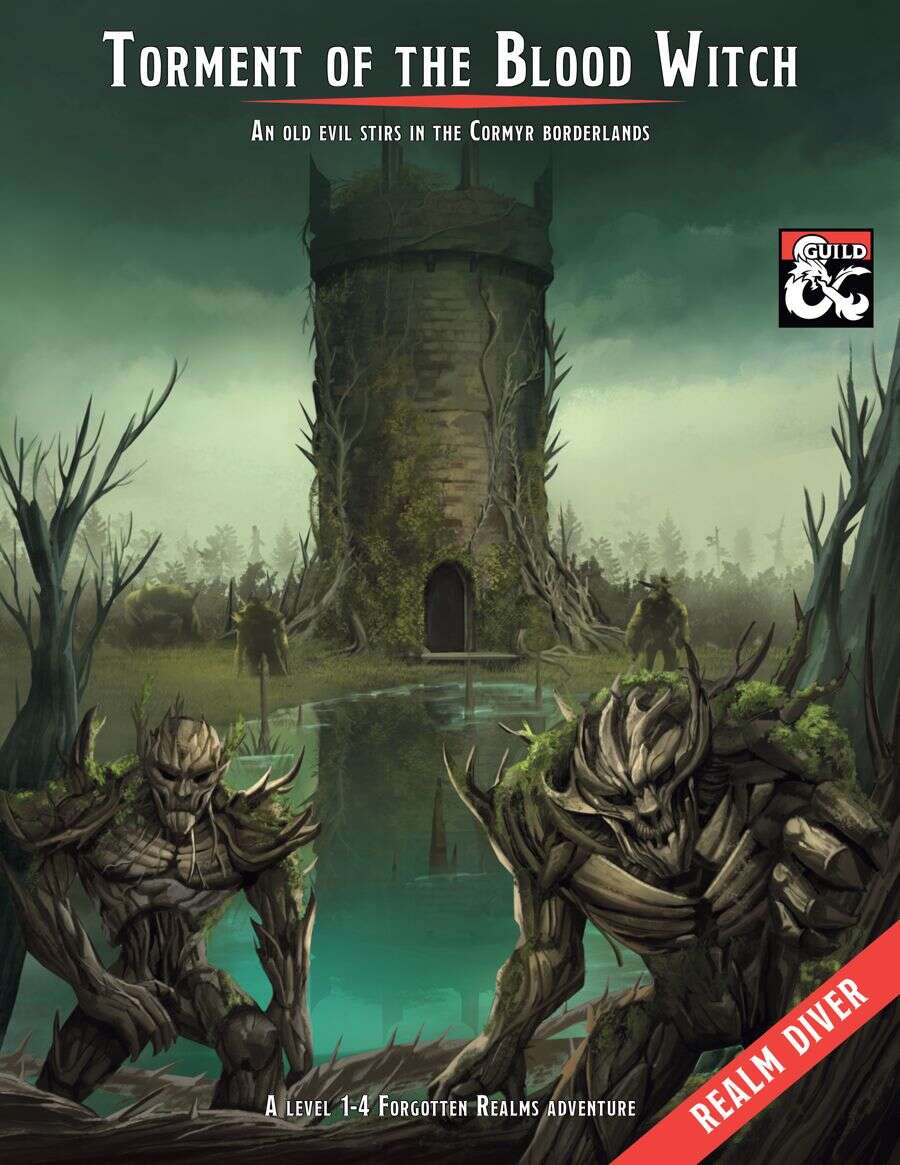
The town of Proskur has been cut off from the rest of the kingdom of Cormyr by a terrible storm, just as its people begins to suffer from a feinting sickness. Now the crops are failing. Are these the acts of a vengeful god? Or something more sinister? While aiding the good peoples of Cormyr in their plight against goblin hordes, the restless dead, a band of cut-throat pirates and the wilds of the Gritstone Moorland, the adventurers must investigate the true cause behind these calamities while uncovering a century old past, following in the footsteps of a legendary band of knights. Will they bring the fight to the evil hag, Bad Blood Hattie in her accursed Bloodtower lair? Or doom Proskur to become a blighted ruin?

The Heart of the Haunted Sea e adventurers are on a storm-wracked ship, seeking the island of a long-forgotten, abandoned temple to the Sea Demon. In the temple, an extinct people sacri ficed their wealth, their criminals, and their kings to quell the demon’s wrath. Untold treasure is said to just be lying there. Are your heroes bold or ruthless enough to claim it? Written by Shane Ivey and illustrated by Kurt Komoda, “ The Sea Demon’s Gold” is an adventure for the Fi h Edition of the world’s most popular fantasy role-playing game. It can be played in any fantasy world you choose. It also makes the perfect introduction to the Broken Empire, a world of ancient mysteries, perils, power, and corruption featured in the Swords & Sorceries adventure line by Arc Dream Publishing.
We saw it—don’t turn your heads. Up near Hilltop Crossroad and the temple. It walked south; the trees fell in its path. Even the moon hid. Gods help Father Dren . . .
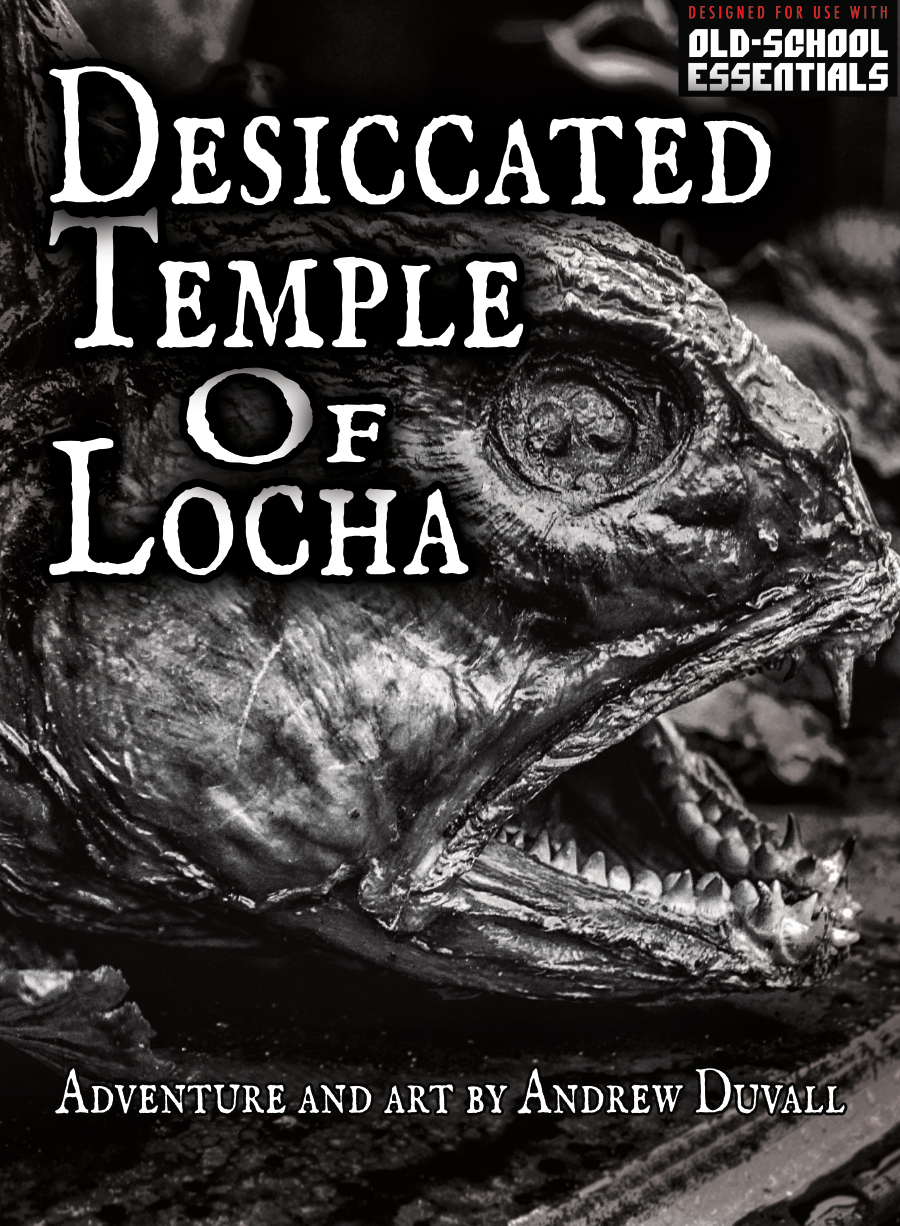
In the parched desert sands, a mirage glistens invitingly on the horizon, but the nearest water is a hard day’s march in the opposite direction. You swear you smell the faint wet smell like coming rain when the wind shifts just right and see the stars reflected off some far lake at night. There’s no water here, just a lone sandblasted pillar, its features smeared by centuries of sand. Smell that? The brine of ocean mist? Here? Is the pillar made of coral polyps and mollusk shells? What is this place? An aquatic temple magically transported to an arid environment. Based on the author’s one-page map that was published in Knock #2 by Merry Mushmen. Published by Duvelman Dice.

A small valley in the Basalt Mountains is home to a small farming community and a priory for the deity Enyndeth. Here young acolytes study to be full-fledged clerics of their faith. The priory was built into the side of one of the mountains when the community specialized in mining. This town should be able to provide road weary adventurers a reprieve from problems….or will it?
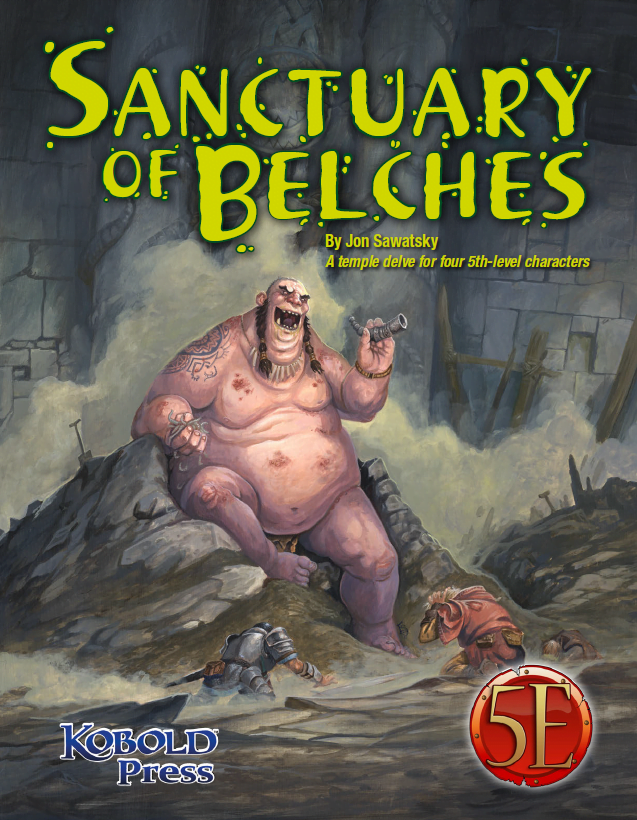
The trouble began several weeks ago when a duergar excavation team went to work in a long-abandoned temple. Drawn to the temple by stories of riches and artifacts, the duergar hired several giants as laborers before cracking the temple’s sealed doors. The largest of the giants, a loathsome Thursir mutant named Huppo, used his acidic vomit to expedite tunneling into the temple’s collapsed hall of worship. Then, Huppo found the horn—an unusual instrument made from a single piece of stone, with a mouthpiece so intricate only a master carver could have made it. The horn became the giant’s obsession. Seeing only the horn’s potential sale value, the dwarves demanded Huppo turn it over to them, but Huppo refused. To force compliance, the dwarves stopped feeding the gluttonous brute, but Huppo had already found his own source of food; in deep areas of the temple, worms were chewing out of the rocks, and Huppo ate them by the fistful. He also played the horn. Then, after several days of blowing the horn and devouring the strange worms, Huppo released a belch so noxious the dwarves had no choice but to lock him in a sealed chamber and carefully consider their next move. The horn’s call, however, had caught the attention of passing nomadic orcs. They set up camp outside the temple entrance in the hope of finding the horn and its player. That’s the current situation at the temple: the giant refuses to stop blowing the horn and belching out deadly clouds of stomach gas; the dwarves are frightened and edgy while their leader is obsessed with malevolent whispers; orcs are threatening to overrun the place; and the population of worms grows steadily as something awakens deep in the stone beneath the sanctuary of belches.

SQ3 – Hatadage Cult takes a group of initial adventurers on their first challenge. This short adventure allows a group of new or low level PCs hear news of a kidnapping from a nearby thorp. Role playing will be key to learning more about the disappearance before heading into the hills near some old ruins. This is the site of a group of cultists that have kidnapped the young woman and mean to use her in a sacrifice!

A man built a temple to a woman who died. It became a shrine for those who lost a spouse too soon. Later. Much later. A young couple came. Their tribes warred so they could only marry in death. It was poison. Which angered HER. They walk the temple ever since, cursed by a shrine spirit. She has a hatred of suicide only dead widows can know.

As you begin your path to adventuring fame, fate brings you a gift. The military is attacking a humanoid army not too far away but their powerful force has splintered the insurgents. Different groups of aggressive humanoids are now off on their own and the military is overwhelmed trying to track them down. Word has it that one such group is headed to the revered Oracle at Nyo! Your time has come and fame is within reach!

SPECIAL DOUBLE ISSUE! The Tabernacle of Ka-Sik-Fal is a 2 in 1 adventure including a TRUE SOLO adventure. This double adventure is actually the same adventure in two formats, one DM & PC, and the other a true do it yourself adventure. This adventure is for a PC of 1-3 level . It follows the Filbar Campaign setting but can be placed in any campaign setting. This adventure takes a single PC into a deserted shrine to discover the whereabouts of missing villagers. At 35 pages this adventure will keep your PC busy. Did I mention a true 1 person solo adventure?
Buried in fire, but hardly dead. Only the Keep survived the destruction of Koralgesh, but few adventurers will survive the terrors that now stalk the lost Keep's halls. Players hear rumours of the Keep at Koralgesh and then traverse it to acquire the treasure within. Pgs. 45-64
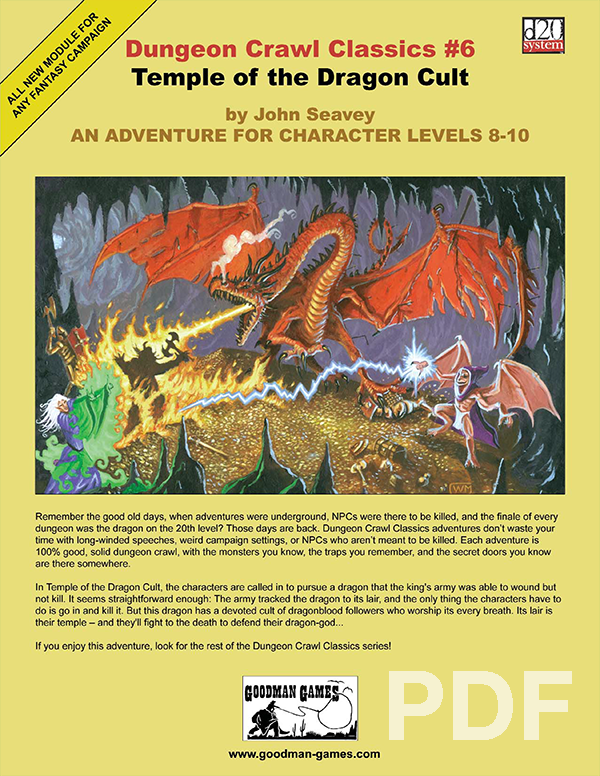
In Temple of the Dragon Cult, the characters are called in to pursue a dragon that the king’s army was able to wound but not kill. It seems straightforward enough: the army tracked the dragon to its lair, and all the characters have to do is go in and kill it. But this dragon has a devoted cult of dragonblood followers who worship its every breath. Its lair is their temple — and they’ll fight to the death to defend their dragon-god…

Hundreds of years have passed since the great war of Valhalla, but the repercussions are known throughout the lands. The Valkyries were once Odin’s greatest warriors who ferried the dead to the eternal resting place of Valhalla. Odin tells it that their duties asked too much of them and their minds were corrupted. In fits of uncontrollable rage and anguish, they began to slaughter the warriors they once protected. Only four Valkyries survived the war; in their cowardice, they fled to Midgard and hid amongst the mortals. You have been tasked with finding the last Valkyrie and destroying her, once and for all ending the Madness of the Valkyries. But there may be more to learn in the once-great halls.

The Blood of a King The king is dead. All hail the king! The nomadic cattle-herding tribes of Shoma now meet at the Horns of Ngura to sacrifice gold and choose a new tribal king based on a series of ritual ordeals. Will you sneak into the temple of the Bull-God to steal its treasures, or will you participate as a champion in the Trials of Ngura? Savage Swords and Sinister Sorcery "The Trials of Ngura" is a stand-alone sword and sorcery adventure module, inspired by the pulp era tales of Robert E. Howard and Clark Ashton Smith. Venture in the footsteps of Conan the Cimmerian, Satampra Zeiros of Uzuldaroum, Imaro of Nyumbani, and other fabled thieves, reavers and slayers! Written for the Fifth Edition (5E) of the world's most popular roleplaying game, the adventure in this book can be easily adapted to any fantasy roleplaying game ruleset or edition.