The Sleeper Awakes! At last, after languishing in its crypt for an age, the secrets of the slumbering city of Tsar burst forth in all their macabre glory. Poured forth from the eldritch furnaces and crucibles of the Necromancer and Orcus himself comes Frog God Games bringing you at long last The Slumbering Tsar Saga™. Something Stirs in the City of Evil Over the distant northern hills, beyond The Camp, and past the Desolation stand the pitted walls of Tsar. A hundred armies have crushed themselves against this bulwark in futile attempts to breach the city. Even the combined might of the Heavens and Earth were unable to break through in the final battle of Tsar. So why was the city suddenly abandoned on the verge of victory, and what waits for those foolish enough to enter the Temple-City of Orcus? The Black Gates Await Only the bravest and most powerful of heroes dare the depths of the Desolation and live to tell of it. But what happens when they penetrate that blasted landscape and look upon the gates of the very center of evil on the earth. Can even heroes of such renown breach the Walls of Death and live?
Deep in the forest, something is stirring. An evil fey sorcerer, cast out of the First World millennia ago by her own kin, has found a way to break through the ancient walls of her prison, and carries with her a vengeance too deep to be sated. For the quiet Andoren town of Bellis, busy celebrating a long-awaited marriage, it's a time for joy and laughter. Yet the forest that's always sheltered it is growing dark, and things are moving in the heart of the woods...
For more than a hundred years, the demon-infested Worldwound has warred against humanity, its Abyssal armies clashing with crusaders, barbarians, mercenaries, and heroes along the border of lost Sarkoris. But when one of the magical wardstones that helps hedge the demons into their savage realm is sabotaged, the crusader city of Kenabres is attacked and devastated by the demonic hordes. Can a small band of heroes destined for mythic greatness survive long enough to hold back the forces of chaos and evil until help arrives, or will they become the latest in a long line of victims slaughtered by Deskari, the demon lord of the Locust Host?
A Pathfinder Roleplaying Game adventure for 10th-level characters, this volume of Pathfinder Adventure Path is part 4 of 6 of the Kingmaker Adventure Path, in which the heroes win and defend a small kingdom from threats foreign and domestic. PCs should advance to 13th level by the end of this adventure. “Blood for Blood” begins with the PCs having returned home from solving the mystery of the Varnhold Vanishing. Shortly after their arrival, they learn that new problems have developed during their absence—there are rumors of an army marching toward their nation!The PCs race to the village of Tatzlford, where they help defend the village from an attack by a small but earnest force of bandits, barbarians, and several lumbering trolls after being warned in advance by a troubled woman who has fled from Fort Drelev to the west. Following the skirmish, she pleads with the PCs to save her father and sister from peril.From there, the PCs strike out into the swamplands of the Slough to the west, exploring new lands and finding opportunities to make new allies and eliminate long-term threats to the region. Their initial goal, though, should be infiltrating Fort Drelev, where they’ll have a chance to confront the traitor Drelev with his crimes and rescue the Fort’s beleaguered settlers. During this time, the PCs learn where Armag’s tribe has been holding the daughters of Drelev’s senior officers hostage. Arriving at the ancient site, the PCs attack Armag’s barbarian encampment and overcome the sinister powers of the Black Sisters to free the girls. Then, entering the tomb, they face deadly traps, ancient undead horrors from a war-torn age, and the trials of the tomb’s immortal, divine guardian. In the final chamber, the PCs encounter Armag himself, armed with the ancient sword of his namesake.
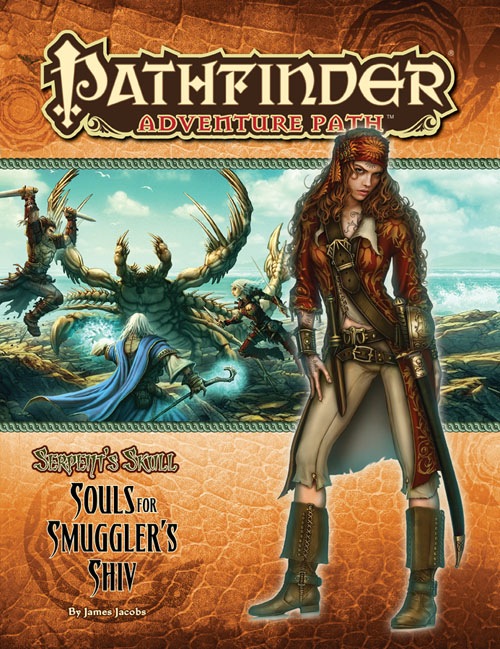
A deadly storm shipwrecks the passengers and crew of the Jenivere upon infamous Smuggler’s Shiv, an island off the coast of the jungle realm of Sargava. If they’re to have any hope of escaping the notorious pirates’ graveyard, the survivors will need to band together to outwit the isle’s strange beasts and legendary menaces. But can the PCs unite the swift-to-squabble castaways, especially when several seem to have mysterious goals of their own? And does Smuggler’s Shiv hide secrets even deadlier than its desperate denizens? This is part one of the Pathfinder Adventure Path "Serpent's Skull", but can be played as a standalone adventure that lasts approximately 10 four-five hour sessions. Great for first time dungeon masters. This is not a seafaring adventure. The PCs are shipwrecked on an island for the entire duration. This adventure ends with (hopefully) the PCs finding a way off the island (reaching level 3). It is therefore a great starting adventure with a definitive conclusion. After this module, you can continue with part two or change into your own homebrew.
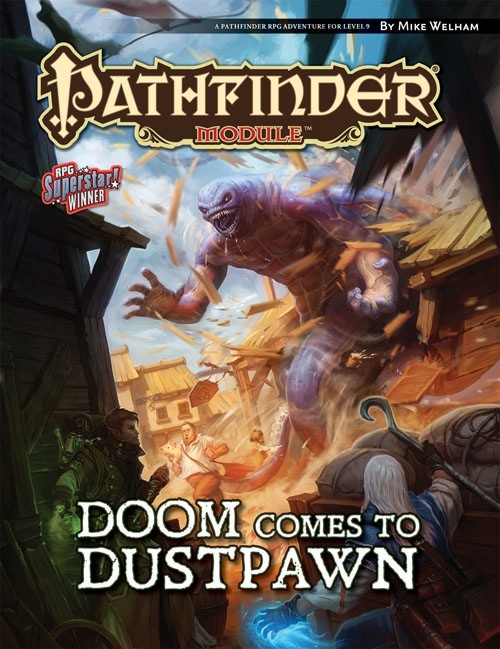
When the iron mines that made Dustpawn so prosperous played out not long after the Goblinblood Wars of Isger ended, the city shifted its focus from mining to goat herding with quite a bit of success. Things have, as a result, been quiet and calm in Dustpawn for the past several years, but that quiet is shattered the night a strange falling star roars across the sky above town to crash somewhere in the hills several miles to the south. When several locals eager to find the fallen star and strip it of its ore go missing, it becomes apparent that whatever has fallen from the sky is much more than a mere meteorite. There are those in town who claim the falling star was in fact a ship, and now a strange malady is creeping through the townsfolk.
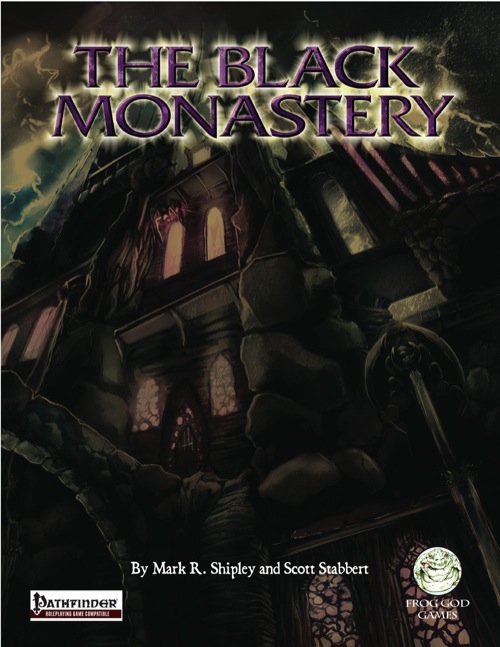
The Legend of the Black Monastery Two centuries have passed since the terrible events associated with the hideous cult known as the Black Brotherhood. Only scholars and story-tellers remember now how the kingdom was nearly laid to waste and the Black Monastery rose to grandeur and fell into haunted ruins. The Brothers first appeared as an order of benevolent priests and humble monks in black robes who followed a creed of kindness to the poor and service to the kingdom. Their rules called for humility and self denial. Other religious orders had no quarrel with their theology or their behavior. Their ranks grew as many commoners and nobles were drawn to the order by its good reputation. The first headquarters for the order was a campsite, located in a forest near the edge of the realm. The Brothers said that their poverty and dedication to service allowed them no resources for more grand accommodations. Members of the Black Brotherhood built chapels in caves or constructed small temples on common land near villages. They said that these rustic shrines allowed them to be near the people they served. Services held by the Brothers at these locations attracted large numbers of common people, who supported the Black Brotherhood with alms. Within 50 years of their first appearance, the Black Brotherhood had a number of larger temples and abbeys around the kingdom. Wealthy patrons endowed them with lands and buildings in order to buy favor and further the work of the Brothers. The lands they gained were slowly expanded as the order’s influence grew. Many merchants willed part of their fortunes to the Black Brotherhood, allowing the order to expand their work even further. The Brothers became bankers, loaning money and becoming partners in trade throughout the kingdom. Within 200 years of their founding, the order was wealthy and influential, with chapters throughout the kingdom and spreading into nearby realms. With their order well-established, the Black Brotherhood received royal permission to build a grand monastery in the hill country north of the kingdom’s center. Their abbot, a cousin of the king, asked for the royal grant of a specific hilltop called the Hill of Mornay. This hill was already crowned by ancient ruins that the monks proposed to clear away. Because it was land not wanted for agriculture, the king was happy to grant the request. He even donated money to build the monastery and encouraged others to contribute. With funds from around the realm, the Brothers completed their new monastery within a decade. It was a grand, sprawling edifice built of black stone and called the Black Monastery. From the very beginning, there were some who said that the Black Brotherhood was not what it seemed. There were always hints of corruption and moral lapses among the Brothers, but no more than any other religious order. There were some who told stories of greed, gluttony and depravity among the monks, but these tales did not weaken the order’s reputation during their early years. All of that changed with the construction of the Black Monastery. Within two decades of the Black Monastery’s completion, locals began to speak of troubling events there. Sometimes, Brothers made strange demands. They began to cheat farmers of their crops. They loaned money at ruinous rates, taking the property of anyone who could not pay. They pressured or even threatened wealthy patrons, extorting money in larger and larger amounts. Everywhere, the Black Brotherhood grew stronger, prouder and more aggressive. And there was more… People began to disappear. The farmers who worked the monastery lands reported that some people who went out at night, or who went off by themselves, did not return. It started with individuals…people without influential families…but soon the terror and loss spread to even to noble households. Some said that the people who disappeared had been taken into the Black Monastery, and the place slowly gained an evil reputation. Tenant farmers began moving away from the region, seeking safety at the loss of their fields. Slowly, even the king began to sense that the night was full of new terrors. Across the kingdom, reports began to come in telling of hauntings and the depredations of monsters. Flocks of dead birds fell from clear skies, onto villages and city streets. Fish died by thousands in their streams. Citizens reported stillborn babies and monstrous births. Crops failed. Fields were full of stunted plants. Crimes of all types grew common as incidents of madness spread everywhere. Word spread that the center of these dark portents was the Black Monastery, where many said the brothers practiced necromancy and human sacrifice. It was feared that the Black Brotherhood no longer worshipped gods of light and had turned to the service of the Dark God. These terrors came to a head when the Black Brotherhood dared to threaten the king himself. Realizing his peril, the king moved to dispossess and disband the Black Brother hood. He ordered their shrines, abbeys and lands seized. He had Brothers arrested for real and imagined crimes. He also ordered investigations into the Black Monastery and the order’s highest ranking members. The Black Brotherhood did not go quietly. Conflict between the order and the crown broke into violence when the Brothers incited their followers to riot across the kingdom. There were disturbances everywhere, including several attempts to assassinate the king by blades and by dark sorcery. It became clear to everyone that the Black Brotherhood was far more than just another religious order. Once knives were drawn, the conflict grew into open war between the crown and the Brothers. The Black Brotherhood had exceeded their grasp. Their followers were crushed in the streets by mounted knights. Brothers were rounded up and arrested. Many of them were executed. Armed supporters of the Black Brotherhood, backed by arcane and divine magic, were defeated and slaughtered. The Brothers were driven back to their final hilltop fortress – the Black Monastery. They were besieged by the king’s army, trapped and waiting for the king’s forces to break in and end the war. The final assault on the Black Monastery ended in victory and disaster. The king’s army took the hilltop, driving the last of the black-robed monks into the monastery itself. The soldiers were met by more than just men. There were monsters and fiends defending the monastery. There was a terrible slaughter on both sides. In many places the dead rose up to fight again. The battle continued from afternoon into night, lit by flames and magical energy. The Black Monastery was never actually taken. The king’s forces drove the last of their foul enemies back inside the monastery gates. Battering rams and war machines were hauled up the hill to crush their way inside. But before the king’s men could take the final stronghold, the Black Brotherhood immolated themselves in magical fire. Green flames roared up from the monastery, engulfing many of the king’s men as well. As survivors watched, the Black Monastery burned away, stones, gates, towers and all. There was a lurid green flare that lit the countryside. There was a scream of torment from a thousand human voices. There was a roar of falling masonry and splitting wood. Smoke and dust obscured the hilltop. The Black Monastery collapsed in upon itself and disappeared. Only ashes drifted down where the great structure had stood. All that was left of the Black Monastery was its foundations and debris-choked dungeons cut into the stones beneath. The war was over. The Black Brotherhood was destroyed. But the Black Monastery was not gone forever. Over nearly two centuries since its destruction, the Black Monastery has returned from time to time to haunt the Hill of Mornay. Impossible as it seems, there have been at least five incidents in which witnesses have reported finding the Hill of Mornay once again crowned with black walls and slate-roofed towers. In every case, the manifestation of this revenant of the Black Monastery has been accompanied by widespread reports of madness, crime and social unrest in the kingdom. Sometimes, the monastery has appeared only for a night. The last two times, the monastery reappeared atop the hill for as long as three months…each appearance longer than the first. There are tales of adventurers daring to enter the Black Monastery. Some went to look for treasure. Others went to battle whatever evil still lived inside. There are stories of lucky and brave explorers who have survived the horrors, returning with riches from the fabled hordes of the Black Brotherhood. It is enough to drive men mad with greed – enough to lure more each time to dare to enter the Black Monastery.
Men always seek the blood of monsters. Some spill it to avenge their massacred families. Others swim through an ocean of gore to find treasures worth the envy of kings. A few know blood can be a priceless treasure in and of itself. Alchemy has long used the lifeblood of monstrosities as arcane fuel, and of all the legendary beasts, the blood of the gorgon holds the most secrets. Few know the blood's darkest lore, its ability to draw out the monster within every soul. Those who drink gorgon's blood are forever changed, and the darkest horrors of their mind unleashed. The heroes hunt a deadly murderer who stalks the streets of the Free City of Zobeck after nightfall, and cross blades with a guild of monsters who rule the city from below. Lucky heroes might risk no more than their lives. Unlucky heroes must wager their souls in a game where monsters and men dance close enough to share their blood and their fate.
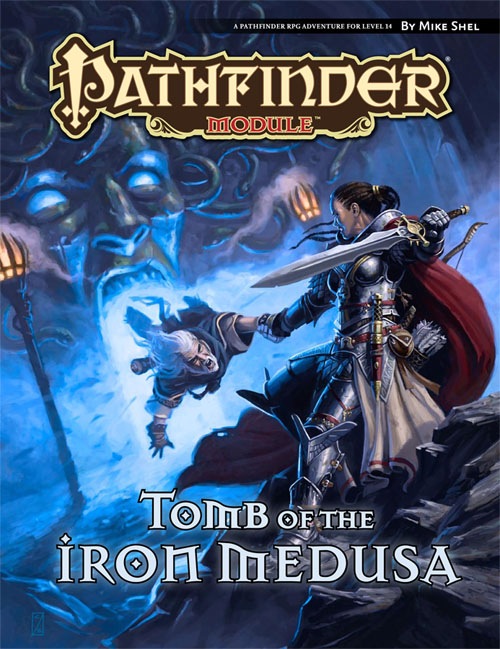
Hidden in the remote southern range of the World’s Edge Mountains lies a mysterious necropolis known in legend as the Tomb of the Iron Medusa. When the last heir of the dungeon’s long-dead noble builders hires the PCs to explore the forlorn and deadly site in search of evidence that may clear his family name, the intrepid heroes soon find themselves in over their heads. For the Tomb of the Iron Medusa does not give up its secrets lightly, and the dangerous truths that lie within its ancient, trap-laden crypts may have been hidden for very good reasons indeed.
Cheliax's largest city, Westcrown, has fallen to the Glorious Reclamation, and the evil adventurers are sent to reclaim the metropolis in the name of House Thrune. Armed with the legendary weapon they created from a gold dragon's head, the nefarious characters confront the Glorious Reclamation's forces and break its siege of a nearby Hellknight citadel. Once the army is defeated, the villains enter Westcrown, where they must undermine the chivalrous knights' rule of the city. Finally, they face the founder and Lord Marshal of the Glorious Reclamation to end the rebellion and restore the Thrice-Damned House of Thrune's rule over the empire of Cheliax.
The adventurer awakens buried in a coffin only to be inadvertently rescued by a goblin grave-robber. With no recollection of how they came to be buried alive, the adventurer is thrust into an encounter with the goblin and his party who have stolen a precious heirloom off their unconscious body. Before starting this adventure the GM and player should discuss what heirloom item the adventurer possesses. Though having immense sentimental value, the heirloom shouldn’t be magical, and it should be of minor monetary value. It should be a worn item that can easily be removed such as a ring, bracer or necklace.
Skelg the Ripper, envoy from the Land of the Linnorm Kings, lies wasting in his villa on the outskirts of Absalom. A frigid curse followed Skelg from his northern homeland and grips his bearish heart in its frosty embrace. As the bizarre freezing ailment pushes Skelg to the brink of death, the Society dispatches you and your fellow Pathfinders to uncover the secrets of the freezing curse before Absalom falls to its icy grip.

Sehvain Malual is renowned for his work in necromancy, using the dark art to destroy the undead pestilence polluting the world. However every warrior must hang his proverbial sword and retiring from adventuring life, the wizened elf settled down in a nearby town purchasing a small townhouse. Here, he would finally find the peace he so craved, or such he hoped before he found The Black Lexicon. What dark intent consumes Sehvain’s time is anyone’s guess, but only the PC can uncover the Legacy of Darkness.
The Licktoad goblins of Brinestump Marsh have stumbled upon a great treasure—fireworks! Yet unfortunately for them, the tribe member responsible for the discovery has already been exiled for the abhorrent crime of writing (which every goblin knows steals words from your head). To remedy this situation, the Licktoads’ leader, His Mighty Girthness Chief Rendwattle Gutwad, has declared that the greatest heroes of the tribe must venture forth to retrieve the rest of the fireworks from a derelict ship stranded in the marsh. The PCs play as a group of freaking goblins! What more do you need to know? Part 1 of the We Be Goblins series.
The Granddaddy of All Dungeons Returns! Rappan Athuk, the legendary mega-dungeon by Frog God Games and Necromancer Games is nothing more and nothing less than a good, old–fashioned, First Edition dungeon crawl updated for the Pathfinder Roleplaying Game. Very difficult, Rappan Athuk will truly strike fear into the hearts of the most stalwart adventurers. It offers legions of inventive traps, tricks, strange features, and monsters—many of them never before seen. It affords numerous opportunities for roleplaying, but anyone willing to brave these subterranean halls better arrive ready to rumble, or their lives will be short indeed. Many, many players have lost favored PCs delving into the depths of this dungeon, all the while giggling like children and having the time of their lives. Hundreds, if not thousands of players have combed the halls of Rappan Athuk over the years, seeking treasure and fame, making it one of the best-known dungeon locations the game has ever produced. Even players who have never entered its halls know the term: “Don’t go down the Well!” Also available for S&W and broken into multiple adventures. Also see https://paizo.com/store/byCompany/f/frogGodGames/pathfinderRPG/rappanAthuk for expansions for this product.
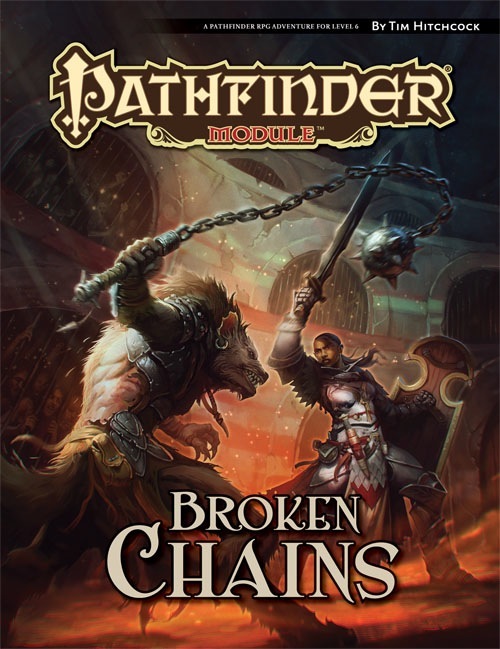
The slave markets of Katapesh may be an unsavory sort of business, but the trade metropolis’s enigmatic law enforcers have few qualms with the legal act of selling and buying flesh. Other factions, including the abolitionist Eagle Knights of Andoran, have their own opinions on the matter, however, and frequently send undercover agents into dangerous territory to break up slave rings. When one such Eagle Knight goes missing while investigating an underground slave operation beneath the dilapidated Twilight Gate district, it’s up to the PCs to delve an abandoned (but hardly uninhabited) qanat beneath Katapesh and discover her dire fate. Yet not everything is as it seems in the dank slave caverns under Twilight Gate, and clues hint that the slavers may have even more loathsome connections than initially suspected.
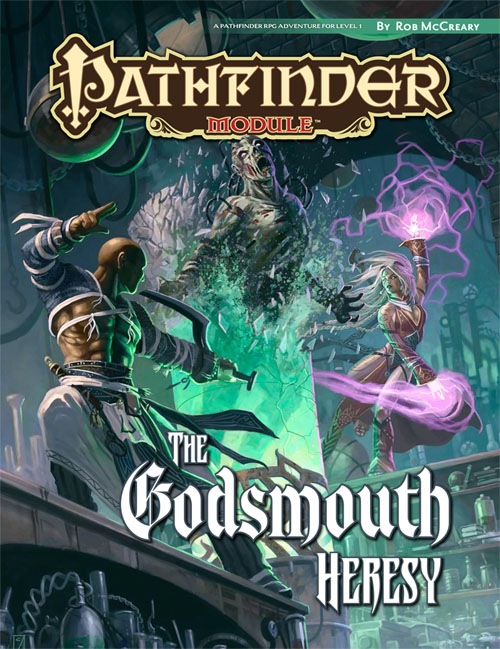
Deep below the anarchic city of Kaer Maga, someone—or something—has begun stealing corpses from the city’s most prestigious tomb, the Godsmouth Ossuary. Fearing the worst, the clerics of Pharasma in charge of maintaining the crypts quietly call for aid, not wanting to risk their own members in combating whatever horrors may have crept in from the tunnels and hidden chambers of the legendary Undercity. Beneath the infamous crypt lies a temple from an ancient empire devoted to sin, and a former Pharasmin cleric whose weathered his goddess’s wrath to create an army of undead minions, their dead flesh standing ready to support his heretical plans.
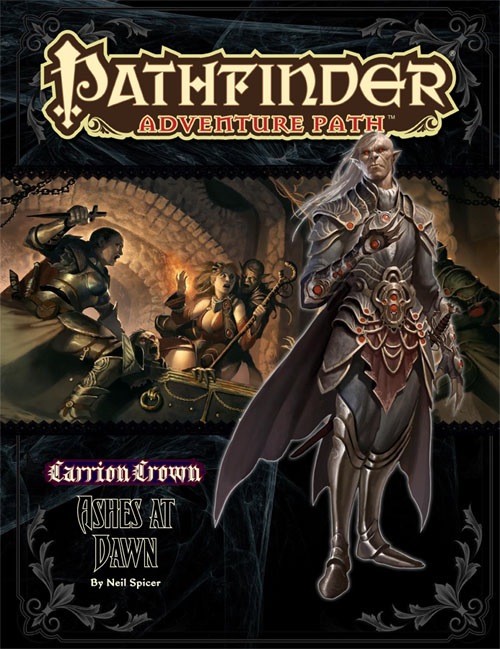
Part 5 of the Carrion Crown Adventure Path takes place in Ustalav's capital Caliphas. The heroes are in the city to follow the trail of evidence left by the neromantic cult The Whispering Way and strengthen their bonds with the mysterious Order of the Palantine Eye. Whilst in the city, they uncover a string of murders. When they discover that all the victims were vampires, they descend into the underground vampire city and have the possibility to form a tentative alliance with the vampire clans. If they help solve the murders, the vampire lord promises to help them on their quest. What role do the deadly necromancers have in the undead murders plaguing Caliphas? What secret grudge exists between the cult and the rulers of the night? And will the heroes be able to save the capital without sacrificing their very souls? This book includes: - “Ashes at Dawn,” a Pathfinder RPG adventure for 11th-level characters, by Neil Spicer - A gazetteer of fog-haunted Caliphas, the mysterious and deadly capital of Ustalav, by F. Wesley Schneider - A terrifying look into the blasphemous church of Urgathoa, goddess of gluttony, disease, and the undead, by Sean K Reynolds - Laurel Cylphra’s attempt to steal a soul stealer in the Pathfinder’s Journal, by F. Wesley Schneider - Six new monsters by Crystal Frasier, Patrick Renie, and Sean K Reynolds
Rumours tell of a secluded cave where a powerful cleansing artifact resides, guarded by a mythical creature that no one has seen and lived to tell the tale. Heat boils forth from this cave, and tortured shrieks echo on the wind. Do you have what it takes to brave the Lair of the Lava Queen?

Beneath the fetid roots of a noisome swamp linger the pathetic remnants of a once proud and noble tribe. Laid low by a powerful narcotic administered by their ambitious (but wildly paranoid) mistress, the lizardfolk of the Dark Oak are but a shadow of their former greatness. Now, in the fetid caverns below the slumbering body of a diseased treant she plots to bring bloody slaughter to the folk of the nearby villages before her followers forget their proud heritage and sink into a lethargy from which there is no escape.