
Player characters attacking the lair of monsters that have been menacing the local village is a common D&D trope. This adventure turns the trope on its head. In Goblin Defense, the players create goblin PCs, and have to fight off repeated attacks by adventurers who are stronger and better equipped than they are. Starting at level 1 and running until level 7, this module encompasses 16 battles against unique and typically themed groups of adventurers built using player character classes and rules. The module is designed for 3 players, each of whom takes on an individual role within the tribe, granting unique bonuses or options for actions outside of combat. Goblin Defense can also be played with 4 players, but is not recommended for 5 or more players without substantial revision. The players aren't alone. Each commands a squad of goblin minions who can help in combat... but goblins are fragile, and adventurers hit hard. Life as a goblin is often brief and violent. Many will die, but as long as some survive, the tribe will carry on. A simple ruleset is provided for managing actions during the downtime between each attack. During this time, players can work to train their minions to use better gear, hunt for food for their tribe, recruit replacement warriors, brew potions, and - most importantly - improve their lair and its defenses by adding walls, traps, tunnels, doors, alarms, and anything else their creative minds can come up with. As the exact layout and placement of defensive features is critical, this is designed to be played on a grid. A PDF is included with the map scaled to print on 24"x36" (Arch D) size paper, available at most print shops. DMs may enjoy the chance to briefly try out many different character class and subclass combinations as they attack and eventually fall to the goblin pests they're trying to eliminate. Page count: Information for the DM only 6 Information for the players 4 Adventurer statblocks 37

Old soldiers never die... For more than three decades, Dr. Rudolph van Richten stood against the forces of darkness, and hunted their servants in the far corners of the land of Mists. Now he had thought his long battle over, had thought he could spend his declining years in quiet enjoyment with old friends. But for some, a tragic end is inevitable. Dark forces have been gathering in the Mists. Their objective is to see Ravenloft's foremost expert on the supernatural destroyed, shattered in spirit as well as in body. From the crumbling edifice of Van Richten's childhood home, an enemy long thought vanquished spins a web of powerful evils and lost souls, drawing Van Richten to his doom. And then a group of heroes gets trapped in the web as well.... This is a boxed set adventure containing 3 adventures: Whom Fortune Would Destroy: https://www.adventurelookup.com/adventures/whom-fortune-would-destroy The Baron: https://www.adventurelookup.com/adventures/the-baron Homecoming: https://www.adventurelookup.com/adventures/homecoming TSR 1141

East of Beregost, nestled in the outskirts of the Wood of Sharp Teeth, Durlag’s Tower has intrigued and yet stymied adventurers for decades. Stuffed full of mechanical traps and arcane wards, and rumored to be inhabited by fiends, very few have managed to extract any REAL treasure from the former home of Durlag Trollkiller. However, a powerful item in the ancient fight against the giants is said to be housed there, and the cloud giant Baron Rajiram has committed significant resources toward recovering it. After a pleasant tea in her garden, SEER calls upon you to beat him there and put a stop to his efforts! Continued in Durlag's Tomb.

The Cult of the Dragon, along with its dragon allies and the Red Wizards of Thay, seek to bring Tiamat from her prison in the Nine Hells to Faerûn. To this end, they are sweeping from town to town, laying waste to all those who oppose them and gathering a hoard of riches for their dread queen. Continued in The Rise of Tiamat.
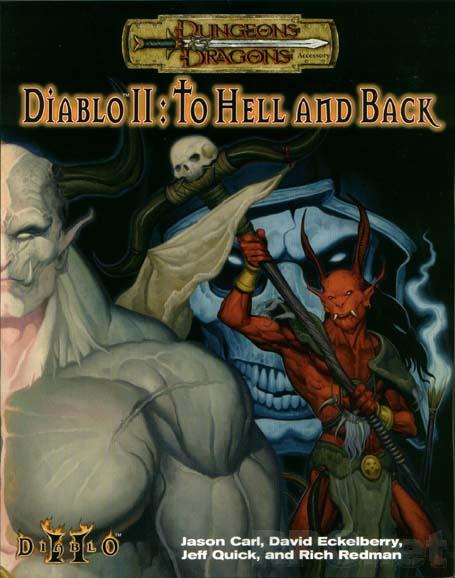
Bringing Diablo II to the tabletop. The legendary Diablo and Diablo II computer games come to life with the release of the tabletop Diablo II: To Hell & Back roleplaying adventure. All a player needs is the Dungeons & Dragons(r) Player's Handbook (0786915501-8/00) to accompany the Diablo II game. Every level and all 4 acts of the computer game are represented in the tabletop mega-adventure, which will also include 64 pages of monsters, information for levels 1-30, and over 60 maps!
A Dreams of the Red Wizards Epic The treachery and master plan of Thay are at last revealed—and heroes are needed for a final assault to prevent the return of one of Faerûn’s greatest evils! Part Five of the Storm King’s Descent series of adventures. A Four-Hour Epic for 11th- through 16th-Level Characters and 17th- through 20th-Level Characters. Optimized For: APL 13 and 18 This adventure also includes rules for single-table play. Content warnings include: cold weather hazards, possession, and slavery

A new megadungeon from Three Castles Award Winner (2018) and Barrowmaze author Dr. Greg Gillespie! HighFell: The Drifting Dungeon is a 246-page classic megadungeon for use with any old school fantasy role-playing games/clone. The pages of HighFell are crammed full with new material, maps, and art, including a colour cover by Ex-TSR artist Erol Otus (that matches Barrowmaze Complete and The Forbidden Caverns of Archaia as sister-books). HighFell: The Drifting Dungeon will keep your players on their toes and your campaign going strong for years. HighFell is brought to you by the Old School Renaissance (so don’t forget your 10’ pole).

A high octane, edge of your seat, seat of your pants, run and gun thrill ride for your 5th Edition Dungeons and Dragons game. Life was peaceful in the pleasant village of Thornyfoot… until the Kobolds of nearby Crag Canyon started kidnapping their kids! Now the distraught villagers turn to a rag tag group of adventurers, who just happened to be having a drink at the local inn, to save the day. Do your heroes have what it takes, the right stuff, the metal, the intestinal fortitude, to fend off the Kobold Hunting Drakes, face the Kobold Commandos, take down the Kobold Air Cavalry and yes… defeat the Kobold Covergirl with the Gun? Will they climb the treacherous canyon, survive the forest gauntlet, storm the fortified keep, raid the dastardly dungeon and thwart the big bad evil nefarious kobold plot? Or will they die a horrible, brutal, violent, traumatic, explosive death? There’s only one way to find out. Killer Kobolds! Action just leveled up. Killer Kobolds is designed for a party of four to eight characters of levels 8 through 12, but could readily be tweaked to accommodate parties of lesser or greater strength. Intentionally set in an entirely generic small village in need, Killer Kobolds can be easily dropped into any Dungeons and Dragons setting. Recently updated with a Yawning Portal cameo, the content within fits perfectly into any Tales of the Yawning Portal campaign, slotting perfectly between White Plume Mountain and Against the Giants. Additionally, it could readily be worked in to your Tyranny of Dragons, Elemental Evil, Rage of Demons or Storm King’s Thunder campaign.

Under raging stormclouds, a lone figure stands silhouetted against the ancient walls of castle Ravenloft. Count Strahd von Zarovich stares down a sheer cliff at the village below. A cold, bitter wind spins dead leaves around him, billowing his cape in the darkness. Lightning splits the clouds overhead, casting stark white light across him. Strahd turns to the sky, revealing the angular muscles of his face and hands. He has a look of power - and of madness. His once-handsome face is contorted by a tragedy darker than the night itself. Rumbling thunder pounds the castle spires. The wind's howling increases as Strahd turns his gaze back to the village. Fas below, yet not beyond his keen eyesight, a party of adventurers has just entered his domain. Strahd's face forms a twisted smile as his dark plan unfolds. He knew they were coming, and he knows why they came, all according to his plan. He, the master of Ravenloft, will attend to them. Another lightning flash rips through the darkness, its thunder echoing through the castle's towers. But Strahd is gone. Only the howling of the wind - or perhaps a lone wolf - fills the midnight air. The master of Ravenloft is having guests for dinner. And you are invited. TSR 9075
This adventure is suitable for four 6th to 7th level PC's and may be completed in a single session. Oithois the exceptional ice mephit and his foul underlings have uncovered a powerful relic at the entry to ancient ruins. The monstrous mephits seek to crack a hole between the material plane and their icy home world. Oithois plots to lead an army of elemental lackeys and conquer the civilized outposts of the north. This ice mephit has studied the machine and is confident he can open a gateway to the elemental plane of ice. PCs are approached by a frostbitten traveler, who pleads with them to assault the terrace. The adventurers must mount an attack against the mephits, contend with an unintentionally summoned young white dragon, and defeat Oithois upon the icebound terrace.

The Githzerai and the Githyanki are constantly at war with one another, but now the Githzerai are looking for whatever help they can get to clear out one of their captured fortresses from their armor-wearing rivals. Perhaps you adopt a faerie dragon while inside or play some cards with a chaos loving Efreeti who drops by at just the right times.
"A Triangle in Shadows" is an umbral vampire lair suitable for a party of four 15th-level characters. Magic weapons are highly advised. This adventure can be completed in one session. The City Fallen into Shadow is the domain of the fiendish umbral vampires, and they are rarely found outside it. But one named Caragorn has fled the city after coming between the lovers Philadon and Zenobia. Philadon and Caragor, however, are secretly meeting at Caragorn's tower behind Zenobia's back. Zenobia suspects them of collusion, and is seeking out the two male umbral vampires to get revenge.

Devastated in a war with a nearby wizards' school, the Fighters' Academy has since been surrounded by a foul and dank swamp - the Gloomfens. Since the climatctic battle between the wizards and fighters, the tower has decayed. The spirit of the head of the academy haunts the building, eternally plotting his revenge on the wizards who killed him. his loyal sutdents remain faithful to him even in death. Other foul undead have made their home in the rotting, spacious academy. From their lair, they make forays into farmsteads near the swamp in search of victims to feed their unspeakable appetites. The Problem of these terrible attacks by the savage undead will not stop until the evil that has found a home at the tower is burned from the face of the land forever. Will your party heed the call and help the town of Melinir? Will they be able to clear the former Academy of its undead? Towers of Evil is the second in a three part adventure, The Haunted Tower. Or, it can be ran as a stand alone adventure. The choice is up to you. Part of TSR 1081 The Haunted Tower

Designed for a party of five characters of at least 9th level, this adventure will challenge players seeking a powerful magic item of the GM’s choosing. A sphere of annihilation has been provided and is woven into several elements of the adventure, but any appropriately powerful item can be substituted if something else suits your campaign better. Though the adventure is designed to test every type of character class, a rogue who can deal with traps is essential, as is a wizard or sorcerer of at least 9th level. Larger groups will have an easier time; parties of four or fewer characters will be in for a very bad time unless you mitigate some of the tower’s more lethal traps and encounters. This adventure culminates in an encounter with devils and a sphere of annihilation. The sphere of annihilation is hidden deep within the tower-and-dungeon complex of Crane the Sorcerer. Originally set atop a high mountain in a secluded and wild part of the world, the tower and dungeon can be relocated to meet the situation in your campign. Crane, an introvert, stayed as far away from civilization as possible, as is detailed below. The tower above the dungeon doesn’t present many difficulties for a group of powerful characters or alert players. It might lull PCs into a false sense of security before they enter the areas where they’ll really be put to the test.
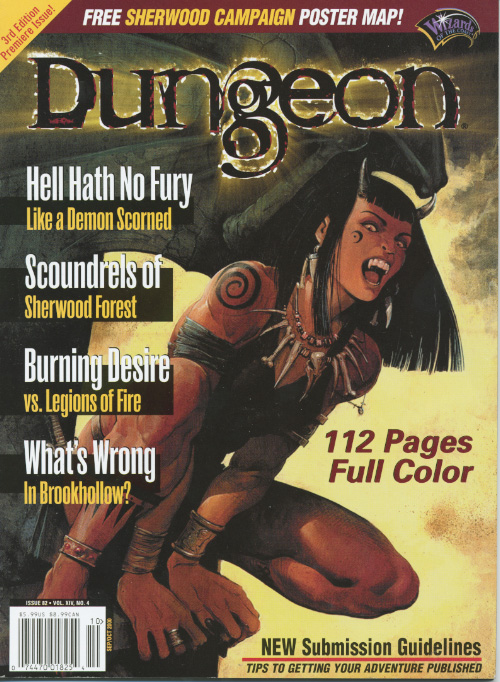
Where's Robin Hood When You Need Him? The Sheriff of Nottingham and the outlaws of Sherwood Forest share a common enemy. Will an unlikely alliance end this newest threat to the land? Pgs. 42-67

When Treason Walks the Land... Trouble stirs in Dunador! The King lies dead of a wound received during a hunting expedition. His brother, Lord Edrin, challenges the rightful Crown Prince, a half-trained young man named Edmund, for possession of the throne while Edmund travels on a pilgrimage to the holy shrine of Nevron. Forces throughout the kingdom vie for control of the realm. Can the player characters find the Crown Prince and protect him from the treacherous forces at large in Dunador? N3: "Destiny of Kings" (1986), by Stephen Bourne, is the third adventure in the novice series for AD&D. It's up at the upper end of what could be considered "novice" play, though, with the pre-rolled characters being 3rd and 4th level. It was released in February 1986. Like N2: "The Forest Oracle" (1984), this adventure is offered as a generic adventure, not specifically based in any existing AD&D setting. Suggestions are given in the conversion guide to place the adventure in the Forgotten Realms. Out of the Dungeons. One of the most impressive elements of N3 is its complete lack of dungeons. Instead - as was increasingly the case by the mid 80s - the players are heavily embroiled in a plot. They must find the prince of Dunador and return him home safely. Elements of investigation and intrigue thus find their way into the game. There is also some opportunity for wilderness adventure - a quality that was also becoming more common in AD&D by the mid-80s. Future History. A decade after its original publication, Wizards of the Coast updated "Destiny of Kings" to 2nd edition AD&D and reprinted it (1998). It was one of the few classic adventures to receive this treatment. This conversion guide allows DMs to run the original module with 5th Edition rules and provides a reference sheet for encounters. To use this conversion guide you will need a copy of Destiny of Kings, originally available in hard-copy and now for sale in digital format at the DMs Guild.

It's a horrible time to have a curse! Each wielding a powerful item to a family legacy, your players are a group of young adventurers who barely survive an attack on their order of vampire-hunters by agents of Dracula. After escaping, they discover Dracula has placed a curse upon the land which makes restful sleep difficult outside of hallowed areas. Dracula, "alive" on another plane but dead on this one, must be resurrected so they can kill him, end the curse, and avenge their dead. To accomplish this goal, the player characters must journey through forest, marsh, hill, and underground paths to retrieve relics of Dracula's last life from keeps and fortresses overrun by monsters and the undead. If they can resurrect him, he will be weak and easy to kill... but the adventurers aren't the only ones who want Dracula on the Material Plane, and Dracula is not the only vampire in the world. Gameplay overview This adventure takes the players from 2nd through 9th or 10th level on a milestone basis as they choose where to travel in what order to retrieve what they need. Starting at a happy gathering at the Belmonte Order, which the characters are hereditary members of, the campaign kicks off with a bang as the group retrieves their chosen legacy items, salvages what other gear they can in a race against time and a growing number of foes, and then escapes to begin their quest. In addition to the six main "dungeons," there are two optional regional lairs, traveling vampires, and many foes along the way. Most of the towns in the area have managed to survive, providing points of light at which the party may stop, long rest safely, acquire supplies, and socialize. Travel is hazardous! 5e classes are balanced for resource management across a 5-8 encounter adventuring day. The campaign is designed to have a semi-variable flow of encounters as the party traels around the area. Encounters grow progressively more difficult as time passes and the party spends more time within a region. These are not random encounters rolled on a table, but encounters designed to be unique to each area's geography, combat terrain, and mix of foes. As the party spends more time in a region or revisits it, the encounter difficulty increases. Dracula's curse requires a Constitution saving throw to successfully long rest outside of Hallowed areas (towns). The difficulty scales up over time, forcing the party to balance speed and safety as they try to accomplish their goals without pushing beyond the limits of what they can handle. The game concept, general map layout, and some enemy distributions are loosely inspired by Castlevania II for the NES, one of the forerunners of the "Metroidvania" genre. Dracula's Curse is indeed a game in which the forests are dark and full of monsters, and every night is a horrible one to have a curse. Includes 15 Legacy items, from weapons like whips and swords to a shield, a belt, or a decanter of holy water 60+ enemy statblocks 8 unique dungeons with unique layouts & challenges 5 inhabited towns with multiple named NPCs 100+ travel encounters (expect to use 30-50%) The module is printer-friendly with no artwork and straightforward grid maps for location-based encounters which require one.

A loyal band of adventurers must find the Horn of Kiri-Jolith, a powerful artifact that could help turn the tide of the War of the Lance before the forces of the Blue Dragonarmy claim it. They must delve into the ruins of Castle di Garinoc - the home of Lord Kiril Garinoc, a Knight of Solamnia who perished 300 years ago in the Cataclysm - and recover the horn before the Blue Dragonarmy arrives and claims it for their own! Dragonlance: Quest for the Horn of Kiri-Jolith is a 5-7 hour adventure for 5th level characters. Inside Quest for the Horn of Kiri-Jolith you'll find: A multi-chapter adventure heavily-researched to fit neatly with previous canon and into the larger story of the War of the Lance. Exploration through a ruined castle from before the Cataclysm. Encounters with draconians, goblins, the ghostly lady that haunts the castle, and a final siege battle with the Blue Dragon, Swiftbolt! Unique versions of classic enemies and magic items to use in your own campaign. A foundational adventure designed to start a larger Dragonlance campaign.
"The Clockwork Tower" is an azza gremlin lair suitable for five 3rd level characters. This adventure can be completed in one session.
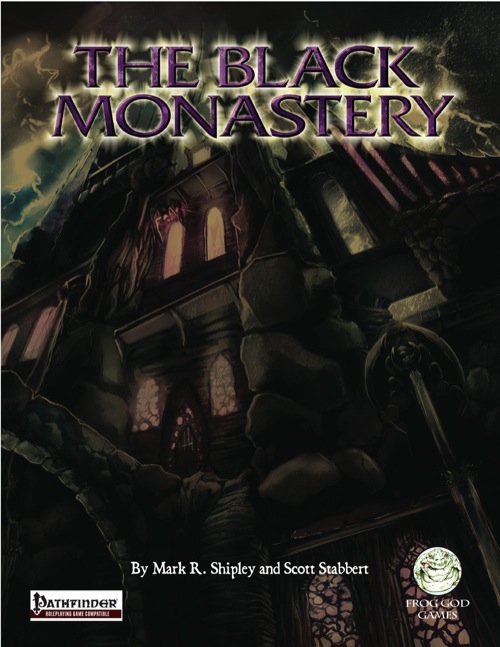
The Legend of the Black Monastery Two centuries have passed since the terrible events associated with the hideous cult known as the Black Brotherhood. Only scholars and story-tellers remember now how the kingdom was nearly laid to waste and the Black Monastery rose to grandeur and fell into haunted ruins. The Brothers first appeared as an order of benevolent priests and humble monks in black robes who followed a creed of kindness to the poor and service to the kingdom. Their rules called for humility and self denial. Other religious orders had no quarrel with their theology or their behavior. Their ranks grew as many commoners and nobles were drawn to the order by its good reputation. The first headquarters for the order was a campsite, located in a forest near the edge of the realm. The Brothers said that their poverty and dedication to service allowed them no resources for more grand accommodations. Members of the Black Brotherhood built chapels in caves or constructed small temples on common land near villages. They said that these rustic shrines allowed them to be near the people they served. Services held by the Brothers at these locations attracted large numbers of common people, who supported the Black Brotherhood with alms. Within 50 years of their first appearance, the Black Brotherhood had a number of larger temples and abbeys around the kingdom. Wealthy patrons endowed them with lands and buildings in order to buy favor and further the work of the Brothers. The lands they gained were slowly expanded as the order’s influence grew. Many merchants willed part of their fortunes to the Black Brotherhood, allowing the order to expand their work even further. The Brothers became bankers, loaning money and becoming partners in trade throughout the kingdom. Within 200 years of their founding, the order was wealthy and influential, with chapters throughout the kingdom and spreading into nearby realms. With their order well-established, the Black Brotherhood received royal permission to build a grand monastery in the hill country north of the kingdom’s center. Their abbot, a cousin of the king, asked for the royal grant of a specific hilltop called the Hill of Mornay. This hill was already crowned by ancient ruins that the monks proposed to clear away. Because it was land not wanted for agriculture, the king was happy to grant the request. He even donated money to build the monastery and encouraged others to contribute. With funds from around the realm, the Brothers completed their new monastery within a decade. It was a grand, sprawling edifice built of black stone and called the Black Monastery. From the very beginning, there were some who said that the Black Brotherhood was not what it seemed. There were always hints of corruption and moral lapses among the Brothers, but no more than any other religious order. There were some who told stories of greed, gluttony and depravity among the monks, but these tales did not weaken the order’s reputation during their early years. All of that changed with the construction of the Black Monastery. Within two decades of the Black Monastery’s completion, locals began to speak of troubling events there. Sometimes, Brothers made strange demands. They began to cheat farmers of their crops. They loaned money at ruinous rates, taking the property of anyone who could not pay. They pressured or even threatened wealthy patrons, extorting money in larger and larger amounts. Everywhere, the Black Brotherhood grew stronger, prouder and more aggressive. And there was more… People began to disappear. The farmers who worked the monastery lands reported that some people who went out at night, or who went off by themselves, did not return. It started with individuals…people without influential families…but soon the terror and loss spread to even to noble households. Some said that the people who disappeared had been taken into the Black Monastery, and the place slowly gained an evil reputation. Tenant farmers began moving away from the region, seeking safety at the loss of their fields. Slowly, even the king began to sense that the night was full of new terrors. Across the kingdom, reports began to come in telling of hauntings and the depredations of monsters. Flocks of dead birds fell from clear skies, onto villages and city streets. Fish died by thousands in their streams. Citizens reported stillborn babies and monstrous births. Crops failed. Fields were full of stunted plants. Crimes of all types grew common as incidents of madness spread everywhere. Word spread that the center of these dark portents was the Black Monastery, where many said the brothers practiced necromancy and human sacrifice. It was feared that the Black Brotherhood no longer worshipped gods of light and had turned to the service of the Dark God. These terrors came to a head when the Black Brotherhood dared to threaten the king himself. Realizing his peril, the king moved to dispossess and disband the Black Brother hood. He ordered their shrines, abbeys and lands seized. He had Brothers arrested for real and imagined crimes. He also ordered investigations into the Black Monastery and the order’s highest ranking members. The Black Brotherhood did not go quietly. Conflict between the order and the crown broke into violence when the Brothers incited their followers to riot across the kingdom. There were disturbances everywhere, including several attempts to assassinate the king by blades and by dark sorcery. It became clear to everyone that the Black Brotherhood was far more than just another religious order. Once knives were drawn, the conflict grew into open war between the crown and the Brothers. The Black Brotherhood had exceeded their grasp. Their followers were crushed in the streets by mounted knights. Brothers were rounded up and arrested. Many of them were executed. Armed supporters of the Black Brotherhood, backed by arcane and divine magic, were defeated and slaughtered. The Brothers were driven back to their final hilltop fortress – the Black Monastery. They were besieged by the king’s army, trapped and waiting for the king’s forces to break in and end the war. The final assault on the Black Monastery ended in victory and disaster. The king’s army took the hilltop, driving the last of the black-robed monks into the monastery itself. The soldiers were met by more than just men. There were monsters and fiends defending the monastery. There was a terrible slaughter on both sides. In many places the dead rose up to fight again. The battle continued from afternoon into night, lit by flames and magical energy. The Black Monastery was never actually taken. The king’s forces drove the last of their foul enemies back inside the monastery gates. Battering rams and war machines were hauled up the hill to crush their way inside. But before the king’s men could take the final stronghold, the Black Brotherhood immolated themselves in magical fire. Green flames roared up from the monastery, engulfing many of the king’s men as well. As survivors watched, the Black Monastery burned away, stones, gates, towers and all. There was a lurid green flare that lit the countryside. There was a scream of torment from a thousand human voices. There was a roar of falling masonry and splitting wood. Smoke and dust obscured the hilltop. The Black Monastery collapsed in upon itself and disappeared. Only ashes drifted down where the great structure had stood. All that was left of the Black Monastery was its foundations and debris-choked dungeons cut into the stones beneath. The war was over. The Black Brotherhood was destroyed. But the Black Monastery was not gone forever. Over nearly two centuries since its destruction, the Black Monastery has returned from time to time to haunt the Hill of Mornay. Impossible as it seems, there have been at least five incidents in which witnesses have reported finding the Hill of Mornay once again crowned with black walls and slate-roofed towers. In every case, the manifestation of this revenant of the Black Monastery has been accompanied by widespread reports of madness, crime and social unrest in the kingdom. Sometimes, the monastery has appeared only for a night. The last two times, the monastery reappeared atop the hill for as long as three months…each appearance longer than the first. There are tales of adventurers daring to enter the Black Monastery. Some went to look for treasure. Others went to battle whatever evil still lived inside. There are stories of lucky and brave explorers who have survived the horrors, returning with riches from the fabled hordes of the Black Brotherhood. It is enough to drive men mad with greed – enough to lure more each time to dare to enter the Black Monastery.