
Driven mad by the darkness of winter, the Prioress of the Red Abbey begins her work. After months of research and work in her lab, she found a way to summon beings of light to push back the darkness, if she could control their destructive natures. The characters find themselves investigating odd deaths, chasing weird weather phenomena and trying to help locals harmed by these creatures of light.

The PCs are sent to investigate a sculpture of the goddess Ezra with seemingly miracle-granting powers. The investigation takes the heroes on a pilgrimage to a forgotten chapel, where they encounter a terrible plague, a wererat police force, death, resurrection, mist horrors, and the miracles of the statue itself.
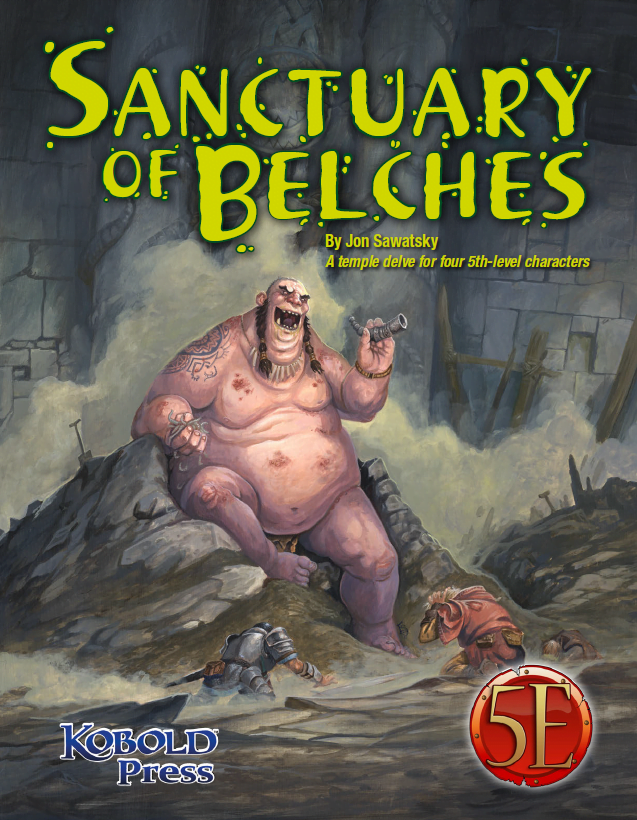
The trouble began several weeks ago when a duergar excavation team went to work in a long-abandoned temple. Drawn to the temple by stories of riches and artifacts, the duergar hired several giants as laborers before cracking the temple’s sealed doors. The largest of the giants, a loathsome Thursir mutant named Huppo, used his acidic vomit to expedite tunneling into the temple’s collapsed hall of worship. Then, Huppo found the horn—an unusual instrument made from a single piece of stone, with a mouthpiece so intricate only a master carver could have made it. The horn became the giant’s obsession. Seeing only the horn’s potential sale value, the dwarves demanded Huppo turn it over to them, but Huppo refused. To force compliance, the dwarves stopped feeding the gluttonous brute, but Huppo had already found his own source of food; in deep areas of the temple, worms were chewing out of the rocks, and Huppo ate them by the fistful. He also played the horn. Then, after several days of blowing the horn and devouring the strange worms, Huppo released a belch so noxious the dwarves had no choice but to lock him in a sealed chamber and carefully consider their next move. The horn’s call, however, had caught the attention of passing nomadic orcs. They set up camp outside the temple entrance in the hope of finding the horn and its player. That’s the current situation at the temple: the giant refuses to stop blowing the horn and belching out deadly clouds of stomach gas; the dwarves are frightened and edgy while their leader is obsessed with malevolent whispers; orcs are threatening to overrun the place; and the population of worms grows steadily as something awakens deep in the stone beneath the sanctuary of belches.
One Night Strahd (ONS) delivers the spectacle and catastrophe of gothic horror as a consistent and fast-paced short campaign for D&D 5e. It condenses and remixes the 200+ hour campaign of Curse of Strahd into a replayable adventure weighing in at 525 pages with 150+ illustrations, 12 maps, 16 encounters, 27 new magic items, and 60+ quick-play charts. With careful attention to the design of exploration, combat, and role-playing opportunities, our goal has been to make something for every DM and every table. After three years of extensive testing, we're proud to share this explosive adventure with you.

The land of Felora is a stable pedocracy off the Feso Seaway. Generally considered a safe place to live because of a low humanoid population and a large defensive wall that rings the country. The same cannot be said for the area to the west known as the Wildlands. Once a thriving human land the area was taken over in humanoid raids a century and a half ago. With the aggressions against the wall lessening the Council of Wisdom is organizing groups to go in and explore the land for possible "taming". Potential explorers will be paired off with non-combatant survey teams. Are you new adventurers ready for a job? Played at Epic Nerd Camp '17!
A free dual edition (3.5e / 5e) one shot for 3-5 PCs of level 3. A religious PC and their companions are tasked with cleansing an old monastery of the cursed spirits that live there. The players must unravel the history of the temple and its inhabitants in order to forgive or condemn their spirits for their actions. Investigation focused, with unique combat encounters for cleansing the cursed spirits. The players must figure out who the cursed spirits are and how they relate to one another, find the circumstances that led to them being cursed and ultimately decide if each is worthy of forgiveness for their sins. Estimated play time 6-9 hours.

THRESHOLD! The northernmost town in the Duchy - and your last stop before your adventures begin. Threshold, the gateway to mysterious castles, lost temples, deadly caves and caverns. You have heard the stories and legends, now you wish to see for yourself. This product provides a complete campaign adventure that will take beginning characters from 1st all the way to 3rd level and possibly beyond, drawn from the first nine modules of the B-series adventures. See individual adventure entries for Boss, Common Monster and Items lists. TSR 9190

Do you want your players to feel like they are in a zombie movie, struggling against a deadly horde that tries to surround them, overpower them, and bear them down to the ground to be devoured? This is an adventure that can threaten even the stoutest of characters, and is not recommended for parties of levels 12 or below unless they are larger than normal. This module is designed to take 4-8 hours of play and cover a single day, depending on the party’s speed of play and how thoroughly they decide to explore. It includes suggestions and some plot hooks that can be used to tie this easily into a variety of long-running campaigns, or it can be run as an indepdent adventure. The players will come upon a sacked town, figure out what happened, track an item whose theft has ominious implications for the region, and explore a partly-flooded old temple to end the threat. It's primarily combat-focused, but there are a few areas where exploration and route choice makes a difference, as well as traps if the party goes for the optional temple treasury. The antagonists in this module are mostly ghasts and ghouls, but the module title and cover page are deliberately selected to not spoil this. These are greater ghouls and ghasts that can challenge higher-level characters, backed up by mobs of lesser ghouls that can surround, paralyze, and devour the weak and unlucky, led by a Warlord whose aura can drive even the stout-hearted into forgetting their plans in a moment of madness.

Locals on the edge of a mountain range are being harassed by brutal monks and their giant tiger pet. Travelling into the hills, the players find the hidden monastery of the Burning Tiger: an evil order of monks that only respect strength. To end the threat, the players must undergo 4 life-or-death trials to test their mettle. But not all is as it seems in the monastery. Can the players unravel the mystery, and survive the Trials of the Burning Tiger? Based on an encounter for 3.5th edition D&D written by Eric Cagle for Wizards of the Coast.

Your PCs are reaching the upper end of the heroic tier. New worlds are opening up to them—they might have already ventured to the Feywild, for example, and made contacts with inhabitants of that magical plane. Now they are ready to take their first steps into the darkness. The Shadowfell awaits... Vandariel, a shadar-kai witch who calls herself the Voice of Pain, is a fanatic devotee of the Raven Queen. She has founded and become the self-proclaimed high priest of a bizarre cult, the Lords of Pain, whose purpose is to bring more fey into the shadow pact with that goddess of death. Although the original shadar-kai entered this pact voluntarily, and the race breeds true, Vandariel is consumed by what she sees as a divine mission to reveal the mystery to all fey—whether they wish it or not. Those who do not come voluntarily to the truth are brought against their will. Dark stalkers move like the night, seeking out and abducting suitable subjects. This Side Trek can serve as an introduction to the dangers of the shadow realm. It works well for PCs who are approaching the paragon tier, since it presents a reasonable challenge for characters of 10th level. It is suitable as a climactic encounter for lowerlevel adventurers, as well. It consists of only two encounters.

The End of the World Is at Hand! A hideous death cult has seized control of an ancient artifact-monument known as Tovag Baragu. The power behind the cult is the Old One himself, Iuz the Evil, demonic master of an empire. He's on an all-or-nothing quest for supremacy over the world—and the heavens beyond. To stop him, heroes must face horrors never dreamed of, journeying to a shadowed city where Death rules and the living cower. Here, Iuz will achieve his mad dream by destroying the imprisoned master of that alien citadel: Vecna, the mightiest lich, an immortal demigod. Two items exist with the power to stop Iuz—the Eye and the Hand of Vecna—but using them carries fantastic risks. Not even the gods know what will be unleashed when these items are fully activated. Die Vecna Die! takes the heroes from the Greyhawk campaign to the demiplane of Ravenloft and then to the Planescape city of Sigil. However, none of the material from those settings is required for play. TSR 11662

When the PCs turn up in the village of Ditch Nettle, they are tasked with solving the mystery of various disappearances. Will they be able to uncover the culprit, a worshiper of the long-dead cult of Morloski, goddess of the Slithering Brood. Or will they get stymied by local politics?

The jungle has opened up and revealed her secrets—now is the time to act upon them. All signs point to a long-abandoned city as the source of the undead contagion, and so you have been called upon to venture within and put an end to it once and for all. Are you up to the task? Part Three of The Rot from Within Trilogy.

𝐀𝐥𝐚𝐛𝐚𝐬𝐭𝐞𝐫 𝐏𝐚𝐥𝐚𝐜𝐞 𝐨𝐟 𝐭𝐡𝐞 𝐃𝐚𝐨 𝐓𝐡𝐞 𝐅𝐢𝐫𝐬𝐭 𝐢𝐧 𝐚 𝐒𝐞𝐫𝐢𝐞𝐬 𝐨𝐟 𝐉𝐞𝐰𝐞𝐥 𝐇𝐞𝐢𝐬𝐭𝐬 𝐚𝐭 𝐭𝐡𝐞 𝐄𝐧𝐝 𝐨𝐟 𝐭𝐡𝐞 𝐌𝐮𝐥𝐭𝐢𝐯𝐞𝐫𝐬𝐞 Wherein our adventurers seek out the Topaz of Earthly Perfection, reputed to be held within an extraplanar mountainside genie retreat. 𝐀 𝐃&𝐃 𝟓𝐄 𝐚𝐝𝐯𝐞𝐧𝐭𝐮𝐫𝐞 𝐟𝐨𝐫 𝟒-𝟕 𝐜𝐡𝐚𝐫𝐚𝐜𝐭𝐞𝐫𝐬 𝐨𝐟 𝟏𝟏𝐭𝐡-𝟏𝟒𝐭𝐡 𝐥𝐞𝐯𝐞𝐥. 𝟑𝟔 𝐩𝐚𝐠𝐞𝐬.
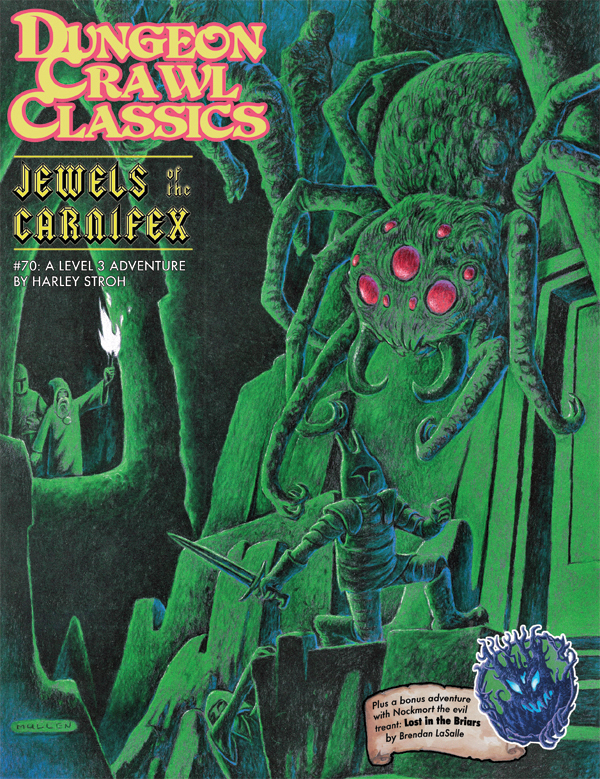
At the end of a forgotten back alley, in the weird and otherworldly marketplace of faiths known as the Bazaar of the Gods, stands the ruins of a forgotten chapel. Once the cult of the Carnifex was celebrated throughout the City of a Thousand Gates. But a band of holy warriors rose against the cult of executioners and torturers, casting down her signs and scattering her devotees to the winds. The fate of the cthonic goddess, and – more importantly – her fabled jewels remains a mystery…until this night. Set amid the sprawling decadence of Punjar, Jewels of the Carnifex offers low-level adventurers a chance to plumb the mysteries beneath the city’s soiled streets, explore forgotten crypts lavished with weird artifacts, and – for the quick and daring – claim the lost Jewels of the Carnifex!

The Temple of the First Fire is a 5e adventure in which a group of heroes must stop an ancient, evil witch known as the Raven Mocker from stealing the eternal flame that lights the sun. If the witch succeeds, it would plunge all humanity into endless darkness. It features a corrupted guardian, a temple suspended from the heavens by divine chains, and a series of unusual encounters, as well as four third-level pregenerated characters! Also available for Savage Worlds. Published by Sigil Entertainment Group.
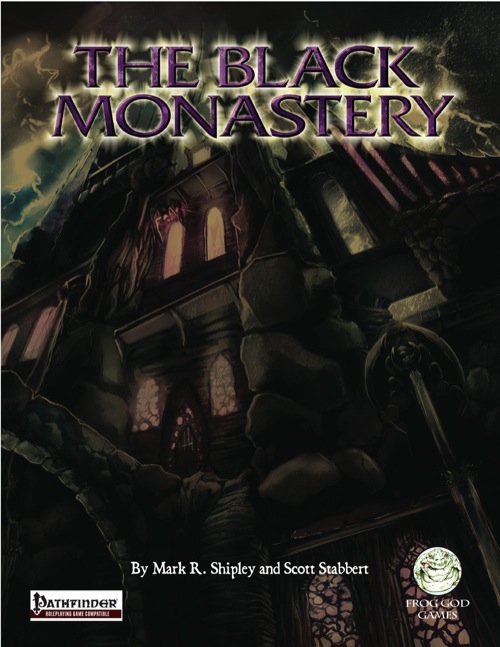
The Legend of the Black Monastery Two centuries have passed since the terrible events associated with the hideous cult known as the Black Brotherhood. Only scholars and story-tellers remember now how the kingdom was nearly laid to waste and the Black Monastery rose to grandeur and fell into haunted ruins. The Brothers first appeared as an order of benevolent priests and humble monks in black robes who followed a creed of kindness to the poor and service to the kingdom. Their rules called for humility and self denial. Other religious orders had no quarrel with their theology or their behavior. Their ranks grew as many commoners and nobles were drawn to the order by its good reputation. The first headquarters for the order was a campsite, located in a forest near the edge of the realm. The Brothers said that their poverty and dedication to service allowed them no resources for more grand accommodations. Members of the Black Brotherhood built chapels in caves or constructed small temples on common land near villages. They said that these rustic shrines allowed them to be near the people they served. Services held by the Brothers at these locations attracted large numbers of common people, who supported the Black Brotherhood with alms. Within 50 years of their first appearance, the Black Brotherhood had a number of larger temples and abbeys around the kingdom. Wealthy patrons endowed them with lands and buildings in order to buy favor and further the work of the Brothers. The lands they gained were slowly expanded as the order’s influence grew. Many merchants willed part of their fortunes to the Black Brotherhood, allowing the order to expand their work even further. The Brothers became bankers, loaning money and becoming partners in trade throughout the kingdom. Within 200 years of their founding, the order was wealthy and influential, with chapters throughout the kingdom and spreading into nearby realms. With their order well-established, the Black Brotherhood received royal permission to build a grand monastery in the hill country north of the kingdom’s center. Their abbot, a cousin of the king, asked for the royal grant of a specific hilltop called the Hill of Mornay. This hill was already crowned by ancient ruins that the monks proposed to clear away. Because it was land not wanted for agriculture, the king was happy to grant the request. He even donated money to build the monastery and encouraged others to contribute. With funds from around the realm, the Brothers completed their new monastery within a decade. It was a grand, sprawling edifice built of black stone and called the Black Monastery. From the very beginning, there were some who said that the Black Brotherhood was not what it seemed. There were always hints of corruption and moral lapses among the Brothers, but no more than any other religious order. There were some who told stories of greed, gluttony and depravity among the monks, but these tales did not weaken the order’s reputation during their early years. All of that changed with the construction of the Black Monastery. Within two decades of the Black Monastery’s completion, locals began to speak of troubling events there. Sometimes, Brothers made strange demands. They began to cheat farmers of their crops. They loaned money at ruinous rates, taking the property of anyone who could not pay. They pressured or even threatened wealthy patrons, extorting money in larger and larger amounts. Everywhere, the Black Brotherhood grew stronger, prouder and more aggressive. And there was more… People began to disappear. The farmers who worked the monastery lands reported that some people who went out at night, or who went off by themselves, did not return. It started with individuals…people without influential families…but soon the terror and loss spread to even to noble households. Some said that the people who disappeared had been taken into the Black Monastery, and the place slowly gained an evil reputation. Tenant farmers began moving away from the region, seeking safety at the loss of their fields. Slowly, even the king began to sense that the night was full of new terrors. Across the kingdom, reports began to come in telling of hauntings and the depredations of monsters. Flocks of dead birds fell from clear skies, onto villages and city streets. Fish died by thousands in their streams. Citizens reported stillborn babies and monstrous births. Crops failed. Fields were full of stunted plants. Crimes of all types grew common as incidents of madness spread everywhere. Word spread that the center of these dark portents was the Black Monastery, where many said the brothers practiced necromancy and human sacrifice. It was feared that the Black Brotherhood no longer worshipped gods of light and had turned to the service of the Dark God. These terrors came to a head when the Black Brotherhood dared to threaten the king himself. Realizing his peril, the king moved to dispossess and disband the Black Brother hood. He ordered their shrines, abbeys and lands seized. He had Brothers arrested for real and imagined crimes. He also ordered investigations into the Black Monastery and the order’s highest ranking members. The Black Brotherhood did not go quietly. Conflict between the order and the crown broke into violence when the Brothers incited their followers to riot across the kingdom. There were disturbances everywhere, including several attempts to assassinate the king by blades and by dark sorcery. It became clear to everyone that the Black Brotherhood was far more than just another religious order. Once knives were drawn, the conflict grew into open war between the crown and the Brothers. The Black Brotherhood had exceeded their grasp. Their followers were crushed in the streets by mounted knights. Brothers were rounded up and arrested. Many of them were executed. Armed supporters of the Black Brotherhood, backed by arcane and divine magic, were defeated and slaughtered. The Brothers were driven back to their final hilltop fortress – the Black Monastery. They were besieged by the king’s army, trapped and waiting for the king’s forces to break in and end the war. The final assault on the Black Monastery ended in victory and disaster. The king’s army took the hilltop, driving the last of the black-robed monks into the monastery itself. The soldiers were met by more than just men. There were monsters and fiends defending the monastery. There was a terrible slaughter on both sides. In many places the dead rose up to fight again. The battle continued from afternoon into night, lit by flames and magical energy. The Black Monastery was never actually taken. The king’s forces drove the last of their foul enemies back inside the monastery gates. Battering rams and war machines were hauled up the hill to crush their way inside. But before the king’s men could take the final stronghold, the Black Brotherhood immolated themselves in magical fire. Green flames roared up from the monastery, engulfing many of the king’s men as well. As survivors watched, the Black Monastery burned away, stones, gates, towers and all. There was a lurid green flare that lit the countryside. There was a scream of torment from a thousand human voices. There was a roar of falling masonry and splitting wood. Smoke and dust obscured the hilltop. The Black Monastery collapsed in upon itself and disappeared. Only ashes drifted down where the great structure had stood. All that was left of the Black Monastery was its foundations and debris-choked dungeons cut into the stones beneath. The war was over. The Black Brotherhood was destroyed. But the Black Monastery was not gone forever. Over nearly two centuries since its destruction, the Black Monastery has returned from time to time to haunt the Hill of Mornay. Impossible as it seems, there have been at least five incidents in which witnesses have reported finding the Hill of Mornay once again crowned with black walls and slate-roofed towers. In every case, the manifestation of this revenant of the Black Monastery has been accompanied by widespread reports of madness, crime and social unrest in the kingdom. Sometimes, the monastery has appeared only for a night. The last two times, the monastery reappeared atop the hill for as long as three months…each appearance longer than the first. There are tales of adventurers daring to enter the Black Monastery. Some went to look for treasure. Others went to battle whatever evil still lived inside. There are stories of lucky and brave explorers who have survived the horrors, returning with riches from the fabled hordes of the Black Brotherhood. It is enough to drive men mad with greed – enough to lure more each time to dare to enter the Black Monastery.

The Court of the Unseelie bundle brings you brand new dark fey themed 5e content! Normally priced for the individual items, this special bundle is provided with 84 pages of 5e content! Including: A 24 page adventure for parties of 7th-8th level 17 stat blocks and 1 new monster template 22 VTT-ready monster tok 10 new items with printable item cards 6 new spells with printable spell cards 7 battle maps 1 new player body graft 4 feats and 2 deficiencies 1 new full player class with 3 subclasses - the Tether: a spirit-lead melee class centered around leading your allies into battle and effecting the battlefield, as you develop a student and pupil bond with your Ardent spirit. 2 new player races - the fungal-folk Codycep and the badger-kin Mustel

Rising from the surface of a massive lake, an ancient ziggurat travels through time for purposes unknown. It’s up to the characters to enter this strange relic and discover what dark threat the structure poses. The Ziggurat Beyond Time contains advice for customizing the adventure for your own campaign. It also contains an artifact, the Deluvian Hourglass, that has time-related properties and wishes to witness the end of the world. Pgs. 23-55
The Temple of Tesh-Yatra is a setting-neutral dungeon delve for a party of 6th level adventurers, inspired by the classic funhouse dungeons of yesteryear. The dungeon takes 6-10 hours to fully explore. It features a high proportion of non-combat encounters: puzzles, exploration, and the occasional deadly centrifuge. The ungodly fusion of a mad scientist’s lab and a planar temple, the dungeon includes an encounter that can launch your players into the Nine Hells – for a price... The Temple of Tesh-Yatra includes two new constructs to use in your game: the sinister Maimers, and the enigmatic Skorverra; as well as a new magic item: the Amulet of Tesh-Yatra, an artisan’s dream! The Temple of Tesh-Yatra also comes with a VTT battlemap (transparent PNG format). The Temple of Tesh-Yatra was originally set in the Outlands, as an extraplanar dungeon. But given its self-contained nature and the Temple's age, it is well-suited to any wildnerness, and would work equally well seeding a hex crawl.