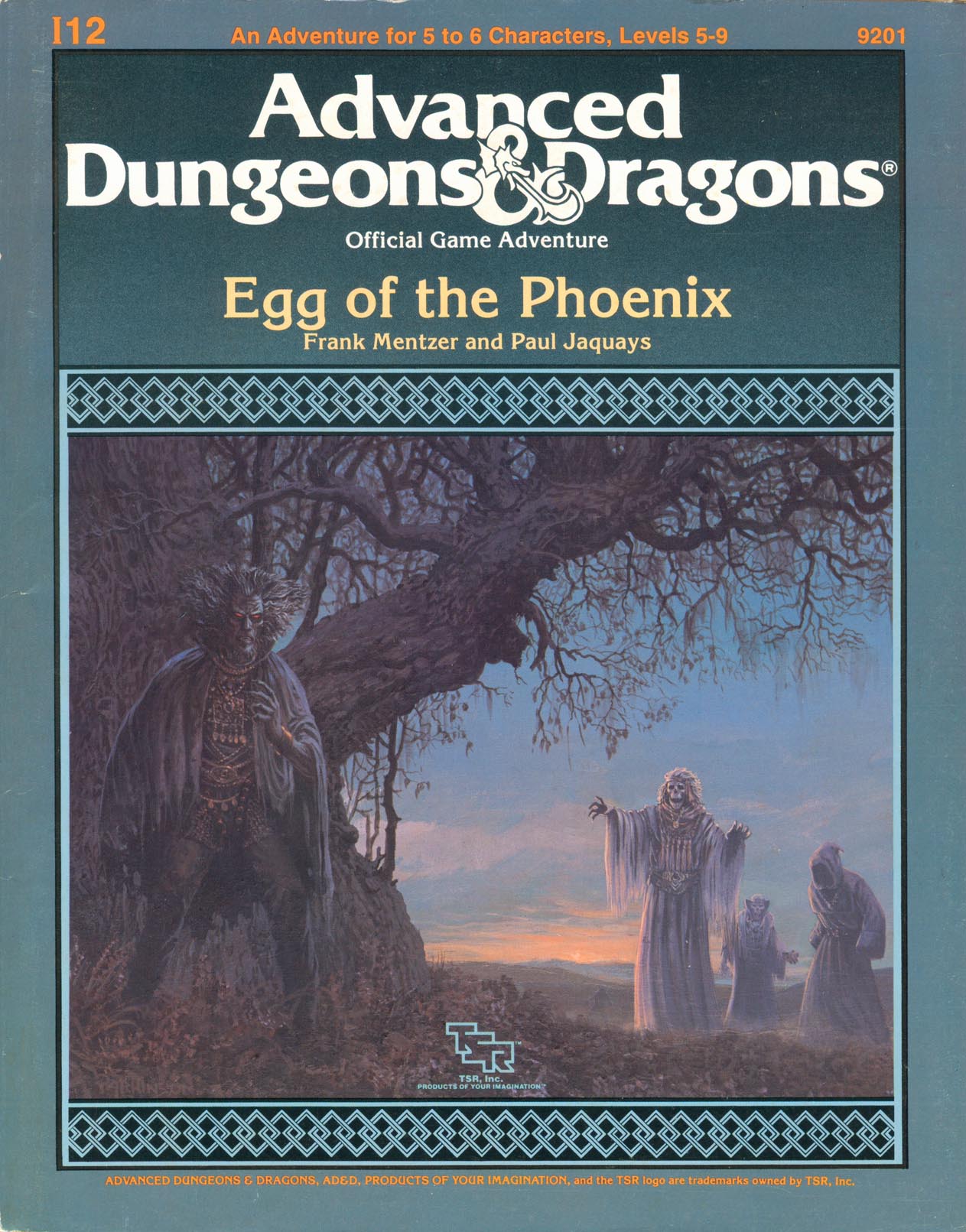
"Come on," they said, "It won't be so tough, just stopping a slavery ring," they said. "I don't know," you said. "Those slaves aren't even entirely human! How do we know they won't try to kill us?" But you went, and now you're having second thoughts. There were the thieves in the lost crypts of Empyrea, raising hundreds of - no, that's too disturbing to think about. There were the three daughters who - no, that's too painful to remember. Now there's this Egg of the Phoenix. What does that have to do with anything? This was supposed to be a cut-and-dried stop-the-slavers job. Who said anything about retrieving lost artifacts? Trudging through forests, traipsing through castles, trotting throug dungeons, traveling through other planes: this has turned into more than your run-of-the-mill adventure. The compensation had better be worth it! Provided, of course, you're around at the end to collect your share. TSR 9201

"Sometimes bugs are just bugs, and sometimes they are organized into a hive mind that is just as smart as humans. Ants are just that. In battle, the ants become a horde of raging combatants that form a blur on all sides. While ants are typically peaceful, they respond to a threat against the hive with a scale of violence that’s almost impossible to imagine. Utterly devoted to duty, ants never retreat from a confrontation—even in the face of certain death. Their engagements are brief and brutal. Working in teams, ants grab enemies, holding them in place until one of the warriors rips into the captive’s body, leaving it smashed and oozing." "Of Ants and Men begins as a quest to recover (e.g., steal) eggs from a giant anthill near the town of Endhome." "This adventure is designed for characters of levels 4 to 8." "The adventure can also be played (perhaps more effectively) by smaller groups. In response to many requests from our fans, the main encounters are designed to work well with groups of two to three characters of levels 6 to 8. Even a solo adventurer could do reasonably well, if the individual character had very good climbing, trap finding, and stealth skills. Druids, barbarians, and rogues will fare best in cases where the groups are limited in size." "While there’s plenty of opportunity for combat here, characters who think through a situation before drawing their swords are likely to do best. Hacking one’s way through is likely to result in character deaths."

This self-contained game gives you and your friends the experience of playing the Dungeons & Dragons game in an easy-to-learn format. In this Fast-Play Game, you and your friends take on the imaginary roles in a fantastic tale of mighty heroes, mythical dragons, and powerful magic. This demo version of the game is designed to give you the feel of playing the Dungeons & Dragons game. The full game contains all sorts of options to help you create your own on-going sword and sorcery campaign. We'll tell you more about that at the end of this booklet.
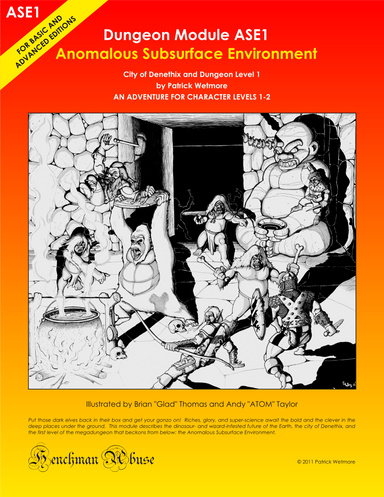
"Put those dark elves back in their box and get your gonzo on! Riches, glory, and super-science await the bold and the clever in the deep places under the ground. This module describes the dinosaur- and wizard-infested future of the Earth, the city of Denethix, and the first level of the megadungeon that beckons from below: the Anomalous Subsurface Environment." Set in a post-apocalyptic future where Earth's remains are explored through dungeons filled with ancient tech, magic, and bizarre ecosystems, inhabited by various factions with their own agendas. This setting blends sci-fi and fantasy with a touch of the absurd, offering a playground for imaginative gameplay and storytelling. The module includes a gatehouse and the first level of the Anomalous Subsurface Environment, each designed with multiple pathways. Unique twists on monsters and magic items. Written for Labyrinth Lord

The heroes find themselves on a road recently beset by bandits. As they stop to rest for the night near the ruins of an old fort, the truth behind the bandit attacks is revealed: War Dogs. The heroes must fend off the attack before figuring out how to stop the body bandits once and for all. This product contains: - A short adventure for a 1st-level party. - A drop-in, little-prep adventure for any campaign. - 2 combat encounters - 1 negotiation - A 5 room dungeon - Cartography from Dyson Logos with starting positions for encounters. - Written for 5 heroes, with scaling for as little as 3 and as many as 6.

Run, play or splice up 66 pages of mayhem and weirdness in this Slavic mythic-inspired (with an acid fantasy-twist) mini-sandbox for Labyrinth Lord or the well-aged fantasy rpg of your druthers. Contains: • A 25-site pointcrawl of the otherwordly Slumbering Ursine Dunes region. Beyond the big ticket adventure sites you will find along the way a Polevik-haunted rye field, a Zardoz head-living hermit, bearling pilgrimage site, antediluvian beaver engineers and other assorted madness. • Two separate “dungeons”, the bio-mechanical, lost-in-time Golden Barge and the faction-contested Glittering Tower, with enough detail and portability to be slotted into an existing campaign. • The Chaos Index, a dynamic events system for modeling the mythic weirdness of the Dunes. Actions of the players in the sandbox will escalate or de-escalate the levels of events. • Four competing factions operating inside the Dunes, plus guidelines for their mutual interactions.
Wise rogues join the government, where their larceny has the cover of “legality” and the cash comes in heaps and piles from deceitful receipts and pocketed procurements rather than in small, bloodstained purses from breaking windows, scaling walls, and risking traps and long-fanged guard dogs. Wise rogues do not, by choice, go up against towering giants armed with clubs larger than the tallest rogue in the guild. Nor do they try to nick treasure from dragons without a group of powerful fellow adventurers behind them, who can hurl mighty spells, hack and hew toe to toe with an angry wyrm, heal the injured, and (when things go as they usually do), resurrect the dead. There are wise rogues, and then there are player characters. Emeralds of Highfang awaits them with open arms, offering special challenges and rewards to rogue characters—but as always, the prospects are much better for a party of adventurers from a variety of classes, with wide skills and experience, and of high level. Some might find that a broad base of experience is not only helpful, but essential for survival.

In the frontier stronghold of Purdey’s Rest, rumors of mysterious lost ruins lead a group of young adventurers into the wilderness — and the forgotten dungeons of a legendary dark mage. Facing off against evil bandits, foul undead, and ravenous monsters, the characters seek the rewards of wealth and fame. But before they can claim either, they must survive all the deadly threats of Hazakor’s lost halls. The Hidden Halls of Hazakor is a starter adventure for fifth edition fantasy roleplaying, written with a special focus on young, beginning Gamemasters of ages twelve and up. In a friendly and straightforward fashion, this adventure explores some of the ways a good fantasy RPG dungeon crawl can be put together. It offers advice on how to just let things happen during a game session, and how to not be overwhelmed by all the directions in which an adventure can go. It talks about how to bring nonplayer characters to life, how to have fun running monsters, and how to challenge the other players and their characters alike. The Hidden Halls of Hazakor is for any player who’s ready to sit in the GM’s chair for the first time — and who is ready to learn some of the tricks and techniques that help all GMs run great games. The PDF download also includes untagged maps for Purdey's Rest and the Hidden Halls of Hazakor dungeon, making it easy to run the adventure in a virtual tabletop setup. These maps are missing the number key and any features that should initially be known only to the GM (including traps and secret doors). The publisher's website offers free pregenerated characters for the adventure, but they are not included in the adventure. The website also has a free GM Guide as well. Insane Angel Studios

The company discovers the Easterly Inn, a piece of the Shire in the land of the Beornings. But the Wild is still the Wild, and it takes more than Hobbit cooking to keep adventures at bay; in no time, the companions find themselves involved in the search for a missing trade caravan. Their quest will put them on the road to the High Pass, and see them go over hills and under hills. Published by Cubicle7

Eurich Gunshoff IV, Count of Kleaves, is beset by powerful enemies. The King to the north has laid waste his holdings beyond the Tot River and even now threatens the river castles. Only the coming winter holds him at bay, giving the Count time, if only a little, to muster his strength. Long have the people of Kleaves worshiped the gods of the south, and it is to these people that he turns, striking a bargain with the powerful King of Kaymor. In exchange for a precious gift the Kayomarese promise to aid Eurich and his people, but it is Eurich’s charge to deliver the prize. He can spare few troops, and with spies all about he cannot be too careful. The prize he sets in a wagon in a caravan and as escort he calls upon those who dwell upon the fringes of society, adventurers who seek fame, gold and glory. They are charged to cross the wilderness and deliver the wagons safely. But the road is fraught with danger. Walls of stone block the road and winter upon the open plains carries dangers beyond the biting cold. But more than stone and frost, the end promises fire without comfort. Designed in 3 parts Giant’s Rapture offers overland travel, dungeon, and intrigue and pits the character’s wits against the open road and one another.

An Undying Evil In Belthaar, city of dark alleys, strange cults, and rival sorcerers, a threat rises from beyond the grave! Can you solve the mystery of the Necromancer's Knife before it is too late? Savage Swords and Sinister Sorcery "The Necromancer's Knife" is a stand-alone sword and sorcery adventure module, inspired by the pulp era tales of Robert E. Howard and Clark Ashton Smith. Venture in the footsteps of Conan the Cimmerian, Satampra Zeiros of Uzuldaroum, Imaro of Nyumbani, and other fabled thieves, reavers and slayers! Written for the Fifth Edition (5E) of the world's most popular roleplaying game, the adventure in this book can be easily adapted to any fantasy roleplaying game ruleset or edition. Note: This standalone adventure was originally published as part of the collection "The Spider-God's Bride and Other Tales of Sword and Sorcery". This new version has been updated to fifth edition rules and includes new maps and artwork.
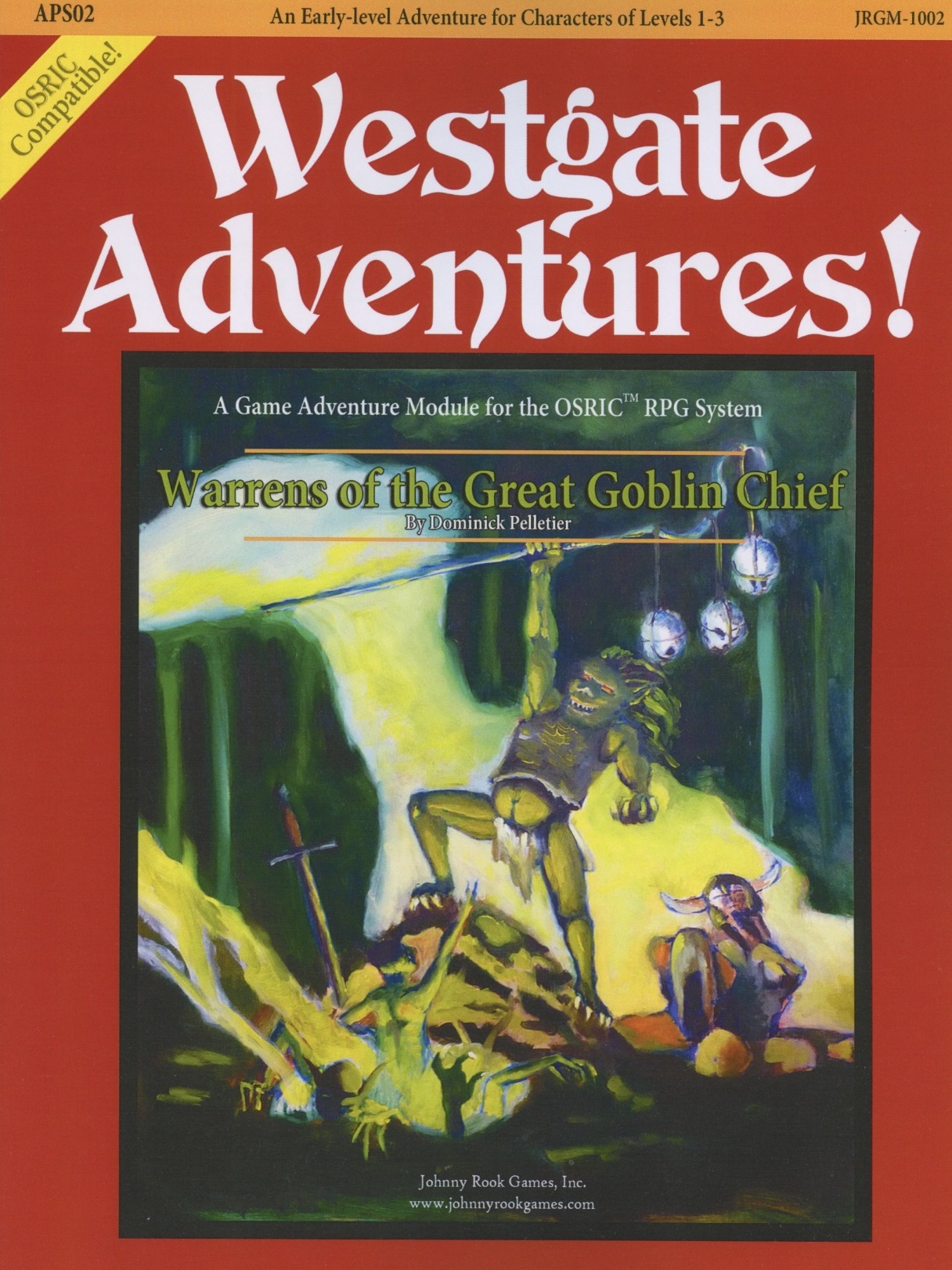
Goblins have returned to the area of Westgate, seeking an ancient magical item constructed for their foul kind. In their search, the goblins attack an imperial convoy secretly disguised as a merchant’s wagon. The knowledge that goblins are near must be kept quiet from the public, thus a small band of adventurers is required to seek out the creatures and the stolen magic item, deep inside the warrens of the great goblin chief! But the adventure does not end there...
In ancient times, the area now known as the Dyrgalas Fens was home to a flourishing civilization of nature worshippers who wrested a living from the forest around them, built open-air temples, and generally did well. Over the centuries, a series of natural disasters (some say a series of foolish magical experiments) led to a rising water table and turned the forest into a vast swamp. As the water rose, most of the people left. Today, a few stalwart humans remain in the fens, living off the land through hunting, fishing, trapping, and even some agriculture. In addition to these honest folk, the Dyrgalas has some less savory residents, including both black and green dragons, trolls, hags, escaped criminals, and a host of lycanthropes. Most of these creatures prey on travelers foolish or unlucky enough to enter the fen, and sometimes raid both inside and outside the fen. This adventure, intended for characters of levels 6 to 8, deals with one group of raiders who make their lair in the Dyrgalas. A weretiger called Gavriil has formed a group of assorted lycanthropes into a band of cunning brigands. The lycanthropes favorite caper involves infiltrating a merchant caravan while posing as travelers, merchants, or swords for hire, then attacking it from within. Gavriil and his servants also take on kidnappings, murder for hire, and any other unsavory tasks that come their way.
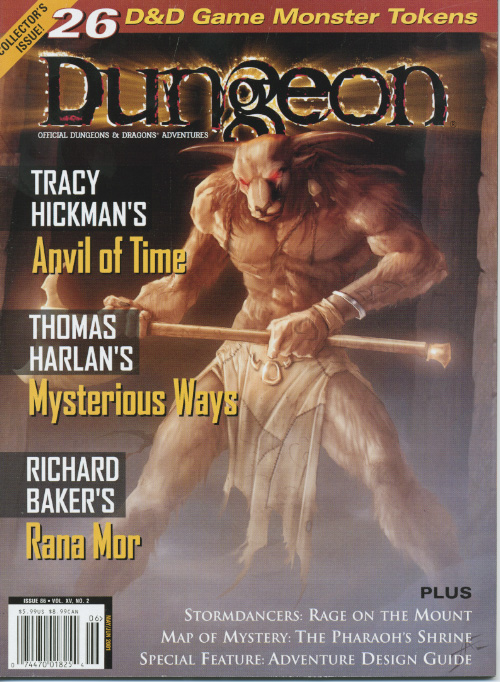
"Mysterious Ways" is a D&D adventure set in the Holy Land (Israel and Jordan) during the time of the Crusades (1114 A.D.) in an alternate-Earth setting. This is a world where the portals to otherworldly realms, particularly the Lower Planes, are closed--sealed shut by the power of the True Cross, a holy relic sought by evil thieves who would see the gates to the Lower Planes flung open. Magic exists in this alternate world, but it is less prevalent than in other D&D campaign settings. This paucity of magic serves the core of the adventure's storyline and should be preserved, if possible. This adventure is designed for a party of four 7th-level player characters (PCs). It is recommended that the party include at least one lawful cleric or paladin. Consult the "Adapting the Adventure" sidebar for ways to incorporate the adventure into generic D&D campaigns and modify it for higher or lower levels of play. Pgs. 84-112
The Siege of Castle Rend is an adventure for the fifth edition of the world’s first roleplaying game, suitable for five 5th-level characters. It takes place over four parts, and each part can be completed in one or two sessions of play, depending on your group’s playstyle and how long you like to play in a single sitting. If all goes according to plan over the course of this adventure, the player characters will expose an usurping lord, fight orcs, acquire a stronghold, defend it from an invading army, win the admiration of a town filled with potential vassals, and make political connections within the Barony of Bedegar. Of course, no adventure goes according to plan. The PCs will invariably throw these well-laid schemes into chaos, and they’ll have to improvise. But if we know how things would have gone if the PCs never showed up (or are cowards), it makes it easier for us GMs to improvise when things go off the rails. Published by MCDM
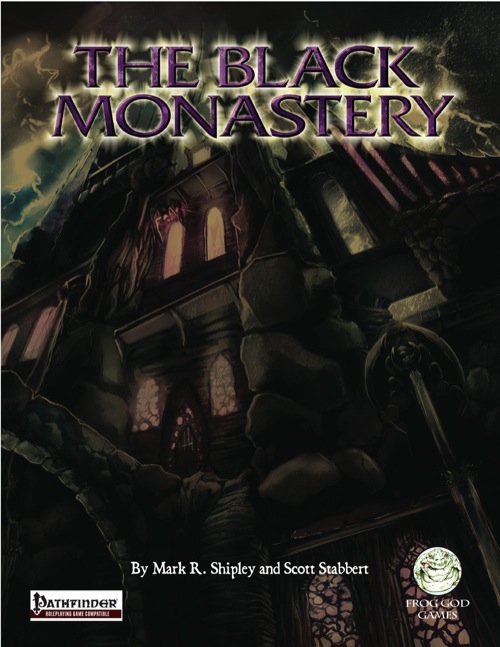
The Legend of the Black Monastery Two centuries have passed since the terrible events associated with the hideous cult known as the Black Brotherhood. Only scholars and story-tellers remember now how the kingdom was nearly laid to waste and the Black Monastery rose to grandeur and fell into haunted ruins. The Brothers first appeared as an order of benevolent priests and humble monks in black robes who followed a creed of kindness to the poor and service to the kingdom. Their rules called for humility and self denial. Other religious orders had no quarrel with their theology or their behavior. Their ranks grew as many commoners and nobles were drawn to the order by its good reputation. The first headquarters for the order was a campsite, located in a forest near the edge of the realm. The Brothers said that their poverty and dedication to service allowed them no resources for more grand accommodations. Members of the Black Brotherhood built chapels in caves or constructed small temples on common land near villages. They said that these rustic shrines allowed them to be near the people they served. Services held by the Brothers at these locations attracted large numbers of common people, who supported the Black Brotherhood with alms. Within 50 years of their first appearance, the Black Brotherhood had a number of larger temples and abbeys around the kingdom. Wealthy patrons endowed them with lands and buildings in order to buy favor and further the work of the Brothers. The lands they gained were slowly expanded as the order’s influence grew. Many merchants willed part of their fortunes to the Black Brotherhood, allowing the order to expand their work even further. The Brothers became bankers, loaning money and becoming partners in trade throughout the kingdom. Within 200 years of their founding, the order was wealthy and influential, with chapters throughout the kingdom and spreading into nearby realms. With their order well-established, the Black Brotherhood received royal permission to build a grand monastery in the hill country north of the kingdom’s center. Their abbot, a cousin of the king, asked for the royal grant of a specific hilltop called the Hill of Mornay. This hill was already crowned by ancient ruins that the monks proposed to clear away. Because it was land not wanted for agriculture, the king was happy to grant the request. He even donated money to build the monastery and encouraged others to contribute. With funds from around the realm, the Brothers completed their new monastery within a decade. It was a grand, sprawling edifice built of black stone and called the Black Monastery. From the very beginning, there were some who said that the Black Brotherhood was not what it seemed. There were always hints of corruption and moral lapses among the Brothers, but no more than any other religious order. There were some who told stories of greed, gluttony and depravity among the monks, but these tales did not weaken the order’s reputation during their early years. All of that changed with the construction of the Black Monastery. Within two decades of the Black Monastery’s completion, locals began to speak of troubling events there. Sometimes, Brothers made strange demands. They began to cheat farmers of their crops. They loaned money at ruinous rates, taking the property of anyone who could not pay. They pressured or even threatened wealthy patrons, extorting money in larger and larger amounts. Everywhere, the Black Brotherhood grew stronger, prouder and more aggressive. And there was more… People began to disappear. The farmers who worked the monastery lands reported that some people who went out at night, or who went off by themselves, did not return. It started with individuals…people without influential families…but soon the terror and loss spread to even to noble households. Some said that the people who disappeared had been taken into the Black Monastery, and the place slowly gained an evil reputation. Tenant farmers began moving away from the region, seeking safety at the loss of their fields. Slowly, even the king began to sense that the night was full of new terrors. Across the kingdom, reports began to come in telling of hauntings and the depredations of monsters. Flocks of dead birds fell from clear skies, onto villages and city streets. Fish died by thousands in their streams. Citizens reported stillborn babies and monstrous births. Crops failed. Fields were full of stunted plants. Crimes of all types grew common as incidents of madness spread everywhere. Word spread that the center of these dark portents was the Black Monastery, where many said the brothers practiced necromancy and human sacrifice. It was feared that the Black Brotherhood no longer worshipped gods of light and had turned to the service of the Dark God. These terrors came to a head when the Black Brotherhood dared to threaten the king himself. Realizing his peril, the king moved to dispossess and disband the Black Brother hood. He ordered their shrines, abbeys and lands seized. He had Brothers arrested for real and imagined crimes. He also ordered investigations into the Black Monastery and the order’s highest ranking members. The Black Brotherhood did not go quietly. Conflict between the order and the crown broke into violence when the Brothers incited their followers to riot across the kingdom. There were disturbances everywhere, including several attempts to assassinate the king by blades and by dark sorcery. It became clear to everyone that the Black Brotherhood was far more than just another religious order. Once knives were drawn, the conflict grew into open war between the crown and the Brothers. The Black Brotherhood had exceeded their grasp. Their followers were crushed in the streets by mounted knights. Brothers were rounded up and arrested. Many of them were executed. Armed supporters of the Black Brotherhood, backed by arcane and divine magic, were defeated and slaughtered. The Brothers were driven back to their final hilltop fortress – the Black Monastery. They were besieged by the king’s army, trapped and waiting for the king’s forces to break in and end the war. The final assault on the Black Monastery ended in victory and disaster. The king’s army took the hilltop, driving the last of the black-robed monks into the monastery itself. The soldiers were met by more than just men. There were monsters and fiends defending the monastery. There was a terrible slaughter on both sides. In many places the dead rose up to fight again. The battle continued from afternoon into night, lit by flames and magical energy. The Black Monastery was never actually taken. The king’s forces drove the last of their foul enemies back inside the monastery gates. Battering rams and war machines were hauled up the hill to crush their way inside. But before the king’s men could take the final stronghold, the Black Brotherhood immolated themselves in magical fire. Green flames roared up from the monastery, engulfing many of the king’s men as well. As survivors watched, the Black Monastery burned away, stones, gates, towers and all. There was a lurid green flare that lit the countryside. There was a scream of torment from a thousand human voices. There was a roar of falling masonry and splitting wood. Smoke and dust obscured the hilltop. The Black Monastery collapsed in upon itself and disappeared. Only ashes drifted down where the great structure had stood. All that was left of the Black Monastery was its foundations and debris-choked dungeons cut into the stones beneath. The war was over. The Black Brotherhood was destroyed. But the Black Monastery was not gone forever. Over nearly two centuries since its destruction, the Black Monastery has returned from time to time to haunt the Hill of Mornay. Impossible as it seems, there have been at least five incidents in which witnesses have reported finding the Hill of Mornay once again crowned with black walls and slate-roofed towers. In every case, the manifestation of this revenant of the Black Monastery has been accompanied by widespread reports of madness, crime and social unrest in the kingdom. Sometimes, the monastery has appeared only for a night. The last two times, the monastery reappeared atop the hill for as long as three months…each appearance longer than the first. There are tales of adventurers daring to enter the Black Monastery. Some went to look for treasure. Others went to battle whatever evil still lived inside. There are stories of lucky and brave explorers who have survived the horrors, returning with riches from the fabled hordes of the Black Brotherhood. It is enough to drive men mad with greed – enough to lure more each time to dare to enter the Black Monastery.

Far below the Fields of Petrichor is a vast cavern containing the skeletal remains of a long-dead Sonorous Titan, a whale-like beast that once floated through the skies of a lost age. Amongst the bones are ravines and grottos home to bizarre creatures and lost treasures that are as beautiful and valuable as they are deadly. Ghostly shapes swim through the air. Glowing mushroom groves hide frightened creatures. And the Titan’s bones sing sadly as an ambitious wizard and his weary hirelings dig for its precious marrow... ADVENTURE TYPE: Small Sandbox Dungeon DESIGN NOTES: This adventure is intended for characters levels 5 to 8. It includes several wilderness areas, a ruined village and a mining camp to explore. Each area contains various encounters and unique magical items.There are many opportunities for combat, but it is possible for players to explore most areas and complete many interactions without any combat at all, depending on their choices. INCLUDES: Story hooks, dialogue prompts, creature stat blocks, original creatures and treasures, and dungeon overview map. KEYWORDS: Grave, skeleton, ghost, undead, wizard, miner, puzzle, mushroom, myconid, hag, witch, social, curse, mutation, mutant, soul, insect, termite, scorpion, bat, monk, beetle, chicken

None know from where the Heresiarch first came, but all remember the night that it did. It rode down from the bleeding stars on a great serpent, hurling bolts of obsidian lightning that shattered the monuments and capitols of every nation. Its infernal army swept aside the defenses of the mortal empires in a single hour, decimating legions once thought to be the invincible fist of humanity's god-kings. Faceless priests - each bearing the symbol of the trident - drifted through the fallen cities and scorched villages on a frigid wind, and when they rose to greet the huddled men and women ringed by their festering, bloated dead, they spoke a single, simple offer: worship the Heresiarch or die. Thousands of crusaders fell tonight so that you might be given this chance. In a last stand that, for the first time, united all of the empires of humanity as brothers and sisters, a way was cleared into an infernal stronghold said to contain a gate to the Heresiarch’s fane. All is silent save for the clangor of distant battle. Surrounded by grim-faced knights and teary-eyed peasants – their hands clasped in desperate hope – you step through the glowing, churning doorway, knowing there will be no help and likely no return. Published by Defy Danger and Save Versus Death
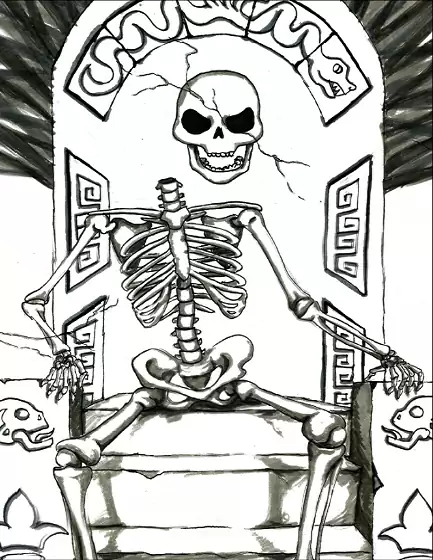
Centuries ago, the four deities worshipped by mortals – Kishar, Kotaresh, Lyth, and Asar-Segt – threatened to drown the world in a flood of saltwater to punish the living for their impiety. The oracles and witches of the realm struck a desperate bargain with the gods, however, and convinced them to spare the world. In exchange, the mortal kingdoms were bound to demonstrate their faith once every generation by sending their most courageous and adroit warriors to the Crucible, a ziggurat in the lowest valley of the land. Every quarter-century, on the first full moon of summer, an eclipse darkens the night and the sealed ziggurat opens. Many traps, tricks, and guardians lie within the Crucible to test those who enter. Few who heed the challenge of the gods survive – most find only quick death. If the races of the world are deserving of the gods’ affection, their champions will overcome the trials of the Crucible and light the Divine Brazier hidden in its uppermost chamber. If they are not, the flickering candle of civilization will be snuffed. Little of value will have been lost. Published by Defy Danger and Save Versus Death
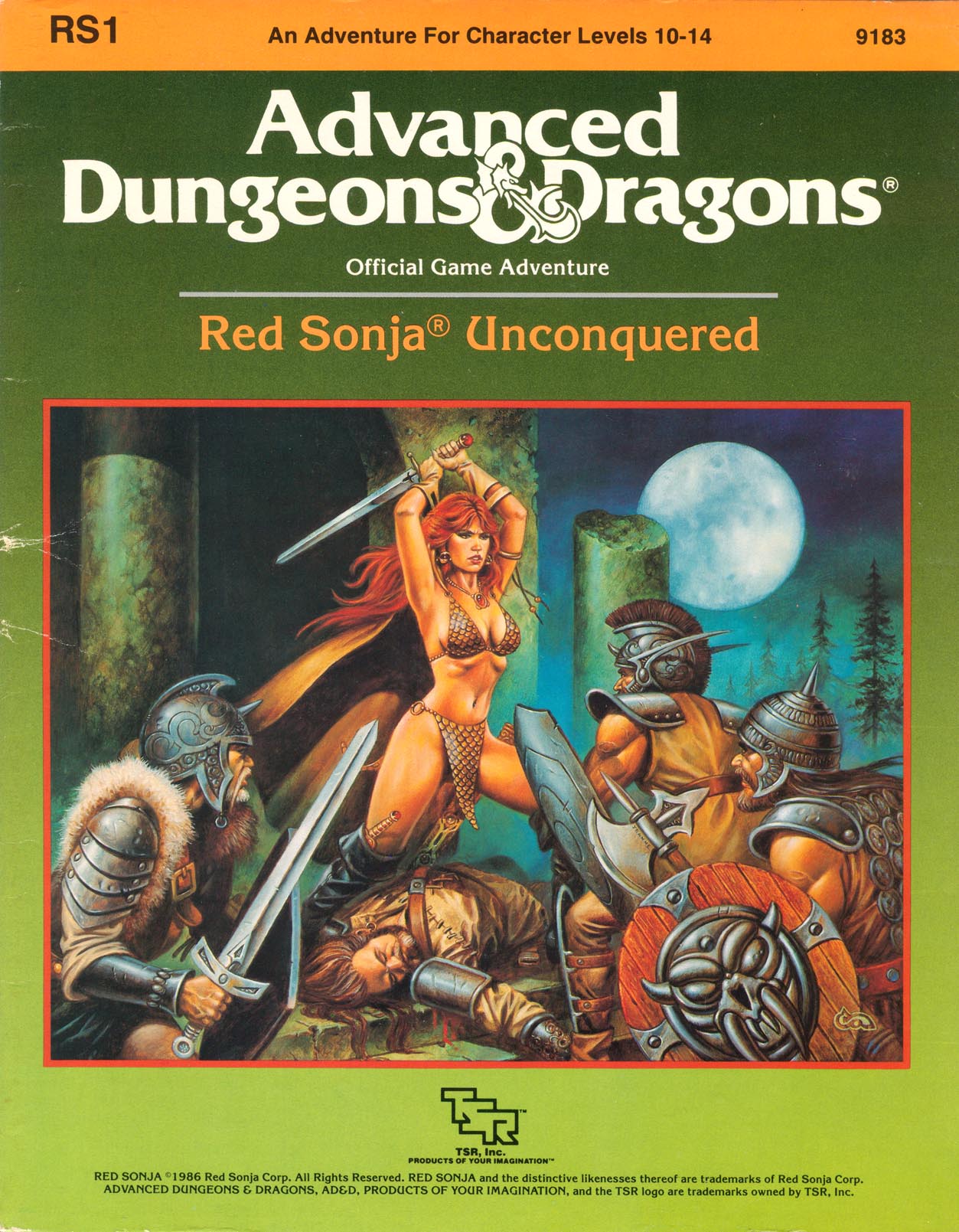
If you but have the will Sonja, you may use your strength to make the world your home. You may become a wanderer, the equal of any man or woman you meet. (The Ring of Ikribu) Red Sonja #1 Steel met steel as Sonja slashed wildly before her. Sparks flew into the air; the mercenary's sword flew to the ground. Her arms vibrated with the contact and her hands grew numb as she tightened her grip on the mighty sword. Still they came - only four in all, but with deadly intent shining deep within theiir hungry eyes. What do these men seek? Why would they rather die than run? TSR 9183