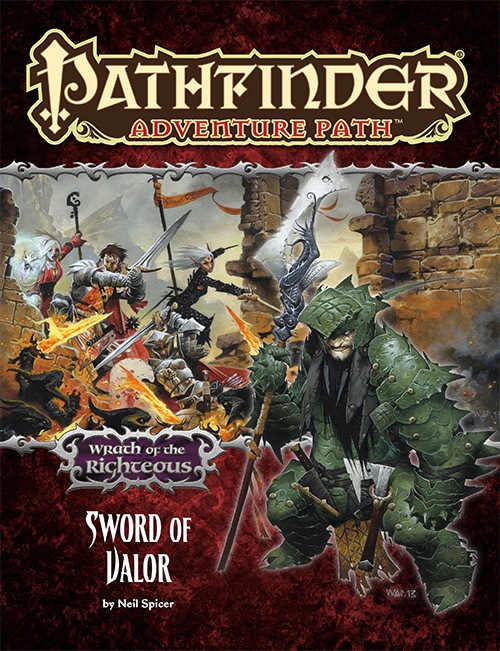
The Wrath of the Righteous Adventure Path continues with “Sword of Valor,” by RPG Superstar Neil Spicer. The PCs, now invested with righteous mythic power, are poised to become the greatest heroes of this seemingly endless war against the demons of the Worldwound… provided they can succeed at their first mission. The citadel city of Drezen was once a symbol of the First Crusade’s triumph against the Worldwound, yet when a larger horde of demons attacked, they shattered Drezen’s defenses and captured both the citadel and the crusaders’ symbol of power. Can the PCs help lead an army north to reclaim Drezen and recover this potent relic, or are they marching their comrades and followers to a gruesome demise?

Thail Donnodol, an eleven scholar, has been imprisoned for crimes he did not commit. The law is no refuge. Only by breaking into the fortress prison of Granite’s End can the player character save Thail from a lifetime of misery. There’s only one problem: Thail Donnodol does not want to be saved. At least not until he finds the Vengeance of Olindor. Part 3 of the Olindor Trilogy.
Doomguard factioneers steal an ancient relic from the church of Fharlanghan as part of an apocalyptic plot involving the Harbinger House, and a group of Clueless adventurers chase them into Sigil on their quest to recover it. Celestian's Compass is a free one-shot adventure that was released for Free RPG Day 2017.
Book 5 in the Iron Gods campaign: Somewhere deep within Silver Mount, the greatest of the Iron Gods is rising to power. But before the heroes of Numeria can oppose it, they must f irst defeat the Technic League and the Black Sovereign, for the corrupt cabal controls access to the legendary site. Will the clues harvested from an ancient android oracle and the technological wonders gathered from strange ruins across Numeria be enough for the heroes to prevail? Or will they simply become the latest upstarts to be crushed under the Technic League’s metal boot?
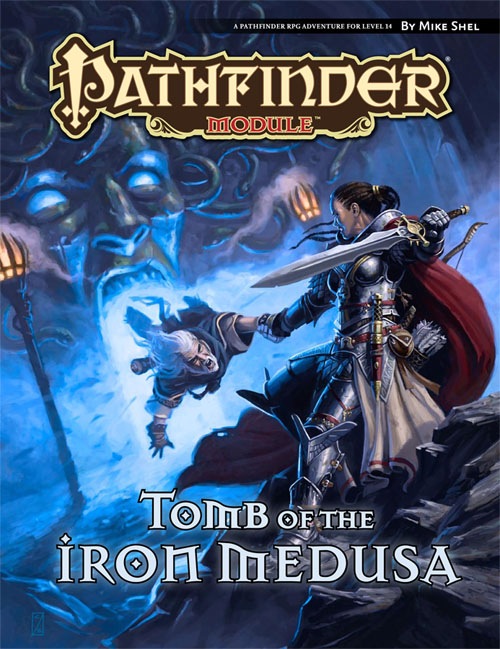
Hidden in the remote southern range of the World’s Edge Mountains lies a mysterious necropolis known in legend as the Tomb of the Iron Medusa. When the last heir of the dungeon’s long-dead noble builders hires the PCs to explore the forlorn and deadly site in search of evidence that may clear his family name, the intrepid heroes soon find themselves in over their heads. For the Tomb of the Iron Medusa does not give up its secrets lightly, and the dangerous truths that lie within its ancient, trap-laden crypts may have been hidden for very good reasons indeed.

Abridged description from DriveThruRPG.com: From award-winning RPG podcaster John Grana comes a new supplement for the Pathfinder RPG: a sprawling goblin warren and the tribe that inhabits it, fleshed out in full detail and turned into a campaign setting for goblin player characters. Within Bloodmoon Goblins is all the information a gamemaster needs to bring a goblin campaign, full of action and intrigue, to life.

In this adventure players are set first on a simple task, to solve the disappearance of the local witch before outside forces take an interest. But as the players get deeper, they will rapidly kind themselves on a quest for far more, as they range from an alchemist's lair on a crumbling tower down to a dark swamp full of mystery and danger, seeking a holy relic that might lead them to the outskirts of Hell itself. All in service of the sleepy Village Sujeira and the dusty souls within. 1452: Saving Sujeira’s Soul is an adventure set in northern Portugal on an alternate history Earth during the year 1452, in a world where history is much the same, but for the fact that the Rus are all hirsute dwarves, the hordes that poured out of central Asia were orcish (and half-orcs are mostly janissaries split among the Ottoman Empire’s demesnes), and elves are creatures of rumors and myth. Halflings live among the English and Portuguese in villages and farms, while goblins are pests best left for dead in the wilds between civilized countries. The Church arms its inquisitors with holy blessings, for witches are not mere milk-souring old women but vile devil-pacted souls, and wizards and sorcerers seek human and kine for sacrifices to fuel their darkling magics. There be dragons on the edges of the world, and ogres and sea serpents and giants, but the alchemists of this world know things beyond mortal ken and fight these horrors with science and canny concoctions. Published by Coldlight Press
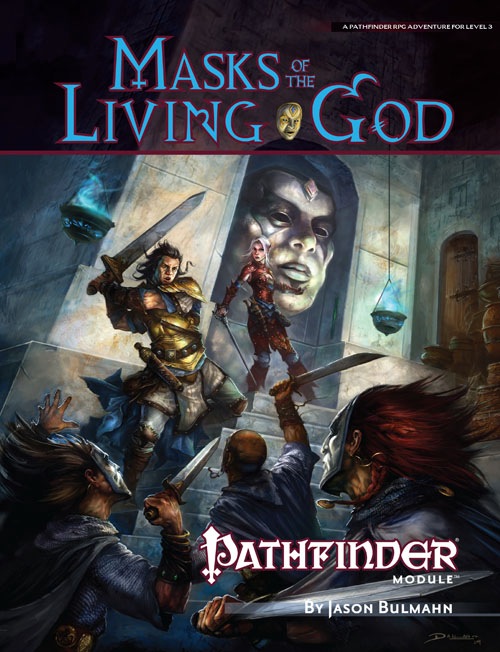
Razmir the Living God used his power to conquer an entire country; now he and his mask-wearing priests enforce peace and generosity—though some say their tools are intimidation and fear. His worshipers preach charity and self-worth, blaming rival faiths for crafting lies about the glories of the Living God. Now the cult has come to the city of Tamran, feeding the poor and promising happiness to those who serve Razmir. Yet ugly rumors persist of bribery, extortion, and strange disappearances associated with the new temple. Are these stories just gossip and lies spread by rival faiths? Or is the church of the Living God more than it seems? Part Two of the Price of Immortality trilogy.
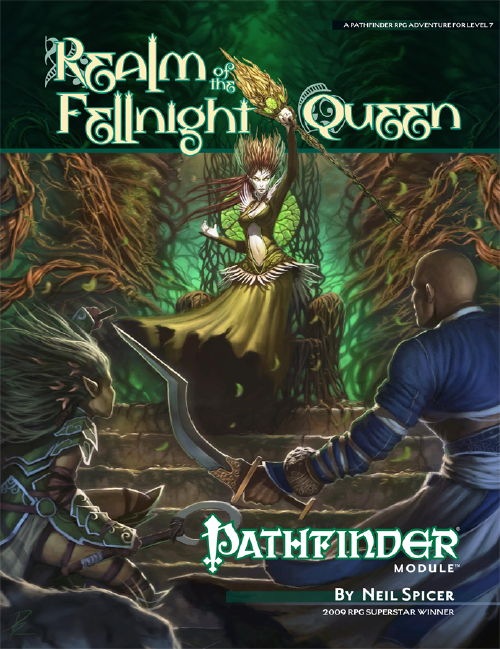
Deep in the forest, something is stirring. An evil fey sorcerer, cast out of the First World millennia ago by her own kin, has found a way to break through the ancient walls of her prison, and carries with her a vengeance too deep to be sated. For the quiet Andoren town of Bellis, busy celebrating a long-awaited marriage, it's a time for joy and laughter. Yet the forest that's always sheltered it is growing dark, and things are moving in the heart of the woods...
When strange reports of misty undead spread through Absalom, you and your fellow Pathfinders are dispatched to the half-drowned district of Puddles. Notoriously rough, the drooling addicts, flesh panderers, and quick-handed knifers of Puddles are the least of your worries. The night's tide brings with it an ancient armada of some long-forgotten war and you are the only thing between their mist-shrouded ghost fleet and Absalom's utter oblivion.
The city of Westcrown is dying. Since being stripped of its station as the capital of Cheliax, the wealth and prestige of the city has gradually slipped away, leaving the desperate people to fend for themselves in a city beset by criminals, a corrupt nobility, and a shadowy curse. Can the PCs fight back against champions of both the law and the criminal world? This volume of Pathfinder Adventure Path launches the Council of Thieves Adventure Path, and includes: - "The Bastards of Erebus," a Pathfinder RPG adventure for 1st-level characters, by Sean K Reynolds - A gazetteer of Westcrown, the shadow-haunted City of Twilight, by Steven Schend - An investigation into the lives of tieflings, along with hundreds of fiendish variations, by Amber Scott - A deadly mystery of nobility and intrigue for Pathfinder Varian Jeggare and his tiefling bodyguard Radovan in a new series of the Pathfinder's Jounal, by Dave Gross - Six terrifying new monsters by Mike Ferguson, Sean K Reynolds, and F. Wesley Schneider
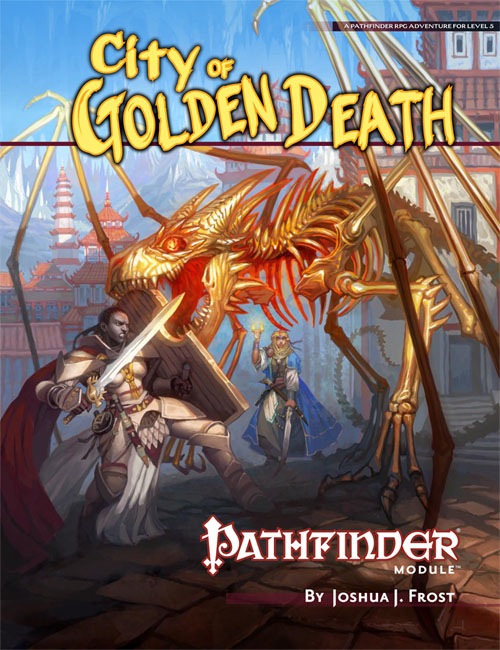
In the center of Lake Encarthan looms the dreaded Isle of Terror, accursed land of mystery and treachery. Hidden within the island's negative energy storms, the secret treasure city of the wizard-king Tar-Baphon has lain sealed for centuries. Now masked cultists have opened the golden city of Xin-Grafar to claim the wealth of the legendary city for the Living God Razmir. Can the PCs track the cultists through the poisoned swamps and blasted wastelands of the Isle of Terror to the City of Golden Death itself? And what forgotten dangers will oppose them as they struggle to prevent a dark faith from spreading across the world? Part 3 of the Price of Immortality trilogy.
The Legend of the Black Monastery Two centuries have passed since the terrible events associated with the hideous cult known as the Black Brotherhood. Only scholars and story-tellers remember now how the kingdom was nearly laid to waste and the Black Monastery rose to grandeur and fell into haunted ruins. The Brothers first appeared as an order of benevolent priests and humble monks in black robes who followed a creed of kindness to the poor and service to the kingdom. Their rules called for humility and self denial. Other religious orders had no quarrel with their theology or their behavior. Their ranks grew as many commoners and nobles were drawn to the order by its good reputation. The first headquarters for the order was a campsite, located in a forest near the edge of the realm. The Brothers said that their poverty and dedication to service allowed them no resources for more grand accommodations. Members of the Black Brotherhood built chapels in caves or constructed small temples on common land near villages. They said that these rustic shrines allowed them to be near the people they served. Services held by the Brothers at these locations attracted large numbers of common people, who supported the Black Brotherhood with alms. Within 50 years of their first appearance, the Black Brotherhood had a number of larger temples and abbeys around the kingdom. Wealthy patrons endowed them with lands and buildings in order to buy favor and further the work of the Brothers. The lands they gained were slowly expanded as the order’s influence grew. Many merchants willed part of their fortunes to the Black Brotherhood, allowing the order to expand their work even further. The Brothers became bankers, loaning money and becoming partners in trade throughout the kingdom. Within 200 years of their founding, the order was wealthy and influential, with chapters throughout the kingdom and spreading into nearby realms. With their order well-established, the Black Brotherhood received royal permission to build a grand monastery in the hill country north of the kingdom’s center. Their abbot, a cousin of the king, asked for the royal grant of a specific hilltop called the Hill of Mornay. This hill was already crowned by ancient ruins that the monks proposed to clear away. Because it was land not wanted for agriculture, the king was happy to grant the request. He even donated money to build the monastery and encouraged others to contribute. With funds from around the realm, the Brothers completed their new monastery within a decade. It was a grand, sprawling edifice built of black stone and called the Black Monastery. From the very beginning, there were some who said that the Black Brotherhood was not what it seemed. There were always hints of corruption and moral lapses among the Brothers, but no more than any other religious order. There were some who told stories of greed, gluttony and depravity among the monks, but these tales did not weaken the order’s reputation during their early years. All of that changed with the construction of the Black Monastery. Within two decades of the Black Monastery’s completion, locals began to speak of troubling events there. Sometimes, Brothers made strange demands. They began to cheat farmers of their crops. They loaned money at ruinous rates, taking the property of anyone who could not pay. They pressured or even threatened wealthy patrons, extorting money in larger and larger amounts. Everywhere, the Black Brotherhood grew stronger, prouder and more aggressive. And there was more… People began to disappear. The farmers who worked the monastery lands reported that some people who went out at night, or who went off by themselves, did not return. It started with individuals…people without influential families…but soon the terror and loss spread to even to noble households. Some said that the people who disappeared had been taken into the Black Monastery, and the place slowly gained an evil reputation. Tenant farmers began moving away from the region, seeking safety at the loss of their fields. Slowly, even the king began to sense that the night was full of new terrors. Across the kingdom, reports began to come in telling of hauntings and the depredations of monsters. Flocks of dead birds fell from clear skies, onto villages and city streets. Fish died by thousands in their streams. Citizens reported stillborn babies and monstrous births. Crops failed. Fields were full of stunted plants. Crimes of all types grew common as incidents of madness spread everywhere. Word spread that the center of these dark portents was the Black Monastery, where many said the brothers practiced necromancy and human sacrifice. It was feared that the Black Brotherhood no longer worshipped gods of light and had turned to the service of the Dark God. These terrors came to a head when the Black Brotherhood dared to threaten the king himself. Realizing his peril, the king moved to dispossess and disband the Black Brother hood. He ordered their shrines, abbeys and lands seized. He had Brothers arrested for real and imagined crimes. He also ordered investigations into the Black Monastery and the order’s highest ranking members. The Black Brotherhood did not go quietly. Conflict between the order and the crown broke into violence when the Brothers incited their followers to riot across the kingdom. There were disturbances everywhere, including several attempts to assassinate the king by blades and by dark sorcery. It became clear to everyone that the Black Brotherhood was far more than just another religious order. Once knives were drawn, the conflict grew into open war between the crown and the Brothers. The Black Brotherhood had exceeded their grasp. Their followers were crushed in the streets by mounted knights. Brothers were rounded up and arrested. Many of them were executed. Armed supporters of the Black Brotherhood, backed by arcane and divine magic, were defeated and slaughtered. The Brothers were driven back to their final hilltop fortress – the Black Monastery. They were besieged by the king’s army, trapped and waiting for the king’s forces to break in and end the war. The final assault on the Black Monastery ended in victory and disaster. The king’s army took the hilltop, driving the last of the black-robed monks into the monastery itself. The soldiers were met by more than just men. There were monsters and fiends defending the monastery. There was a terrible slaughter on both sides. In many places the dead rose up to fight again. The battle continued from afternoon into night, lit by flames and magical energy. The Black Monastery was never actually taken. The king’s forces drove the last of their foul enemies back inside the monastery gates. Battering rams and war machines were hauled up the hill to crush their way inside. But before the king’s men could take the final stronghold, the Black Brotherhood immolated themselves in magical fire. Green flames roared up from the monastery, engulfing many of the king’s men as well. As survivors watched, the Black Monastery burned away, stones, gates, towers and all. There was a lurid green flare that lit the countryside. There was a scream of torment from a thousand human voices. There was a roar of falling masonry and splitting wood. Smoke and dust obscured the hilltop. The Black Monastery collapsed in upon itself and disappeared. Only ashes drifted down where the great structure had stood. All that was left of the Black Monastery was its foundations and debris-choked dungeons cut into the stones beneath. The war was over. The Black Brotherhood was destroyed. But the Black Monastery was not gone forever. Over nearly two centuries since its destruction, the Black Monastery has returned from time to time to haunt the Hill of Mornay. Impossible as it seems, there have been at least five incidents in which witnesses have reported finding the Hill of Mornay once again crowned with black walls and slate-roofed towers. In every case, the manifestation of this revenant of the Black Monastery has been accompanied by widespread reports of madness, crime and social unrest in the kingdom. Sometimes, the monastery has appeared only for a night. The last two times, the monastery reappeared atop the hill for as long as three months…each appearance longer than the first. There are tales of adventurers daring to enter the Black Monastery. Some went to look for treasure. Others went to battle whatever evil still lived inside. There are stories of lucky and brave explorers who have survived the horrors, returning with riches from the fabled hordes of the Black Brotherhood. It is enough to drive men mad with greed – enough to lure more each time to dare to enter the Black Monastery.
From the idyllically peaceful coastal town of Sandpoint to an ancient lost city at the top of the world, Rise of the Runelords takes a party of adventurers from 1st to over 15th level and delves into the mysteries of Varisia's ancient past. Millennia ago, the powerful empire of Thassilon ruled the land, dominated by despotic runelords who maintained their power through harnessing the power of rune magic. Thought gone forever, the working of Thassilon are not so far beneath the surface and one of the runelords plans a return to power. Only the brave adventurers stand in his way. ” Burnt Offerings Five years after a tragic fire and spate of brutal murders, the people of Sandpoint eagerly anticipate the Swallowtail Festival to commemorate the consecration of the town’s new temple. At the height of the ceremony, disaster strikes! In the days that follow, a sinister shadow settles over Sandpoint. Rumors of goblin armies and wrathful monsters in forgotten ruins have set the populace on edge. As Sandpoint’s newest heroes, the PCs must deal with treachery, goblins, and the rising threat of a forgotten empire whose cruel and despotic rulers might not be as dead as history records.
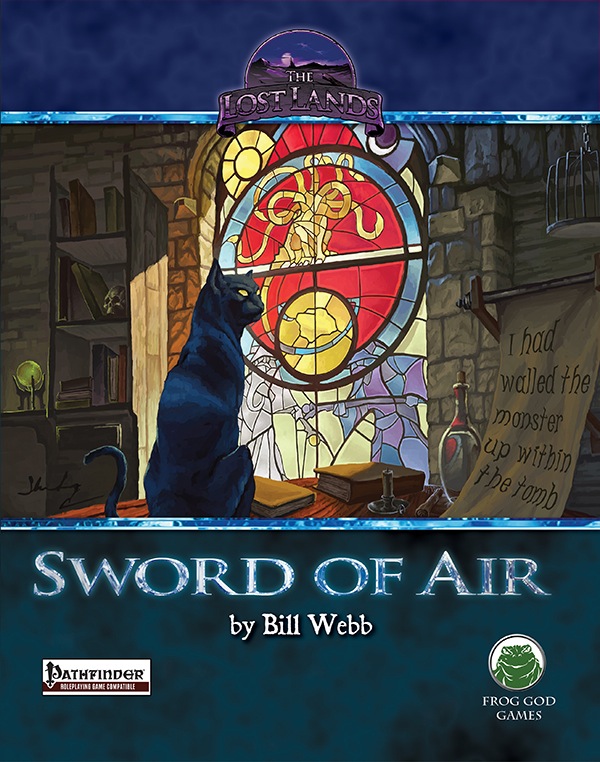
What is the Lost Lands? The Lost Lands is the home campaign world of Necromancer Game's and Frog God Game's own Bill Webb. This campaign has been continuously running since 1977. Many of the adventures published by Necromancer Games and Frog God Games are directly inspired by this campaign. They have evolved over the decades, and more material continues to flow from it as the dice keep rolling. Sages and wizards of legend speak of the Lost Lands—many of the players who have lived and died in Bill's campaign over the years now have a place in history (in the books). Frac Cher the dwarf, Flail the Great, Bannor the Paladin, Speigle the Mage, and Helman the Halfling are well known to the fans of Bill's work. This is the game world, and these are the adventures in which the players of these famous characters lived and died. Hundreds of players over the past 35 years have experienced the thrills and terrors of this world. The Sword of Air is the centerpiece of the Lost Lands. Currently, this epic tome consists of several parts: 1. The Hel’s Temple Dungeon—kind of like Tomb of Horrors on crack. This six-level, trap-and-puzzle infested dungeon formed the basis of Bill's game through his high school and college years. Clark Peterson’s very own Bannor the Paladin spent several real life months in the place, and, sadly, finished the objective. This is where the fragments of the fabled Sword of Air can be found…perhaps. 2. The Wilderness of the Lost Lands extending to the humanoid-infested Deepfells Mountains and providing detail about the nearby Wizard’s Wall. This so-called “wall” was raised by the archmages Margon and Alycthron harnessing the Spirit of the Stoneheart Mountains to raise the land itself, creating a massive escarpment to block invaders from the Haunted Steppes. These archmages are actual player characters from the early 1980s who live on in the legends of the Lost Lands. Over 70 unique encounter areas are detailed, and each one is a mini-adventure in itself. New wilderness areas may be added based on bonus goals described below! 3. The Ruined City of Tsen. Legend has it the city was destroyed by a falling meteor. This place forms an aboveground dungeon area the size of a city, with over 100 detailed encounter areas. It’s a very dark place…even at noon. 4. The Wizard’s Feud—This campaign-style adventure pits the players in a long-running series of intrigues and battles between two archmages. Which side will they take? Their actions all play into the overall quest, and could well determine which side wins. Law and Chaos are not always what they seem, and if the wrong decisions are made, the entire ordeal could fail. Remember, one of the wizards WANTS Tsathogga to win. 5. New monsters, new demons, new spells, and new rules for various aspects of play. 6. The Tower of Bells. This dungeon is the result of the workshop Bill ran at PaizoCon 2013, where the participants assisted him in building an old-school dungeon. Visit the tower and discover the secrets of the “artist” within. Beware: those entering may never come out!
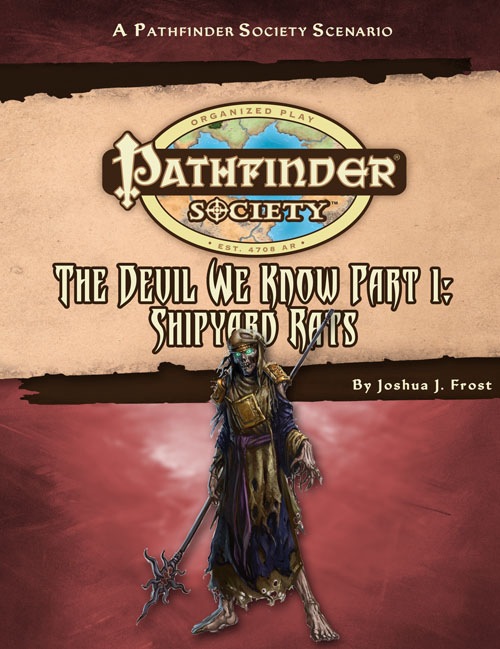
Part 1 of the "The Devil We Know" campaign arc. Shipyard Rats is a Pathfinder Society Scenario designed for 1st to 7th level characters (Tiers: 1–2, 3–4, and 6–7). When simultaneous kidnappings of Pathfinder and Aspis Consortium agents rock Cassomir's Imperial Naval Shipyards, the Society orders you to join forces with hated Aspis agents to solve the mystery. Can you work together with the enemies of the Society to uncover the source of the kidnappings, or will you perish in the shipyards of Cassomir?
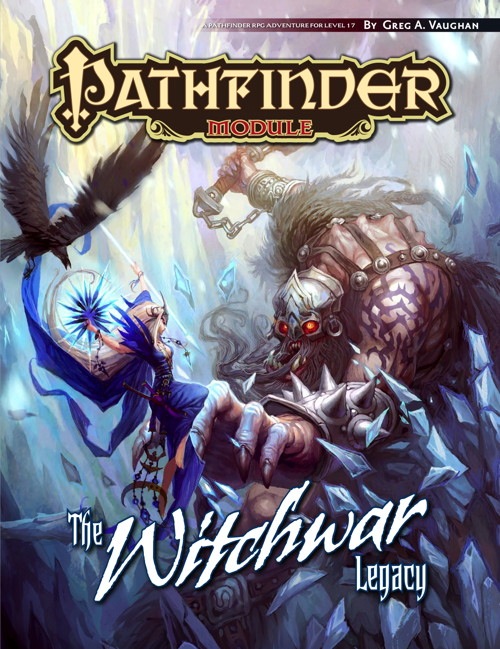
The witch queens of Irrisen must abdicate their thrones every 100 years when their mother, Baba Yaga, places a new daughter on the throne. But one queen was unwilling to relinquish her rule, and led a doomed rebellion against the Mother of Witches. Afterward, Baba Yaga entombed her wayward daughter in an icy necropolis known as the Veil of Frozen Tears, along with a powerful artifact called the Torc of Kostchtchie, hiding them both far from mortal eyes. Now, almost 500 years later, the tomb has been found, and the race is on to plunder its treasures.

A terrible plague has swept through the city of Cairdus, and despite the local clergy’s best efforts, they have been unable to control the spread of the disease. Even those who seem cured often contract the disease again. The only thing that is making any headway are the special blessings given by the powerful Baron Velstaf, but he only grants these blessings for a price that few can afford. The Star of Olindor is an adventure designed for 7th-level rogue, or other character of similar abilities. The obstacles in the adventure are set up to encourage the use of stealth and trickery, and many rely on classic rogue skills. The adventure takes place in the city of Cairdus, the details of which have been intentionally left imprecise, so that it can be easily slipped into an existing campaign, or better yet the adventure can be altered to take place in any existing city. Part 1 of the Olindor Trilogy.
Now bound to Queen Abrogail by infernal contracts, the villainous adventurers are tasked with destroying the Glorious Reclamation's headquarters in the former citadel of the Hellknight Order of the Godclaw, where they face a gold dragon ally of Iomedae herself! Only if they can survive the terrible onslaught of this fearsome foe and secure the citadel from the revolutionaries can the vile characters succeed at their quest—to perform an evil ritual, using the dragon's head to craft a legendary weapon capable of defeating the Glorious Reclamation's army of valorous knights once and for all.
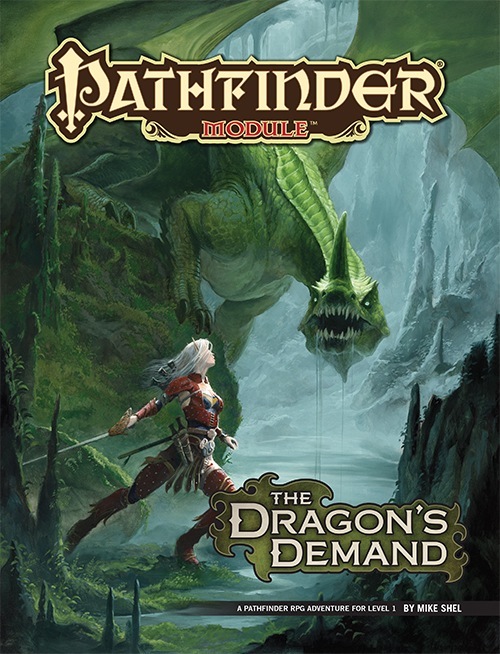
Founded by a famous dragonslayer, the small town of Belhaim has become a sleepy rural community just off the beaten path, a settlement where everyone knows everyone and strangers are the talk of the town. But when Belhaim’s peace and quiet is shattered by the sudden collapse of the last standing tower of its founder’s castle, things quickly bloom out of control. Why were there bodies of kobolds amid the rubble? What’s the sinister secret behind the strange sounds of flapping wings in the night? And what’s happened to local wizard Balthus Hunclay, who’s not answering knocks on his door? The collapsed tower had long been an eyesore to the cantankerous old man—could he have had something to do with its destruction? And what of the rumors of strange stirrings in nearby Dragonfen? Has Belhaim’s ancient draconic nemesis returned?