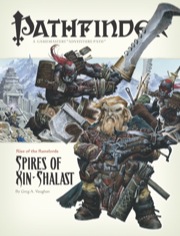
A Runelord Rises! The Rise of the Runelords Adventure Path concludes! The Runelord of Greed, Karzoug the Claimer, stirs in the legendary city of Xin-Shalast. There are more forces than an ancient evil wizard at work in this remote corner of Golarion, a place where the boundaries between reality and nightmare are unnaturally thin. Karzoug's minions have awakened as well, among them giants and dragons and devils and worse. Could there be an even deeper evil poised to emerge from the darkness at the dawn of time? Can the Rise of the Runelords be stopped?
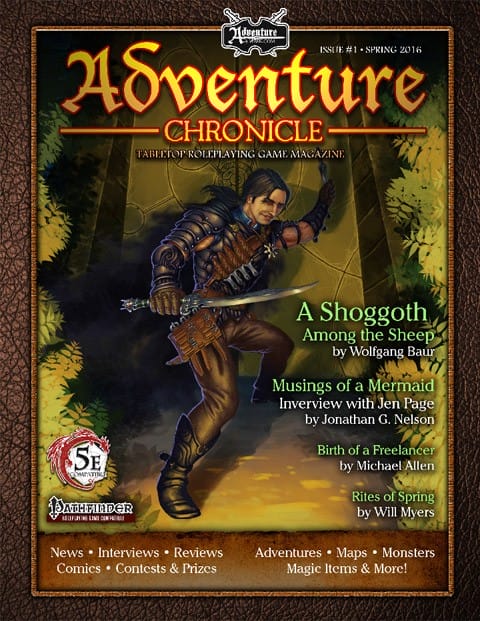
Necromancer Lintu practices undead-focused magic, avant-garde taxidermy, and is one of the most intelligent, successful, and evil people in Morsain. Outwardly helpful about undead, he's a psychotic serial killer happily "sourcing raw materials" himself.
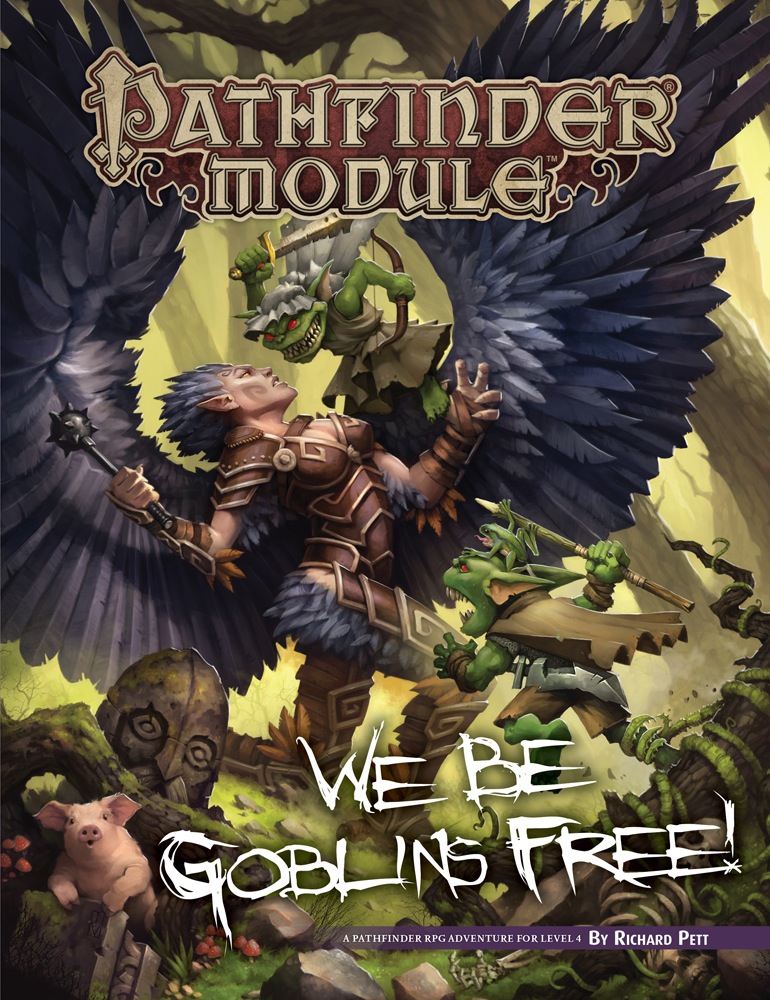
After losing chieftain after chieftain, the Birdcruncher goblin tribe finally found competent leadership in its four goblin "heroes". But it turns out leading a tribe of goblins isn't much fun, and the newest Birdcruncher chieftains are bored. In order to cure their doldrums, the chieftains have issued a new demand—find them some adventure, or else! Eager to please their great chieftains, the Birdcruncher goblins frantically try to whip up all sorts of amusements, including goblin games, feats of skill, and a grand feast. But trouble arises in the midst of the goblins' feast for their mighty leaders—the goblins who went to harvest truffles for the feast got beat up by some stinky humans! Part 3 of the We Be Goblins series.
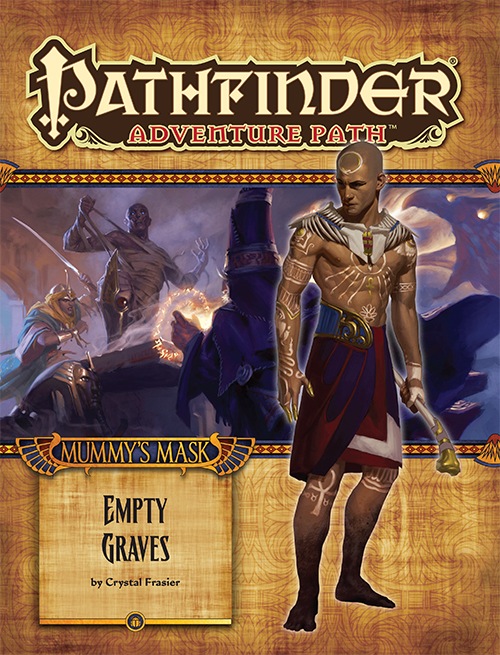
Following the opening of its necropolis, the city of Wati is overrun by hordes of the unquiet dead. The heroes must once more brave the abandoned streets and dusty tombs of Wati’s necropolis in search of the powerful artifact called the Mask of the Forgotten Pharaoh, as well as the necromancer who is using it to create the undead uprising. But mysterious masked cultists also seek the artifact so they can bring a pharaoh from the ancient past back to life. Can the heroes defeat the evil necromancer and return the deceased to their graves, or will Wati truly become a city of the dead?
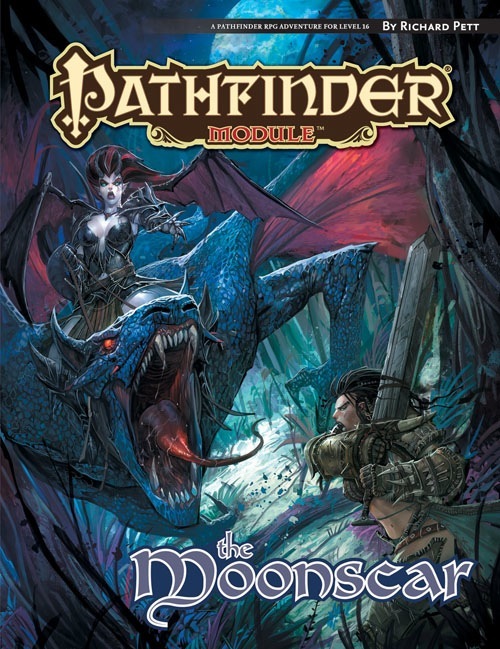
For millennia, a complex plot has brewed in a demonic jungle on the surface of the moon—a plan by the patient and sinister succubi of the Moonscar to kidnap and brainwash the people of Golarion. Now a long-dormant portal linking the moon to Golarion has returned to life, accelerating the demon queen’s designs. Only the brave PCs can venture to the surface of the moon, navigate the treacherous Abyssal jungle called the Moonscar, and delve into the depths of the Insatiable Queen’s subterranean palace of torture, seduction, and depravity.

In this adventure players are set first on a simple task, to solve the disappearance of the local witch before outside forces take an interest. But as the players get deeper, they will rapidly kind themselves on a quest for far more, as they range from an alchemist's lair on a crumbling tower down to a dark swamp full of mystery and danger, seeking a holy relic that might lead them to the outskirts of Hell itself. All in service of the sleepy Village Sujeira and the dusty souls within. 1452: Saving Sujeira’s Soul is an adventure set in northern Portugal on an alternate history Earth during the year 1452, in a world where history is much the same, but for the fact that the Rus are all hirsute dwarves, the hordes that poured out of central Asia were orcish (and half-orcs are mostly janissaries split among the Ottoman Empire’s demesnes), and elves are creatures of rumors and myth. Halflings live among the English and Portuguese in villages and farms, while goblins are pests best left for dead in the wilds between civilized countries. The Church arms its inquisitors with holy blessings, for witches are not mere milk-souring old women but vile devil-pacted souls, and wizards and sorcerers seek human and kine for sacrifices to fuel their darkling magics. There be dragons on the edges of the world, and ogres and sea serpents and giants, but the alchemists of this world know things beyond mortal ken and fight these horrors with science and canny concoctions. Published by Coldlight Press

The last of his line, Baron Paytro NeMoren has left his dark secret sealed for decades in the family's underground vault. Now, years after his death, a group of stalwart heroes has gathered according to the baron's final wishes. At last, the seal will be broken and the secrets of the vault revealed. Can all sins be forgiven? The adventure is designed to kick-off a campaign, as it provides for an interesting way to get the party together. Instead of meeting at a tavern or being recruited by the local militia, each party member starts with a key to the NeMoren's vault, a key that was handed down by a friend or given as a gift for some good deed peformed in the past. The executor of the estate has gathered together all of the key-holders so that they could claim the contents of the vault. The vault can only be opened with all of the keys in unison. The vault is protected by a number of minor traps and tricks, but it also became the final resting place for the Baron's ex-lover, Lisette, and her brothers--all three of whom had attempted to blackmail the Baron. They were buried alive and are now undead. To complicate matters, a young umber hulk made its way to the vault, leaving some crude tunnels that were later exploited by hobgoblins coming from another surface entrance. The party will need to deal with the hobgoblins, the undead, the traps, and possibly the young umber hulk. There is a side-plot of poisoned groundwater in the nearby town that the party can also resolve by clearing out the undead and properly disposing of the putrid corpses leaking into the groundwater from the vault. Produced by Fiery Dragon Productions
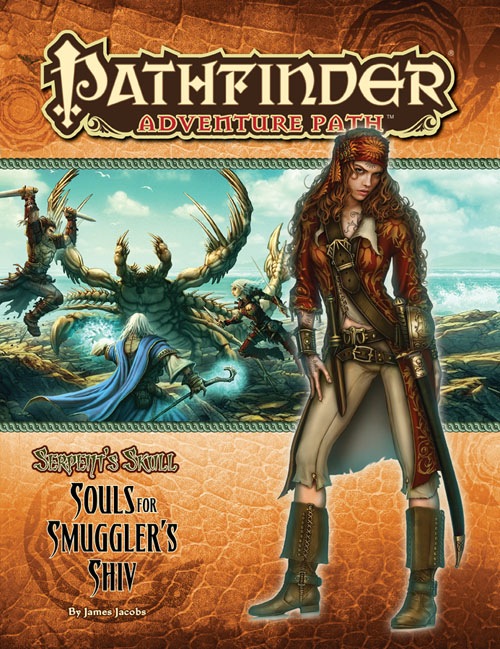
A deadly storm shipwrecks the passengers and crew of the Jenivere upon infamous Smuggler’s Shiv, an island off the coast of the jungle realm of Sargava. If they’re to have any hope of escaping the notorious pirates’ graveyard, the survivors will need to band together to outwit the isle’s strange beasts and legendary menaces. But can the PCs unite the swift-to-squabble castaways, especially when several seem to have mysterious goals of their own? And does Smuggler’s Shiv hide secrets even deadlier than its desperate denizens? This is part one of the Pathfinder Adventure Path "Serpent's Skull", but can be played as a standalone adventure that lasts approximately 10 four-five hour sessions. Great for first time dungeon masters. This is not a seafaring adventure. The PCs are shipwrecked on an island for the entire duration. This adventure ends with (hopefully) the PCs finding a way off the island (reaching level 3). It is therefore a great starting adventure with a definitive conclusion. After this module, you can continue with part two or change into your own homebrew.
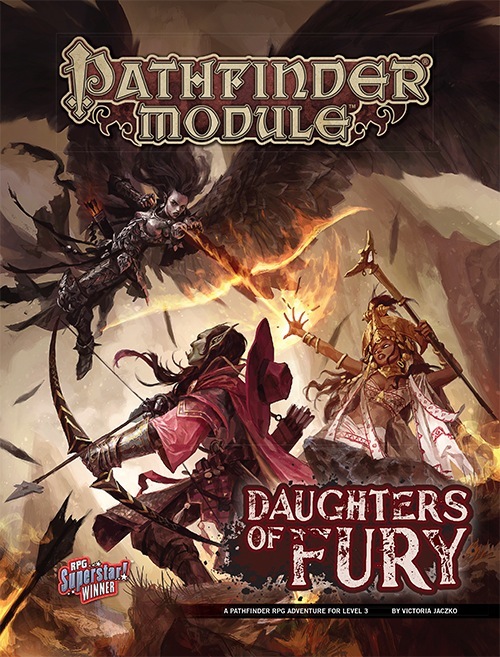
When devils slay the knightly leader of Arwyll Stead and orcs from the Hell's Fury tribe attack the town, all hope seems lost for the brave people living on Lastwall's border. The coincidental arrival of the mysterious half-orc Vegazi also raises unsettling questions, and it's up to the heroes to make sense of these events and end the Hell's Fury tribe's threat to Arwyll Stead once and for all. What does Vegazi have to do with the raiders' diabolical plot? Who will rally Arwyll Stead now that the town's icon has been cut down? And who is the mastermind orchestrating the orc tribe's alliance with devils from beyond?

Sehvain Malual is renowned for his work in necromancy, using the dark art to destroy the undead pestilence polluting the world. However every warrior must hang his proverbial sword and retiring from adventuring life, the wizened elf settled down in a nearby town purchasing a small townhouse. Here, he would finally find the peace he so craved, or such he hoped before he found The Black Lexicon. What dark intent consumes Sehvain’s time is anyone’s guess, but only the PC can uncover the Legacy of Darkness.
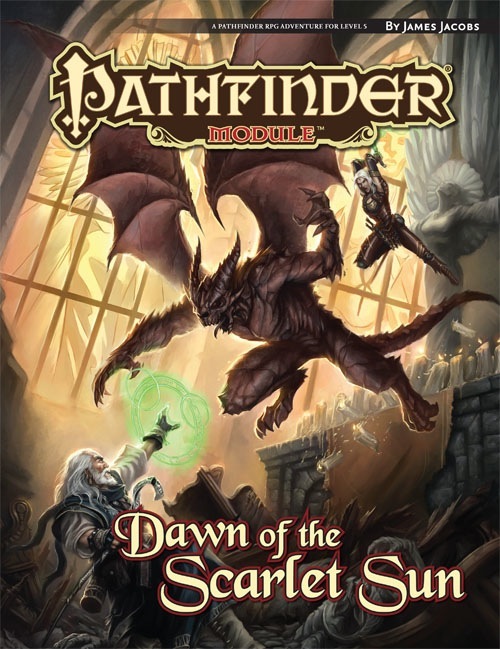
The coastal city of Magnimar is no stranger to crime, yet recently, a series of murders has sent a chill through the early morning streets. Someone—or something—is stalking and killing worshipers of Sarenrae, the goddess of the sun. The city guard is prepared to ambush the murderer, but they need help—help of the kind that adventurers are so good at providing. What is the sinister truth behind these violent acts?
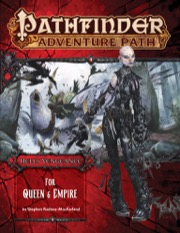
Her Infernal Majestrix Queen Abrogail II of Cheliax summons her agents to the city of Egorian to address the current crisis with the Glorious Reclamation. Upon arriving in the bustling capital, the adventurers find themselves swept up in the cutthroat politics of the imperial court. To impress the queen and secure a royal audience, the wicked characters must scour the City of Thorns to root out and eradicate a secret organization that works to free halfling slaves. But to truly earn Queen Abrogail's trust, the adventurers must perform a sacrifice for the queen to renew House Thrune's contract with Hell, and there are many—both within the court and without—who wish to see the monarch dethroned.
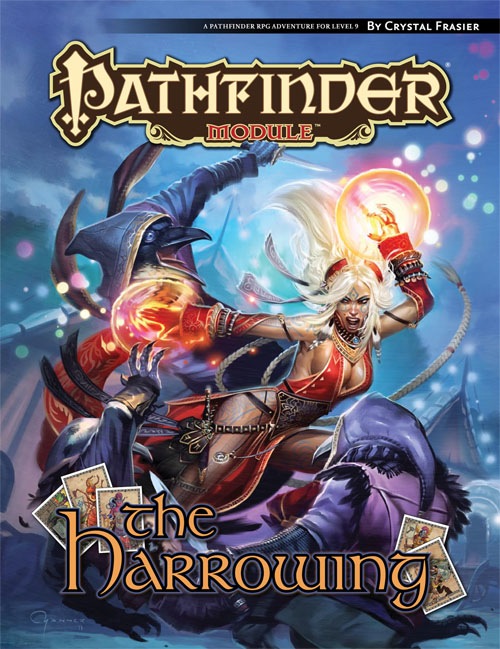
Varisian fortune-tellers from across Golarion use the mystic harrow deck to read fate and predict the future, but few have ever mastered the mysterious harrow to such a degree as Sonnorae, a long-dead bard from the Age of Darkness. Fearing her collection of stories would be lost when she died, she created a demiplane within her own harrow deck to contain them. Over time, these stories took on lives of their own, and melded with the images on the cards themselves. But not all stories have happy endings, and the storykin who inhabit the Harrowed Realm have their own motivations and plots for power or even escape into the real world.

Beneath the fetid roots of a noisome swamp linger the pathetic remnants of a once proud and noble tribe. Laid low by a powerful narcotic administered by their ambitious (but wildly paranoid) mistress, the lizardfolk of the Dark Oak are but a shadow of their former greatness. Now, in the fetid caverns below the slumbering body of a diseased treant she plots to bring bloody slaughter to the folk of the nearby villages before her followers forget their proud heritage and sink into a lethargy from which there is no escape.
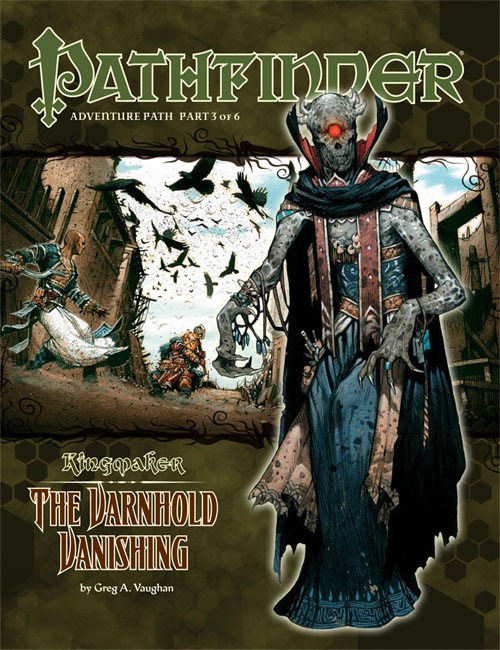
The Stolen Lands consume many wanderers—the perils of its rugged wildernesses and hidden mysteries prey upon even the wariest of travelers. Founded upon one of the most savage frontiers, the colony of Varnhold defied the many dangers of this harsh region. At least, it did until all the residents of the fledgling community completely disappeared. Now it falls to the PCs to discover what became of their eastern neighbor, a secret steeped in generations-old hatreds and the mysteries of an empire long crumbled to dust. Can they uncover the terrible secret behind this shocking disappearance before the same calamity befalls their own land?

Deep in the heart of a forsaken and filthy mire, a great amphibious foe awaits. Led by an ancient evil from the world's history, can you stop thesummoning of the Demon Frog- God? If not, you may face the Devourer of Life! Also available as 5E and Swords & Wizardry.
To banish the monstrous shadows that stalk Westcrown by night, the PCs go undercover, joining the city’s chaotic theatrical community in an elaborate plot to infiltrate the estate of the decadent lord-mayor. Yet theater life turns deadly when they become players in a spectacle no actor has ever survived. Can the PCs endure their debut performance in a city where an actor’s first big hit is often his last? This volume of Pathfinder Adventure Path continues the Council of Thieves Adventure Path, and includes: "The Sixfold Trial," a Pathfinder RPG adventure for 3rd-level characters, by Richard Pett The Six Trials of Larazod, the complete and unabridged text of that infamously deadly play, by Nicolas Logue An exploration of the faith of Iomedae the Inheritor, goddess of valor, by Sean K Reynolds Pathfinder Varian Jeggare investigating death among the aristocracy in the Pathfinder’s Journal, by Dave Gross Six new monsters by Darrin Drader, David Eitelbach, Sean K Reynolds, and F. Wesley Schneider
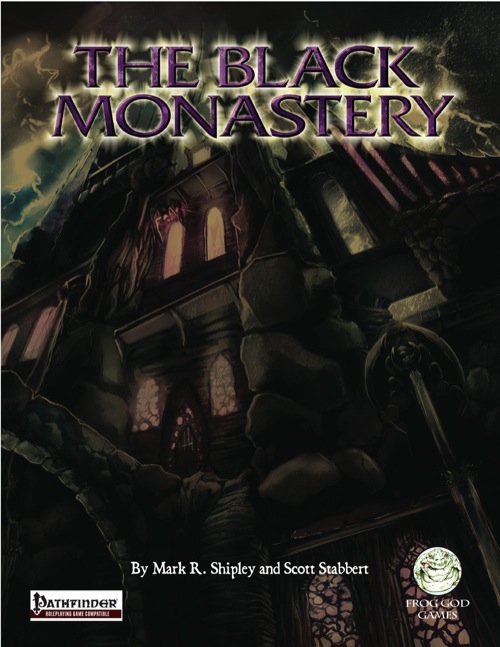
The Legend of the Black Monastery Two centuries have passed since the terrible events associated with the hideous cult known as the Black Brotherhood. Only scholars and story-tellers remember now how the kingdom was nearly laid to waste and the Black Monastery rose to grandeur and fell into haunted ruins. The Brothers first appeared as an order of benevolent priests and humble monks in black robes who followed a creed of kindness to the poor and service to the kingdom. Their rules called for humility and self denial. Other religious orders had no quarrel with their theology or their behavior. Their ranks grew as many commoners and nobles were drawn to the order by its good reputation. The first headquarters for the order was a campsite, located in a forest near the edge of the realm. The Brothers said that their poverty and dedication to service allowed them no resources for more grand accommodations. Members of the Black Brotherhood built chapels in caves or constructed small temples on common land near villages. They said that these rustic shrines allowed them to be near the people they served. Services held by the Brothers at these locations attracted large numbers of common people, who supported the Black Brotherhood with alms. Within 50 years of their first appearance, the Black Brotherhood had a number of larger temples and abbeys around the kingdom. Wealthy patrons endowed them with lands and buildings in order to buy favor and further the work of the Brothers. The lands they gained were slowly expanded as the order’s influence grew. Many merchants willed part of their fortunes to the Black Brotherhood, allowing the order to expand their work even further. The Brothers became bankers, loaning money and becoming partners in trade throughout the kingdom. Within 200 years of their founding, the order was wealthy and influential, with chapters throughout the kingdom and spreading into nearby realms. With their order well-established, the Black Brotherhood received royal permission to build a grand monastery in the hill country north of the kingdom’s center. Their abbot, a cousin of the king, asked for the royal grant of a specific hilltop called the Hill of Mornay. This hill was already crowned by ancient ruins that the monks proposed to clear away. Because it was land not wanted for agriculture, the king was happy to grant the request. He even donated money to build the monastery and encouraged others to contribute. With funds from around the realm, the Brothers completed their new monastery within a decade. It was a grand, sprawling edifice built of black stone and called the Black Monastery. From the very beginning, there were some who said that the Black Brotherhood was not what it seemed. There were always hints of corruption and moral lapses among the Brothers, but no more than any other religious order. There were some who told stories of greed, gluttony and depravity among the monks, but these tales did not weaken the order’s reputation during their early years. All of that changed with the construction of the Black Monastery. Within two decades of the Black Monastery’s completion, locals began to speak of troubling events there. Sometimes, Brothers made strange demands. They began to cheat farmers of their crops. They loaned money at ruinous rates, taking the property of anyone who could not pay. They pressured or even threatened wealthy patrons, extorting money in larger and larger amounts. Everywhere, the Black Brotherhood grew stronger, prouder and more aggressive. And there was more… People began to disappear. The farmers who worked the monastery lands reported that some people who went out at night, or who went off by themselves, did not return. It started with individuals…people without influential families…but soon the terror and loss spread to even to noble households. Some said that the people who disappeared had been taken into the Black Monastery, and the place slowly gained an evil reputation. Tenant farmers began moving away from the region, seeking safety at the loss of their fields. Slowly, even the king began to sense that the night was full of new terrors. Across the kingdom, reports began to come in telling of hauntings and the depredations of monsters. Flocks of dead birds fell from clear skies, onto villages and city streets. Fish died by thousands in their streams. Citizens reported stillborn babies and monstrous births. Crops failed. Fields were full of stunted plants. Crimes of all types grew common as incidents of madness spread everywhere. Word spread that the center of these dark portents was the Black Monastery, where many said the brothers practiced necromancy and human sacrifice. It was feared that the Black Brotherhood no longer worshipped gods of light and had turned to the service of the Dark God. These terrors came to a head when the Black Brotherhood dared to threaten the king himself. Realizing his peril, the king moved to dispossess and disband the Black Brother hood. He ordered their shrines, abbeys and lands seized. He had Brothers arrested for real and imagined crimes. He also ordered investigations into the Black Monastery and the order’s highest ranking members. The Black Brotherhood did not go quietly. Conflict between the order and the crown broke into violence when the Brothers incited their followers to riot across the kingdom. There were disturbances everywhere, including several attempts to assassinate the king by blades and by dark sorcery. It became clear to everyone that the Black Brotherhood was far more than just another religious order. Once knives were drawn, the conflict grew into open war between the crown and the Brothers. The Black Brotherhood had exceeded their grasp. Their followers were crushed in the streets by mounted knights. Brothers were rounded up and arrested. Many of them were executed. Armed supporters of the Black Brotherhood, backed by arcane and divine magic, were defeated and slaughtered. The Brothers were driven back to their final hilltop fortress – the Black Monastery. They were besieged by the king’s army, trapped and waiting for the king’s forces to break in and end the war. The final assault on the Black Monastery ended in victory and disaster. The king’s army took the hilltop, driving the last of the black-robed monks into the monastery itself. The soldiers were met by more than just men. There were monsters and fiends defending the monastery. There was a terrible slaughter on both sides. In many places the dead rose up to fight again. The battle continued from afternoon into night, lit by flames and magical energy. The Black Monastery was never actually taken. The king’s forces drove the last of their foul enemies back inside the monastery gates. Battering rams and war machines were hauled up the hill to crush their way inside. But before the king’s men could take the final stronghold, the Black Brotherhood immolated themselves in magical fire. Green flames roared up from the monastery, engulfing many of the king’s men as well. As survivors watched, the Black Monastery burned away, stones, gates, towers and all. There was a lurid green flare that lit the countryside. There was a scream of torment from a thousand human voices. There was a roar of falling masonry and splitting wood. Smoke and dust obscured the hilltop. The Black Monastery collapsed in upon itself and disappeared. Only ashes drifted down where the great structure had stood. All that was left of the Black Monastery was its foundations and debris-choked dungeons cut into the stones beneath. The war was over. The Black Brotherhood was destroyed. But the Black Monastery was not gone forever. Over nearly two centuries since its destruction, the Black Monastery has returned from time to time to haunt the Hill of Mornay. Impossible as it seems, there have been at least five incidents in which witnesses have reported finding the Hill of Mornay once again crowned with black walls and slate-roofed towers. In every case, the manifestation of this revenant of the Black Monastery has been accompanied by widespread reports of madness, crime and social unrest in the kingdom. Sometimes, the monastery has appeared only for a night. The last two times, the monastery reappeared atop the hill for as long as three months…each appearance longer than the first. There are tales of adventurers daring to enter the Black Monastery. Some went to look for treasure. Others went to battle whatever evil still lived inside. There are stories of lucky and brave explorers who have survived the horrors, returning with riches from the fabled hordes of the Black Brotherhood. It is enough to drive men mad with greed – enough to lure more each time to dare to enter the Black Monastery.

Rules for playing any level with any number of players without a GM! Have you and your friends ever sat around the gaming table wanting an exciting, perilous dungeon adventure but no one wanted to be the Gamemaster? Do you find yourself with little time to read through lengthy adventure modules and memorize them? Do you want to get down into the dungeon as quickly as possible and start killing monsters and finding treasure? Then look no farther than “Unbound Adventures”! In this rules supplement, players will find the information necessary for using the 3.5 d20 core rules without a Gamemaster. Players will form a party, find an adventure, travel to the dungeon (which will be generated for them as they explore) and fight the monsters they find there.
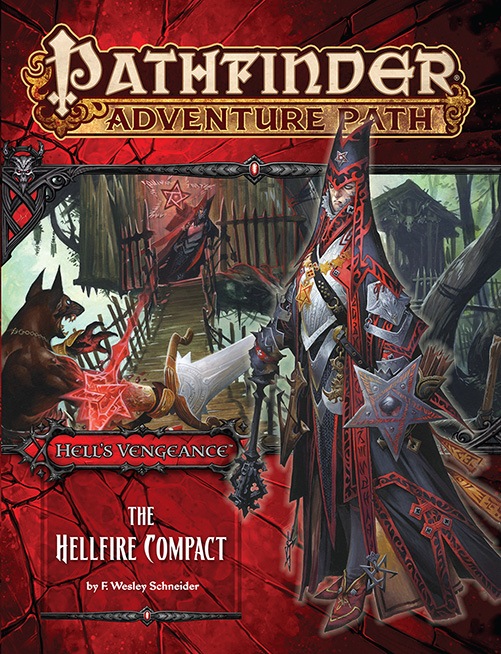
The Hell's Vengeance Adventure Path begins with "The Hellfire Compact," an exciting new adventure in which the players take the roles of evil characters in the diabolical empire of Cheliax! A paladin of Iomedae and knight-errant of the Glorious Reclamation comes to the town of Longacre, inspiring the citizens to join the uprising against the Thrice-Damned House of Thrune. First as amoral mercenaries, then as retainers of the wicked archbaron of Longacre, the evil adventurers must move quickly to put down the insurgency and keep the town from falling to the knight's rebellion.