Half-orc proprietress, Sielu Kaitsija, a night hag, lost a bet with a glabrezu and guards his "extremely valuable bottles" as forfeit. She must also curb her natural instinct for slaughter. But that doesn't mean her dingy bar is a safe place to visit

60 years ago, a wizard's tower was encased in a magical glacier. Now a crack has appeared, exposing the tower for adventures. Inside, a magic artifact turns any who did in the tower to undead, including the PCs.

Far from the nearest town, hidden deep in the forest, lies a marshy, boggy valley. Woodsmen and hunters shun the place—kept away by rumours of a terrible beast lairing within and of a ghost haunting the valley’s boggy mere. But, as well as great danger, treasures magical and mundane may yet lie unclaimed in the valley for three unexplored tombs built by ancient hands, stand amid the mud and reeds. Dare you explore the Shunned Valley of the Three Tombs?

The Bleeding Hollow was written as a tribute to the golden era of adventures. Danger lurks around every turn, and a great over-arching storyline ties everything together. There is much to discover and learn, and solving the woes of the adventure is entirely up to the players. They will choose how to deal with the myriad challenges put forth, and will probably run down a red herring or two. They might choose a very dangerous path unknowingly and pay the consequences fortheir actions. That is intended. Let the story lead your party, and your players lead the game. You won’t regret it. Published by Total Party Kill Games
The sleepy town of Karpad in shadow-haunted Nidal has long been overseen by the Boroi family, and until a few weeks ago, the citizens under Baron Stepan Boroi's rule have lived uneventful lives of relative peace. Recently, however, the outbreak of a virulent and fatal disease and a number of mysterious disappearances have left the people of Karpad paranoid and fearful. Even Baron Stepan has been acting strangely, and now the tenuous balance of racial tensions between Karpad's human and fetchling populations stands on the verge of collapsing into total anarchy.
Her Infernal Majestrix Queen Abrogail II of Cheliax summons her agents to the city of Egorian to address the current crisis with the Glorious Reclamation. Upon arriving in the bustling capital, the adventurers find themselves swept up in the cutthroat politics of the imperial court. To impress the queen and secure a royal audience, the wicked characters must scour the City of Thorns to root out and eradicate a secret organization that works to free halfling slaves. But to truly earn Queen Abrogail's trust, the adventurers must perform a sacrifice for the queen to renew House Thrune's contract with Hell, and there are many—both within the court and without—who wish to see the monarch dethroned.
In the town of Gafolweed, the market is in disarray: toppled barrows and collapsed tents spill their contents onto the muddy ground. Merchants and locals flee the scene as you arrive. In the midst of the destruction stands a muscular, green-skinned humanoid—an orc! Three bodies lie near his feet, the victims of his bloody axe. He turns to you, a vivid red tattoo of a bleeding eye prominent on his brow. The orcs are gathering in numbers unseen in many generations and make war upon the people of the Borderlands. The cause of this deadly conflict is entwined with the history of the unholy mark that all the orcs now bear. Will your fellowship of budding heroes be able to quell the Wrath of the Orc God?

Deep in the Osirian desert stands the blank-faced monument known as the Sightless Sphinx. In search of the stolen mummy of Chisisek, the architect of the flying tomb of the Sky Pharaoh Hakotep I, the heroes track the cult of the Forgotten Pharaoh to its secret headquarters inside the sphinx. There they must face monstrous mercenaries and servants of the demon lord Areshkagal before finally confronting the masked cultists and their leader, the Forgotten Pharaoh, who has been possessed by a fragment of Hakotep’s soul. This volume of Pathfinder Adventure Path continues the Mummy’s Mask Adventure Path and includes: - "Secrets of the Sphinx,” a Pathfinder adventure for 10th-level characters, by Amber E. Scott. - An exploration of the sinister world of curses, by Russ Taylor. - Two exciting additional encounters in Osirion’s wastes, by Greg A. Vaughan. - Reptilian rage and unexpected rescue in the Pathfinder’s Journal, by Amber E. Scott. - Five new monsters to challenge player characters, by Michael Kortes, David Schwartz, and Larry Wilhelm.
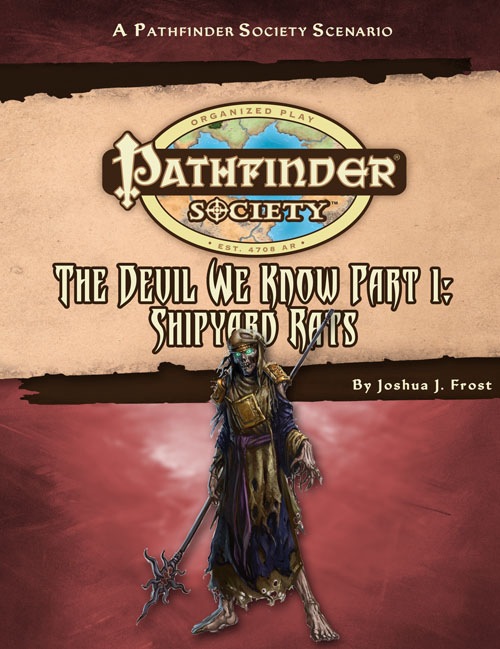
Part 1 of the "The Devil We Know" campaign arc. Shipyard Rats is a Pathfinder Society Scenario designed for 1st to 7th level characters (Tiers: 1–2, 3–4, and 6–7). When simultaneous kidnappings of Pathfinder and Aspis Consortium agents rock Cassomir's Imperial Naval Shipyards, the Society orders you to join forces with hated Aspis agents to solve the mystery. Can you work together with the enemies of the Society to uncover the source of the kidnappings, or will you perish in the shipyards of Cassomir?

To learn more about the ancient Pharaoh Hakotep I and the secretive cult that wants to revive him, the heroes travel to the city of Tephu to explore the vast archives in its Great Library. This is no small task, as they must contend with those who wish such knowledge to remain forgotten. With the clues they discover, the heroes venture deep into Osirion’s uncharted deserts in search of the tomb of Hakotep’s master pyramid-builder. There they face not only dangerous denizens of the desert, but the cult of the Forgotten Pharaoh—cultists who will stop at nothing to ensure their god-king remains undisturbed. This volume of Pathfinder Adventure Path continues the Mummy’s Mask Adventure Path and includes: - “Shifting Sands,” a Pathfinder RPG adventure for 7th-level characters, by Richard Pett. - A gazetteer of the city of Tephu, the City of the Reed People, by Richard Pett. - A study of the rituals of mummification, by Russ Taylor. - Ancient secrets and deadly kidnappers in the Pathfinder’s Journal, by Amber E. Scott. - Five new monsters, by Benjamin Bruck, Adam Daigle, Thurston Hillman, Michael McCarthy, and Patrick Renie.
Men always seek the blood of monsters. Some spill it to avenge their massacred families. Others swim through an ocean of gore to find treasures worth the envy of kings. A few know blood can be a priceless treasure in and of itself. Alchemy has long used the lifeblood of monstrosities as arcane fuel, and of all the legendary beasts, the blood of the gorgon holds the most secrets. Few know the blood's darkest lore, its ability to draw out the monster within every soul. Those who drink gorgon's blood are forever changed, and the darkest horrors of their mind unleashed. The heroes hunt a deadly murderer who stalks the streets of the Free City of Zobeck after nightfall, and cross blades with a guild of monsters who rule the city from below. Lucky heroes might risk no more than their lives. Unlucky heroes must wager their souls in a game where monsters and men dance close enough to share their blood and their fate.

In this adventure players are set first on a simple task, to solve the disappearance of the local witch before outside forces take an interest. But as the players get deeper, they will rapidly kind themselves on a quest for far more, as they range from an alchemist's lair on a crumbling tower down to a dark swamp full of mystery and danger, seeking a holy relic that might lead them to the outskirts of Hell itself. All in service of the sleepy Village Sujeira and the dusty souls within. 1452: Saving Sujeira’s Soul is an adventure set in northern Portugal on an alternate history Earth during the year 1452, in a world where history is much the same, but for the fact that the Rus are all hirsute dwarves, the hordes that poured out of central Asia were orcish (and half-orcs are mostly janissaries split among the Ottoman Empire’s demesnes), and elves are creatures of rumors and myth. Halflings live among the English and Portuguese in villages and farms, while goblins are pests best left for dead in the wilds between civilized countries. The Church arms its inquisitors with holy blessings, for witches are not mere milk-souring old women but vile devil-pacted souls, and wizards and sorcerers seek human and kine for sacrifices to fuel their darkling magics. There be dragons on the edges of the world, and ogres and sea serpents and giants, but the alchemists of this world know things beyond mortal ken and fight these horrors with science and canny concoctions. Published by Coldlight Press
The Lonely Coast’s most remote village, Oakhurst broods under the dark boughs of the Tangled Woods. Rumours of incest, murder and vile rites during the black of night surround its insular citizens. It is a place most wise people avoid as the very air seems inhospitable to strangers. Yet in the rumours is a grain of truth, for something dark does indeed stir in the shadow haunted trees and hunched homes of Oakhurst. An ancient evil, hungry with the thirst for blood, awakens from its eons long sleep. As disappearances mount and the Lonely Coast can no longer turn a blind eye to the blight that is Oakhurst, heroes are called upon to investigate the foul rumours and mysteries that plague the village. As the search for the truth intensifies, they may find themselves the next victims of a rising, bloodthirsty evil. Can they survive Against the Cult of the Bat God? Although designed for The Lonely Coast, a free mini-campaign setting available from Raging Swan Press, Against the Cult of the Bat God is simple to insert into almost any GM's home campaign.
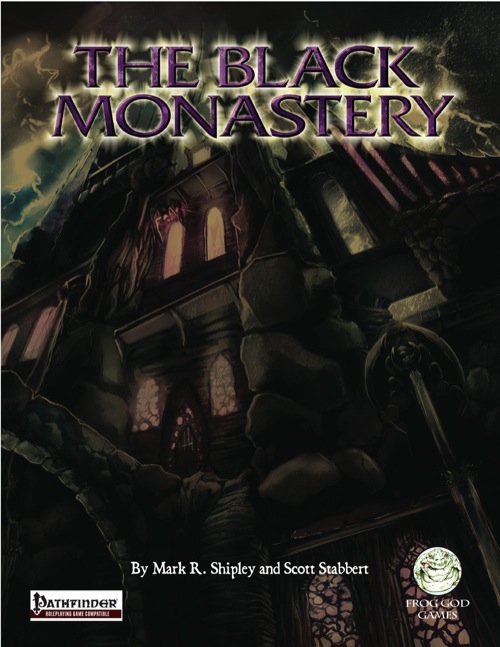
The Legend of the Black Monastery Two centuries have passed since the terrible events associated with the hideous cult known as the Black Brotherhood. Only scholars and story-tellers remember now how the kingdom was nearly laid to waste and the Black Monastery rose to grandeur and fell into haunted ruins. The Brothers first appeared as an order of benevolent priests and humble monks in black robes who followed a creed of kindness to the poor and service to the kingdom. Their rules called for humility and self denial. Other religious orders had no quarrel with their theology or their behavior. Their ranks grew as many commoners and nobles were drawn to the order by its good reputation. The first headquarters for the order was a campsite, located in a forest near the edge of the realm. The Brothers said that their poverty and dedication to service allowed them no resources for more grand accommodations. Members of the Black Brotherhood built chapels in caves or constructed small temples on common land near villages. They said that these rustic shrines allowed them to be near the people they served. Services held by the Brothers at these locations attracted large numbers of common people, who supported the Black Brotherhood with alms. Within 50 years of their first appearance, the Black Brotherhood had a number of larger temples and abbeys around the kingdom. Wealthy patrons endowed them with lands and buildings in order to buy favor and further the work of the Brothers. The lands they gained were slowly expanded as the order’s influence grew. Many merchants willed part of their fortunes to the Black Brotherhood, allowing the order to expand their work even further. The Brothers became bankers, loaning money and becoming partners in trade throughout the kingdom. Within 200 years of their founding, the order was wealthy and influential, with chapters throughout the kingdom and spreading into nearby realms. With their order well-established, the Black Brotherhood received royal permission to build a grand monastery in the hill country north of the kingdom’s center. Their abbot, a cousin of the king, asked for the royal grant of a specific hilltop called the Hill of Mornay. This hill was already crowned by ancient ruins that the monks proposed to clear away. Because it was land not wanted for agriculture, the king was happy to grant the request. He even donated money to build the monastery and encouraged others to contribute. With funds from around the realm, the Brothers completed their new monastery within a decade. It was a grand, sprawling edifice built of black stone and called the Black Monastery. From the very beginning, there were some who said that the Black Brotherhood was not what it seemed. There were always hints of corruption and moral lapses among the Brothers, but no more than any other religious order. There were some who told stories of greed, gluttony and depravity among the monks, but these tales did not weaken the order’s reputation during their early years. All of that changed with the construction of the Black Monastery. Within two decades of the Black Monastery’s completion, locals began to speak of troubling events there. Sometimes, Brothers made strange demands. They began to cheat farmers of their crops. They loaned money at ruinous rates, taking the property of anyone who could not pay. They pressured or even threatened wealthy patrons, extorting money in larger and larger amounts. Everywhere, the Black Brotherhood grew stronger, prouder and more aggressive. And there was more… People began to disappear. The farmers who worked the monastery lands reported that some people who went out at night, or who went off by themselves, did not return. It started with individuals…people without influential families…but soon the terror and loss spread to even to noble households. Some said that the people who disappeared had been taken into the Black Monastery, and the place slowly gained an evil reputation. Tenant farmers began moving away from the region, seeking safety at the loss of their fields. Slowly, even the king began to sense that the night was full of new terrors. Across the kingdom, reports began to come in telling of hauntings and the depredations of monsters. Flocks of dead birds fell from clear skies, onto villages and city streets. Fish died by thousands in their streams. Citizens reported stillborn babies and monstrous births. Crops failed. Fields were full of stunted plants. Crimes of all types grew common as incidents of madness spread everywhere. Word spread that the center of these dark portents was the Black Monastery, where many said the brothers practiced necromancy and human sacrifice. It was feared that the Black Brotherhood no longer worshipped gods of light and had turned to the service of the Dark God. These terrors came to a head when the Black Brotherhood dared to threaten the king himself. Realizing his peril, the king moved to dispossess and disband the Black Brother hood. He ordered their shrines, abbeys and lands seized. He had Brothers arrested for real and imagined crimes. He also ordered investigations into the Black Monastery and the order’s highest ranking members. The Black Brotherhood did not go quietly. Conflict between the order and the crown broke into violence when the Brothers incited their followers to riot across the kingdom. There were disturbances everywhere, including several attempts to assassinate the king by blades and by dark sorcery. It became clear to everyone that the Black Brotherhood was far more than just another religious order. Once knives were drawn, the conflict grew into open war between the crown and the Brothers. The Black Brotherhood had exceeded their grasp. Their followers were crushed in the streets by mounted knights. Brothers were rounded up and arrested. Many of them were executed. Armed supporters of the Black Brotherhood, backed by arcane and divine magic, were defeated and slaughtered. The Brothers were driven back to their final hilltop fortress – the Black Monastery. They were besieged by the king’s army, trapped and waiting for the king’s forces to break in and end the war. The final assault on the Black Monastery ended in victory and disaster. The king’s army took the hilltop, driving the last of the black-robed monks into the monastery itself. The soldiers were met by more than just men. There were monsters and fiends defending the monastery. There was a terrible slaughter on both sides. In many places the dead rose up to fight again. The battle continued from afternoon into night, lit by flames and magical energy. The Black Monastery was never actually taken. The king’s forces drove the last of their foul enemies back inside the monastery gates. Battering rams and war machines were hauled up the hill to crush their way inside. But before the king’s men could take the final stronghold, the Black Brotherhood immolated themselves in magical fire. Green flames roared up from the monastery, engulfing many of the king’s men as well. As survivors watched, the Black Monastery burned away, stones, gates, towers and all. There was a lurid green flare that lit the countryside. There was a scream of torment from a thousand human voices. There was a roar of falling masonry and splitting wood. Smoke and dust obscured the hilltop. The Black Monastery collapsed in upon itself and disappeared. Only ashes drifted down where the great structure had stood. All that was left of the Black Monastery was its foundations and debris-choked dungeons cut into the stones beneath. The war was over. The Black Brotherhood was destroyed. But the Black Monastery was not gone forever. Over nearly two centuries since its destruction, the Black Monastery has returned from time to time to haunt the Hill of Mornay. Impossible as it seems, there have been at least five incidents in which witnesses have reported finding the Hill of Mornay once again crowned with black walls and slate-roofed towers. In every case, the manifestation of this revenant of the Black Monastery has been accompanied by widespread reports of madness, crime and social unrest in the kingdom. Sometimes, the monastery has appeared only for a night. The last two times, the monastery reappeared atop the hill for as long as three months…each appearance longer than the first. There are tales of adventurers daring to enter the Black Monastery. Some went to look for treasure. Others went to battle whatever evil still lived inside. There are stories of lucky and brave explorers who have survived the horrors, returning with riches from the fabled hordes of the Black Brotherhood. It is enough to drive men mad with greed – enough to lure more each time to dare to enter the Black Monastery.
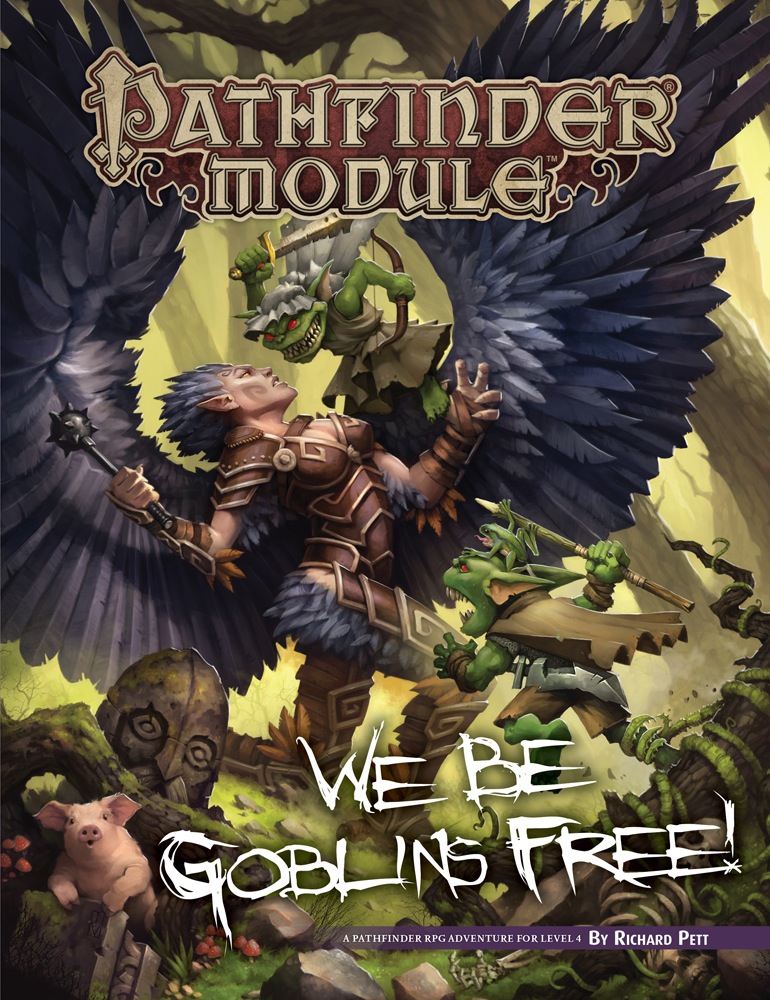
After losing chieftain after chieftain, the Birdcruncher goblin tribe finally found competent leadership in its four goblin "heroes". But it turns out leading a tribe of goblins isn't much fun, and the newest Birdcruncher chieftains are bored. In order to cure their doldrums, the chieftains have issued a new demand—find them some adventure, or else! Eager to please their great chieftains, the Birdcruncher goblins frantically try to whip up all sorts of amusements, including goblin games, feats of skill, and a grand feast. But trouble arises in the midst of the goblins' feast for their mighty leaders—the goblins who went to harvest truffles for the feast got beat up by some stinky humans! Part 3 of the We Be Goblins series.
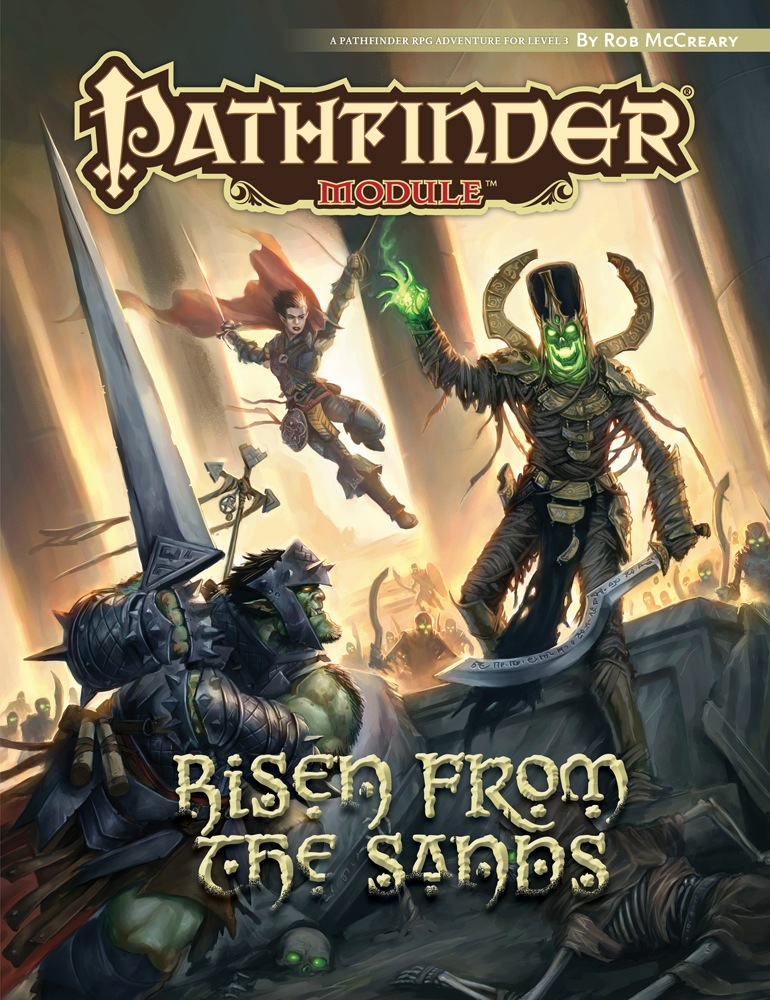
The deserts of Osirion—land of pharaohs and ancient tombs—hide not just untold wonders, but also unspeakable dangers. When the vast sand dunes part to reveal the ancient pyramid of the legendary Pharaoh of Sphinxes, glory seekers from across many nations race toward it, each fighting to be the first to claim its wonders. But the storied pharaoh doesn't rest quietly within this monument, and his tomb was designed to slaughter any who would dare trespass.

The Amulet of a Demon Prince In a few days, the rising blood moon will reveal the resting-place of the soul amulet of a forgotten demon prince. A dark lord seeks the amulet, and if he finds it ultimate power is within his grasp. Someone must stop him and his diabolical scheme before evil is unleashed! But for the heroes to beat the dark lord to his prize, they must travel through time and conquer demonic foes! A Battle Throughout Time Chaos Rising is a classic dungeon exploration adventure by Jim Collura, it details an ancient and abandoned dwarven citadel where the demon's amulet is hidden and provides unique encounters allowing the players to travel back in time to shape the very future itself! Chaos Rising supports monsters found in the Tome of Horrors. Also available for S&W and 5e.
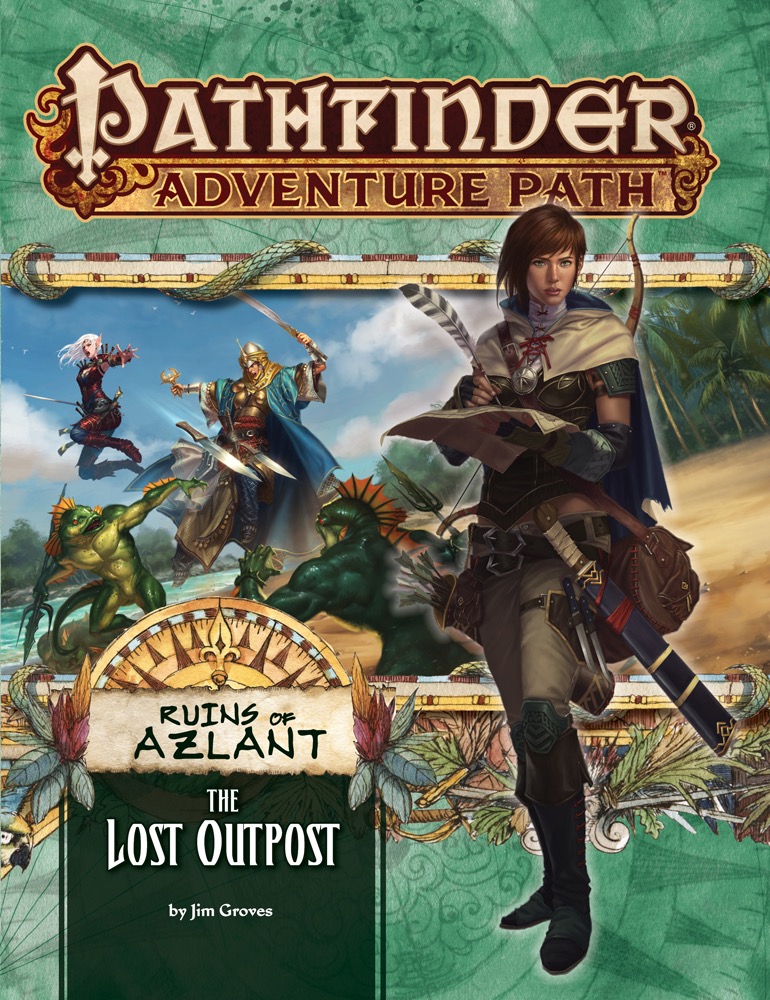
Trouble in Paradise The Ruins of Azlant Adventure Path begins with the adventurers standing on the deck of a ship ready to make landfall at their new home. However, dread settles in as they notice that the colony is empty and abandoned. Tasked with uncovering the whereabouts of the prior group of colonists, the adventurers go ashore and explore the deserted settlement. Uncovering strange evidence leads the adventurers across the island, where they encounter two survivors who can give them clues as to the fate of the rest of the first wave of settlers. Can the adventurers survive long enough to discover what truly befell the fledgling colony?

Having won the Free Captains’ Regatta, the adventurers must now claim their prize—the uninhabited Island of Empty Eyes. Yet exploring strange ruins and fighting the isle’s monstrous denizens won’t be enough. Once they’ve got things well in hand, the adventurers must host a feast for the Shackles' infamous Pirate Council, only to have a dangerous situation turn even worse when a mysterious saboteur threatens to disrupt the party. Can the adventurers tame their island and protect their influential guests? Or will they lose the respect of the pirate lords and fade into obscurity? This volume of Pathfinder Adventure Path includes: • “Island of Empty Eyes,” a Pathfinder RPG adventure for 9th level characters, by Neil Spicer. • Pirate legends and mysteries of the Shackles, by Jack Graham. • Details on the cyclopes who once ruled the Shackles, by Gareth Hanrahan. • Island harpies in the Pathfinder’s Journal, by Robin D. Laws. • Five new monsters, by Alex Greenshields, Michael Kenway, Mark Moreland, and Tork Shaw.
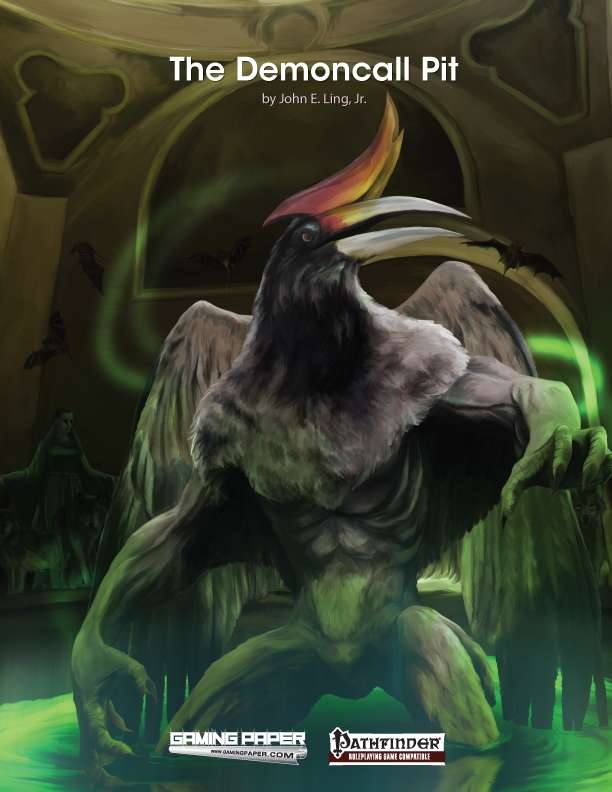
It’s finally happened! The Demoncall Ritual has begun, and creatures from the Abyss are streaming out through the Cellend family crypt. Heroes are needed, not only to slay the demons and stop the ritual, but to accept the risk of reversing the ritual to seal the Demoncall Pit forever.