
Synopsis: Goblin Bathwater, a magical drug, has taken hold in a sleepy coastal town at the edge of the Empire. As the characters investigate the origin of the drug, they uncover an international criminal conspiracy, wild and ancient magic, and a threat to reality itself. Contents: This beautifully made, 54-page adventure offers: A fully fleshed out, setting-agnostic starter area, brimming with colourful NPCs and hooks for adventure. Balanced encounters to bring characters to level 2; then some more devious encounters on their way to level 3. Three mini-dungeons built on the design philosophy of the "5 room dungeon method" Multiple big, cinematic set-piece boss encounters what will make your players feel epic. A facetted intrigue, which does not immediately suggest a simple, ready-made solution but invites the players to come up with their own, personal approach. Why pick this adventure? Hey, my name is Marius. This is my first time publishing on the DMs Guild but I wouldn't call myself a newcomer. I started playing Pathfinder 1e back in 2014. When I took over as our group's DM in 2019, we swapped over to 5e. We have run many, many modules and adventures since. Currently I play three games a week. In short: You could say I'm hooked. I created The Goblin Bathwater Incident as the ideal adventure for in-between your big modules, but it isn't a simple little adventure. With a playtime of about 30 hours, it still manages to hit that sweet-spot, where it establishes context, makes you grow fond of NPCs, and makes those big bossfight wins so much sweeter, all without taking more than a few sessions. The Goblin Bathwater Incident is different from many of the 1st tier adventures in that it pits the characters against traps and monsters, but also asks difficult, open-ended ethical questions, where a simple strategy of "apply sword to head of bad guy" will not cut it.

The Terror of Screeching Hill is an adventure designed for a party of four level 1-3 characters. Introduce your friends to Dungeons & Dragons or take a break from your current campaign and save the town of Stonehollow in this early level one-shot! To the villagers of Stonehollow, the flight of bats warns of an impending disaster. Earthquakes, which riddle the small mining town, often follow this omen causing cave-ins and trapping miners underground. Thankfully, the ground hasn't shaken in weeks. However, every night at sunset, a colony of bats fly over the town as a haunting cry echoes over Screeching Hill, a mound on the southern outskirts of the village. Villagers have begun to go missing, including the town's doctors Simon and Kirk Bartok, and some have suffered terrible wounds after being attacked by a relentless creature out of the darkness. With no doctors to treat the wounded and the expectation of more attacks, the villagers of Stonehollow turn to you for help. Will you investigate the terror of Screeching Hill and save the town from its reoccurring nightmare? Included: - A 16 page one-shot designed for level 1-3 characters - Unique maps - Two player handouts - A simplified document compatible with screenreaders
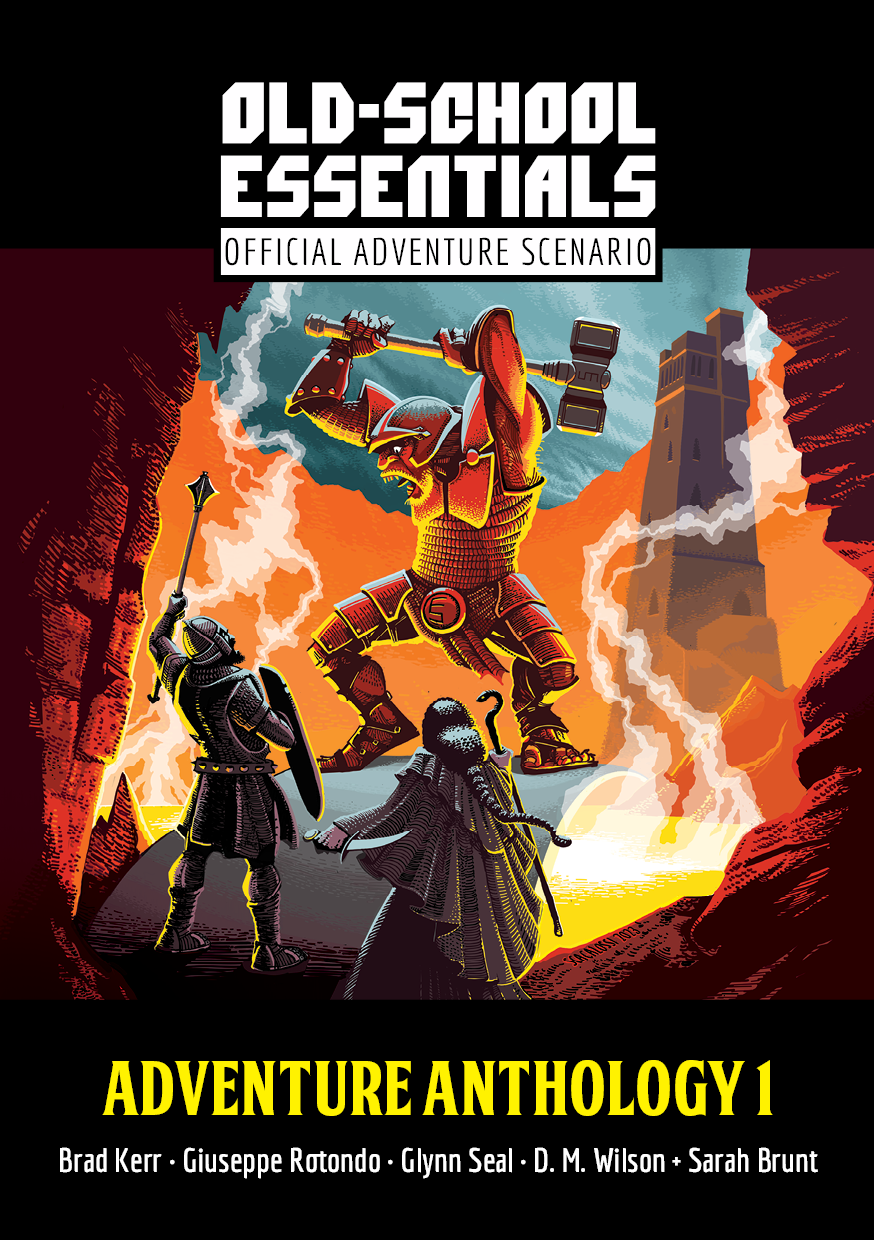
A level 3 temple incursion adventure by Brad Kerr. In a golden temple of healing on a sundrenched island, blissful amnesiac patients are held prisoner by monstrous caretakers. Intruding PCs will need their wits and their swords to unravel the temple’s secrets, snatch its treasures, and escape. For Old-School Essentials (OSE) Included as one of four adventures in "Old-School Essentials Adventure Anthology 1"

A Maze of Tragedy and Mystery. While investigating a mysteriously abandoned mansion, the adventurers stumble into a tangled web of kidnapping, theft and murder. From a mansion with a deadly secret to the blood-stained waves of the high seas and an ancient, cursed citadel, the adventurers face a succession of deadlier and deadlier foes, with the rescue of innocents and the recovery of fabulous treasure as their ultimate rewards. A Family Affair includes a fully-developed town setting, numerous unique NPCs and a wide range of challenging opponents.
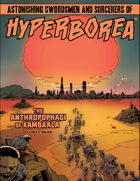
Ancient port city on the edge of a desert. The city is stratified by social class and some of the slaves have formed a cannibal cult to Kthulhu. City + hexcrawl + dungeon. The Anthropophagi of Xambaala™ takes players into an action-packed realm of adventure: the mythical world of Hyperborea, a sword-and-sorcery campaign setting inspired by the fantastic fiction of Robert E. Howard, H.P. Lovecraft, Clark Ashton Smith, and others. This adventure is inspired by Robert E. Howard’s “The Man-Eaters of Zamboula” and by various short tales of H.P. Lovecraft and Clark Ashton Smith. It is designed for use with Astonishing Swordsmen & Sorcerers of Hyperborea ™(AS&SH™), a role-playing game descended from the original 1974 fantasy wargame and miniatures campaign rules as conceived by E. Gary Gygax and Dave Arneson. AS&SH is compatible with most traditional fantasy role-playing games (c. 1974 to 1999) and their modern simulacra, such as OSRIC™ and Swords & Wizardry™. This work is both a setting and an adventure. The setting describes the town of Xambaala, noting key people, locations, and local lore. The adventure proper provides players with a variety of environments and the several factions fighting over them for their own goals. With a bit of skill and luck, stalwart adventurers may emerge richer and maybe wiser. The situation that will develop in Xambaala will be determined by the players’ choices.

You possess a map to the tomb of the cursed archmage Bigby. Legend has it that the dungeon itself changes, altered by a powerful artifact and changed each time the tomb is entered. Some tales say that Bigby is trapped in magical stasis seeking something to prolong his life. All agree that great treasure and magic lie within if you are brave enough to face the hazards.
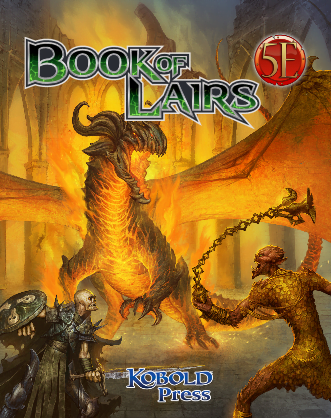
Hada the Black, a necromancer who was apprehended during an investigation of five missing orphans perished last night in the custody of city officials. The inquisitor who questioned Hada is certain that the children are still alive. After the characters hear of a contract offered by the city guard, they discuss the situation with the inquisitor. The tired and disheveled man smooths his crimson robes as he speaks.
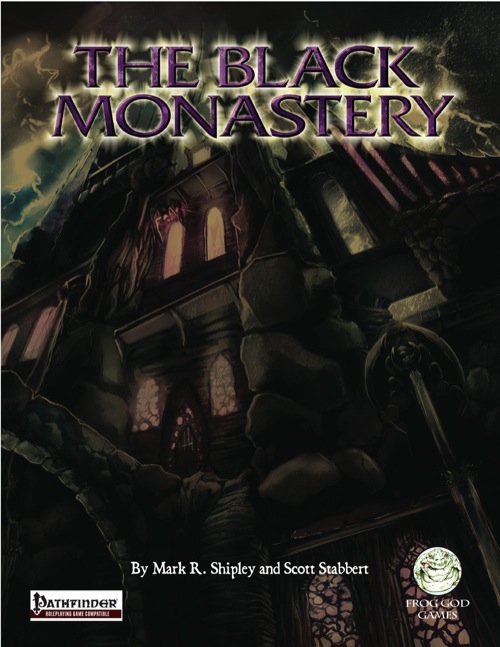
The Legend of the Black Monastery Two centuries have passed since the terrible events associated with the hideous cult known as the Black Brotherhood. Only scholars and story-tellers remember now how the kingdom was nearly laid to waste and the Black Monastery rose to grandeur and fell into haunted ruins. The Brothers first appeared as an order of benevolent priests and humble monks in black robes who followed a creed of kindness to the poor and service to the kingdom. Their rules called for humility and self denial. Other religious orders had no quarrel with their theology or their behavior. Their ranks grew as many commoners and nobles were drawn to the order by its good reputation. The first headquarters for the order was a campsite, located in a forest near the edge of the realm. The Brothers said that their poverty and dedication to service allowed them no resources for more grand accommodations. Members of the Black Brotherhood built chapels in caves or constructed small temples on common land near villages. They said that these rustic shrines allowed them to be near the people they served. Services held by the Brothers at these locations attracted large numbers of common people, who supported the Black Brotherhood with alms. Within 50 years of their first appearance, the Black Brotherhood had a number of larger temples and abbeys around the kingdom. Wealthy patrons endowed them with lands and buildings in order to buy favor and further the work of the Brothers. The lands they gained were slowly expanded as the order’s influence grew. Many merchants willed part of their fortunes to the Black Brotherhood, allowing the order to expand their work even further. The Brothers became bankers, loaning money and becoming partners in trade throughout the kingdom. Within 200 years of their founding, the order was wealthy and influential, with chapters throughout the kingdom and spreading into nearby realms. With their order well-established, the Black Brotherhood received royal permission to build a grand monastery in the hill country north of the kingdom’s center. Their abbot, a cousin of the king, asked for the royal grant of a specific hilltop called the Hill of Mornay. This hill was already crowned by ancient ruins that the monks proposed to clear away. Because it was land not wanted for agriculture, the king was happy to grant the request. He even donated money to build the monastery and encouraged others to contribute. With funds from around the realm, the Brothers completed their new monastery within a decade. It was a grand, sprawling edifice built of black stone and called the Black Monastery. From the very beginning, there were some who said that the Black Brotherhood was not what it seemed. There were always hints of corruption and moral lapses among the Brothers, but no more than any other religious order. There were some who told stories of greed, gluttony and depravity among the monks, but these tales did not weaken the order’s reputation during their early years. All of that changed with the construction of the Black Monastery. Within two decades of the Black Monastery’s completion, locals began to speak of troubling events there. Sometimes, Brothers made strange demands. They began to cheat farmers of their crops. They loaned money at ruinous rates, taking the property of anyone who could not pay. They pressured or even threatened wealthy patrons, extorting money in larger and larger amounts. Everywhere, the Black Brotherhood grew stronger, prouder and more aggressive. And there was more… People began to disappear. The farmers who worked the monastery lands reported that some people who went out at night, or who went off by themselves, did not return. It started with individuals…people without influential families…but soon the terror and loss spread to even to noble households. Some said that the people who disappeared had been taken into the Black Monastery, and the place slowly gained an evil reputation. Tenant farmers began moving away from the region, seeking safety at the loss of their fields. Slowly, even the king began to sense that the night was full of new terrors. Across the kingdom, reports began to come in telling of hauntings and the depredations of monsters. Flocks of dead birds fell from clear skies, onto villages and city streets. Fish died by thousands in their streams. Citizens reported stillborn babies and monstrous births. Crops failed. Fields were full of stunted plants. Crimes of all types grew common as incidents of madness spread everywhere. Word spread that the center of these dark portents was the Black Monastery, where many said the brothers practiced necromancy and human sacrifice. It was feared that the Black Brotherhood no longer worshipped gods of light and had turned to the service of the Dark God. These terrors came to a head when the Black Brotherhood dared to threaten the king himself. Realizing his peril, the king moved to dispossess and disband the Black Brother hood. He ordered their shrines, abbeys and lands seized. He had Brothers arrested for real and imagined crimes. He also ordered investigations into the Black Monastery and the order’s highest ranking members. The Black Brotherhood did not go quietly. Conflict between the order and the crown broke into violence when the Brothers incited their followers to riot across the kingdom. There were disturbances everywhere, including several attempts to assassinate the king by blades and by dark sorcery. It became clear to everyone that the Black Brotherhood was far more than just another religious order. Once knives were drawn, the conflict grew into open war between the crown and the Brothers. The Black Brotherhood had exceeded their grasp. Their followers were crushed in the streets by mounted knights. Brothers were rounded up and arrested. Many of them were executed. Armed supporters of the Black Brotherhood, backed by arcane and divine magic, were defeated and slaughtered. The Brothers were driven back to their final hilltop fortress – the Black Monastery. They were besieged by the king’s army, trapped and waiting for the king’s forces to break in and end the war. The final assault on the Black Monastery ended in victory and disaster. The king’s army took the hilltop, driving the last of the black-robed monks into the monastery itself. The soldiers were met by more than just men. There were monsters and fiends defending the monastery. There was a terrible slaughter on both sides. In many places the dead rose up to fight again. The battle continued from afternoon into night, lit by flames and magical energy. The Black Monastery was never actually taken. The king’s forces drove the last of their foul enemies back inside the monastery gates. Battering rams and war machines were hauled up the hill to crush their way inside. But before the king’s men could take the final stronghold, the Black Brotherhood immolated themselves in magical fire. Green flames roared up from the monastery, engulfing many of the king’s men as well. As survivors watched, the Black Monastery burned away, stones, gates, towers and all. There was a lurid green flare that lit the countryside. There was a scream of torment from a thousand human voices. There was a roar of falling masonry and splitting wood. Smoke and dust obscured the hilltop. The Black Monastery collapsed in upon itself and disappeared. Only ashes drifted down where the great structure had stood. All that was left of the Black Monastery was its foundations and debris-choked dungeons cut into the stones beneath. The war was over. The Black Brotherhood was destroyed. But the Black Monastery was not gone forever. Over nearly two centuries since its destruction, the Black Monastery has returned from time to time to haunt the Hill of Mornay. Impossible as it seems, there have been at least five incidents in which witnesses have reported finding the Hill of Mornay once again crowned with black walls and slate-roofed towers. In every case, the manifestation of this revenant of the Black Monastery has been accompanied by widespread reports of madness, crime and social unrest in the kingdom. Sometimes, the monastery has appeared only for a night. The last two times, the monastery reappeared atop the hill for as long as three months…each appearance longer than the first. There are tales of adventurers daring to enter the Black Monastery. Some went to look for treasure. Others went to battle whatever evil still lived inside. There are stories of lucky and brave explorers who have survived the horrors, returning with riches from the fabled hordes of the Black Brotherhood. It is enough to drive men mad with greed – enough to lure more each time to dare to enter the Black Monastery.

This adventure is scaled for level 1 characters. The ruins of a flying castle teeming with goblins is heading to the peaceful village of Barrowmist. It is up to the heroes to get up there and stop it before the castle lands in the village and chaos ensues. The group will enter into the ancient struggle between elves and orcs. Not only can they claim the ruins as their home, but the heroes will be asked to go on a quest to repair the castle and use it to find the Misty Isle, a legendary elven realm stolen by Gruumsh, god of the orcs. This adventure is the beginning of the Litany of Arrows adventure path. It can be run on its own or as a linked part to the larger story.

Jungle, tomb rading style adventure that sets the group to a new locale, with it's own eco systems and cultures. Exploration adventure, with glint of gold as a catalyst. The adventurers accidently find a map, which leads them to this unknown land. "Can you unravel the map's mysteries and find your way to the promised treasure? Or will your dreams end only in death and an unmarked grave far from home! Only the bravest characters of levels 3-5 will live to discover that all that glitters is not gold, but much, much more!" TSR 9126

The Iron King's daughter has been cursed by a demon who lurks inside a mirror locked deep in the palace dungeons. Can the characters win their freedom from those same dungeons by entering the mirror demon's horrifying, maze-like realm and finding a way to end the curse? The Demon in the Mirror is a creepy dungeon crawl adventure for 5th-level characters. It takes about 5-7 hours to complete and includes: -An otherworldly, reality-bending realm inside a magical mirror -Four new monsters: the mirror demon, ceiling creep, reflection demon, and librarian of Leng! -Combat cards for each monster, PC, and special treasure -Gorgeous digital maps (with and without grid) for virtual table tops

Part of the First Quest Box Set TSR1105, this is an adventure designed to introduce new players and DMs to AD&D. The High Wizard Nethril asks the PCs to enter an old ruin and search it fro his missing apprentice. The ruin is not empty, though! Horrible things have moved in, so the search will be dangerous... First Quest Adventure Book Pgs. 7-17
The Siege of Castle Rend is an adventure for the fifth edition of the world’s first roleplaying game, suitable for five 5th-level characters. It takes place over four parts, and each part can be completed in one or two sessions of play, depending on your group’s playstyle and how long you like to play in a single sitting. If all goes according to plan over the course of this adventure, the player characters will expose an usurping lord, fight orcs, acquire a stronghold, defend it from an invading army, win the admiration of a town filled with potential vassals, and make political connections within the Barony of Bedegar. Of course, no adventure goes according to plan. The PCs will invariably throw these well-laid schemes into chaos, and they’ll have to improvise. But if we know how things would have gone if the PCs never showed up (or are cowards), it makes it easier for us GMs to improvise when things go off the rails. Published by MCDM

From time out of mind, the standing stones known as the Circle of Cahervaniel have stood lonely vigil on a grassy hilltop. Sheepherders once moved their flocks over the hill and through the circle, sometimes resting in the cool shadows cast by the ancient stones. Everything changed when a stone finger fell, revealing a fissure in the earth. Now, dark shadows caress the circle after the sun sets. Creatures out of nightmare dance upon the hillside at night. Many swear that a unicorn of deepest ebony now hunts all upon two legs who draw near, while stunted creatures scurry in the shadows, abducting sheep from their sheds and drawing them down below ground for food. After the disappearance of a sheperd, fear grows stronger in neighboring villages. Who will brave the black hollow of the ancient Circle of Cahervaniel? Heroes of stern mettle must descend into the cavity and explore the ancient spaces existing there. Product History "The Shattered Circle" (1999), by Bruce R. Cordell, is a generic adventure for AD&D 2e. It was published in January 1999. Origins: Another Generic. After Wizards of the Coast began publishing D&D, their first year and a half of generic adventures were all classic revivals: returns to RPGA tournaments, to classic adventures, and to Dungeon scenarios. Even "A Paladin in Hell" (1998) was a return in its own way, to the demons and devils that TSR had become afraid of. Wizards was staking out new ground by reclaiming the past. "The Shattered Circle" (1999) was the first generic Wizards adventure that was simply a generic adventure, with no deeper origins and no hidden motives. Artifacts of Note. the foundingstone and the harp Euphonious are both one-off named magic items. However, it's sword Icerazor that's the most interesting. It's said to have grown from a shard of Frostrazor — a sword that would only appear ten months later in Return to White Plume Mountain (1999). There, it's listed as one of Keraptis' four implements of power, alongside Wave, Blackrazor, and Whelm — meaning that Icerazor (and this adventure) are just one step removed from White Plume Mountain itself. Monsters of Note: Chitine. It's somewhat curious, given the Greyhawk and Neverness connections, to note that the chitine debuted in MC11: "Monstrous Compendium Forgotten Realms Appendix" (1991). The spider-humanoids have generally been a Realms creature, featuring in bestiaries and histories for that setting. However, they also received a more generic "Ecology of the Chitine" in Dragon #223 (November 1995), which introduced the choldrith, or chitine priestess. This is their major adventure appearance. When asked about pronouncing their name Cordell says that he "can't be 100% sure of the original designer's pronunciation", but he prefers "KI-TEEN". About the Creators. By 1999, Cordell was one of D&D's most prolific writers. He'd previously authored many slightly related adventures, such as The Gates of Firestorm Peak(1996) and the sahuagin (1997) and illithid (1998) Monstrous Arcana adventure trilogies. This conversion guide allows DMs to run the original module with 5th Edition rules. To use this conversion guide you will need a copy of The Shattered Circle, originally available in hard-copy and now for sale in Digital format at the DMs Guild. This adventure is a generic adventure, not specifically based in any existing setting. Suggestions are given in the conversion guide to place the adventure in the Forgotten Realms.

Your players have ventured so far north that they are within reach of the last vestiges of humanity. You are weary from your travels and decide that a respite in Gregat, City of the Shrine. The area is also home to several other spots of interest that you may go to since you are in the region. This ‘sandbox’ style offers several adventures for your players but beware, they are just as deadly as any dungeon delve!
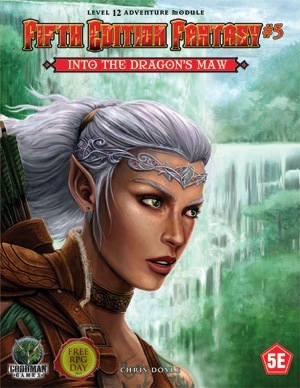
Your stalwart band treks through the trackless jungle seeking the Dragon's Maw Waterfall. At the base of the falls, behind a massive curtain of water, is rumored to be the cavern lair of a great wyrm. The local Xulmec tribesmen say the great dragon has not been seen in nearly 100 years, so perhaps its hoard lies unguarded and ready for plunder. But what role do the heroes play in a blind shaman's prophecy foretold a century ago?
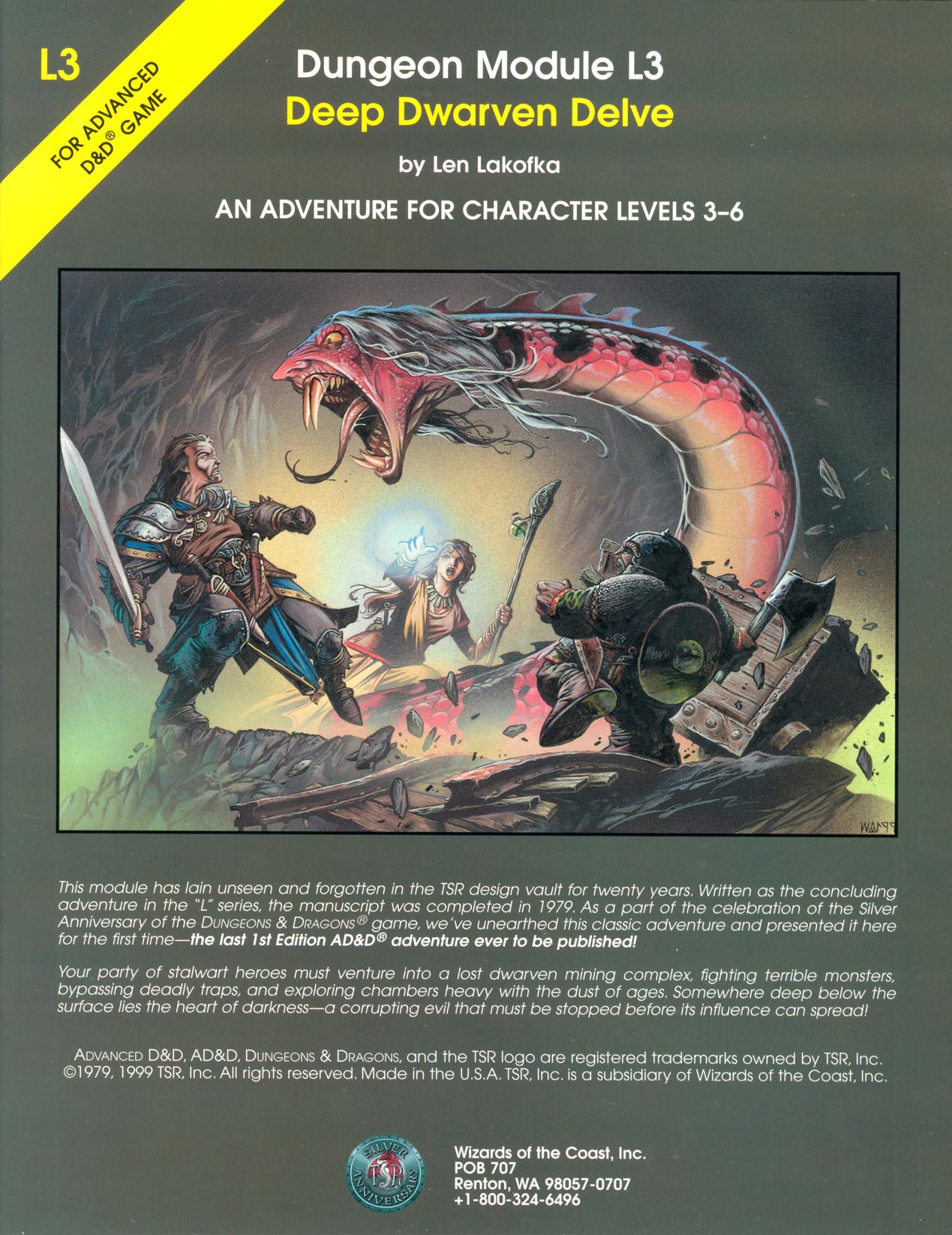
Your party of stalwart heroes must venture into a lost dwarven mining complex, fighting terrible monsters, bypassing deadly traps, and exploring chambers heavy with the dust of ages. Somewhere deep below the surface lies the heart of darkness--a corrupting evil that must be stopped before its influence can spread! TSR 9844

This starting adventure for 5E is designed to introduce new players and give them a taste of the core aspects of D&D. Over the course of a single session the heroes will journey to the dungeon where the evil kobolds have taken hold and rescue the kidnapped baby before the kobolds welcome their new draconic overlord. Included are first level character sheets so you can get started right away.
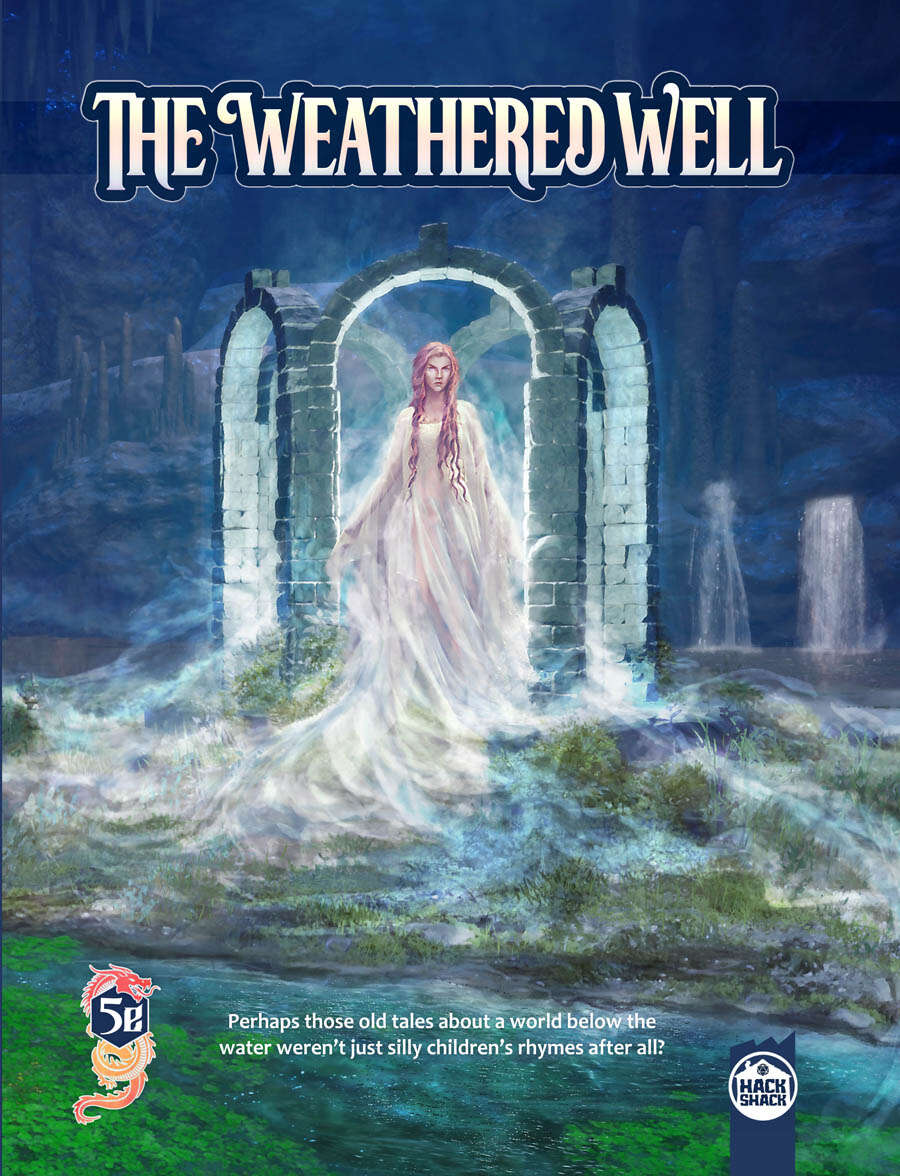
It’s a story as old as time. Boy meets girl. Girl meets abandoned well. Boy chases girl down abandoned well only to find horrors beyond their worst nightmares.. Perhaps those old tales about 'ol Grim Jack and Granny Hentooth lurking in a world below the water weren’t just silly children’s rhymes after all? The Weathered Well is a starting level Tabletop RPG adventure for the 5th edition of the world's greatest roleplaying game, centered around classic themes that feel familiar yet fresh to players of all skill levels. Designed to be easy to add into existing campaign worlds, this module takes the players through 3 levels of social, puzzle, and tactically focused combat encounters, and should take 10-12 hours to complete for a standard party of 1st-2nd level characters. The adventure takes the players through an open area town map, then into a more exploration focused dungeon crawl, and finishes up with a series of cinematic and challenging encounters, which combine enemy forces and the landscape to challenge the party and players alike. Designed for New Players and Game Masters! Getting started in tabletop roleplaying can be a daunting task. Learning the rules, finding the players, and convincing some poor fool to be the GM, all are difficult enough tasks on their own. We felt that there were a lack of adventures truly designed to be "1st level friendly" out there, and so got together to make The Weathered Well for just that purpose. This adventure is designed in a linear low-combat style which is intentionally helpful for low level characters and new players, and includes occasional blocks of DM Notes and tips to also aid Dungeon Masters new at their craft. It can be played both 'pick up and go', with many helpful block text descriptions, or read in advance for more appreciation of the backstory or for customization. The Weathered Well contains: 68 pages of highly illustrated adventure content, with detailed room and encounter descriptions. Three full-color maps printed within the book. The Black Root - a fully playable necromantic druid subclass, and the original builders of the Temple. Use them to create unique NPC's, or maybe even allow one of your players to play as a long lost member rediscovering their ancient temple! 13 new monsters, styled to fit the 'dark druids' theme; including bizarre fey creatures and monstrosities, like the Clawed Butterfly, Bliss Lizards, Weasel-worms, Zombie Oozes, and the vine wrapped crocodillian monster - the Hagator. 12 new magic items, specifically designed for low level characters. A mix of roleplaying, combat, puzzles, and skills designed to challenge but not overwhelm players of all skills. Multiple intro hooks, with matching wrap ups, as well as Further Adventures prompts. Published by Hack Shack Games

The outpost of Fort Dolor has experienced an unprecedented stretch of peace in recent times. Then nearly the entire garrison disappears on a supposed routine patrol, and the town— still on the frontier— is left nearly defenseless. Can the adventurers dig to the bottom of the mystery at Fort Dolor before they, too, disappear? Pgs. 82-103