
Moonless Night is an adventure module composed of short adventures which are compatible with both the first and second editions of the Advanced Dungeons and Dragons game.

A kid-friendly adventure for heroes of all ages and experience levels! When the ancient wizard Tyndareus develops a craving for a special treat from his childhood, he will stop at nothing to get his hands on the best apple pie in the whole world. He hires a group of adventurers to seek out the bakery that once produced the wonderful dessert – unfortunately for them, the bakery has long since been overrun by goblins. But all is not as it seems at Grammy’s Bakery, and Tyndareus isn’t the only one who’d do anything for those pies.

Designed for a party of five characters of at least 9th level, this adventure will challenge players seeking a powerful magic item of the GM’s choosing. A sphere of annihilation has been provided and is woven into several elements of the adventure, but any appropriately powerful item can be substituted if something else suits your campaign better. Though the adventure is designed to test every type of character class, a rogue who can deal with traps is essential, as is a wizard or sorcerer of at least 9th level. Larger groups will have an easier time; parties of four or fewer characters will be in for a very bad time unless you mitigate some of the tower’s more lethal traps and encounters. This adventure culminates in an encounter with devils and a sphere of annihilation. The sphere of annihilation is hidden deep within the tower-and-dungeon complex of Crane the Sorcerer. Originally set atop a high mountain in a secluded and wild part of the world, the tower and dungeon can be relocated to meet the situation in your campign. Crane, an introvert, stayed as far away from civilization as possible, as is detailed below. The tower above the dungeon doesn’t present many difficulties for a group of powerful characters or alert players. It might lull PCs into a false sense of security before they enter the areas where they’ll really be put to the test.
Sewers of the Underguild is an adventure designed for characters of at least 11th level, and characters up to 15th level will find plenty of challenges. Hidden within these narrow passages and filth-filled channels is a guild of vampiric rogues, led by their master Sangre and his aide, a nycaloth called Ankoz. Deadly traps abound, so a skillful rogue will be a lifesaver. Because of the high likelihood of desperate combat with numerous vampiric and monstrous opponents, it is suggested that a cleric and at least two fighters be prepared to beat back the many watchdog monsters the guild employs. You can hide the locales in Sewers of the Underguild in any ruin or location that fits your campaign purposes. A thriving metropolis that just happens to have a large crime and vampire problem would fit the bill nicely. In the Lost Lands campaign setting of Frog God Games, the Underguild is located in the sewers beneath the ruins of Curgantium, the ancient imperial capital of lost Hyperboria. Located at the edge of the modern Kingdom of Foere, the Underguild still finds itself located centrally enough to pull the strings of its weblike network running throughout the former lands of the Hyperborian Empire.
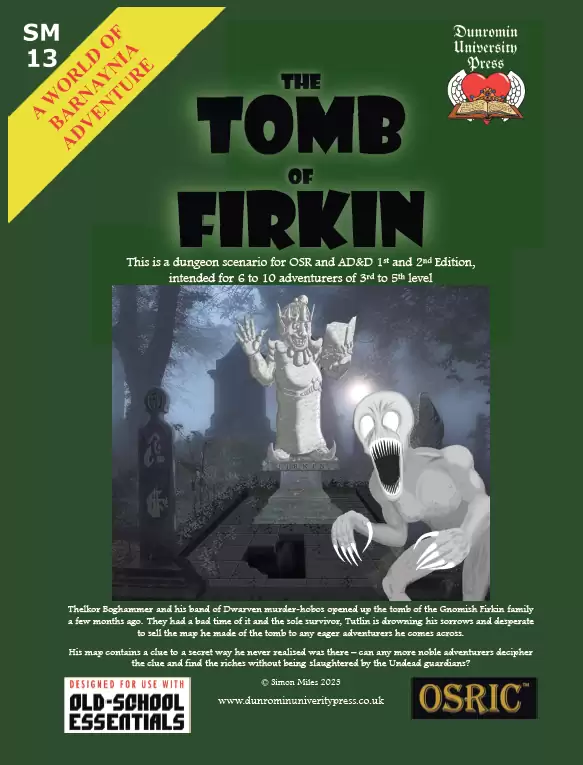
The Tomb of Firkin is a challenging and varied Dungeon Tomb-Raid from Dunromin University Press Designed for 6 to 10 adventurers of 3rd to 5thlevel, this is a Tomb dungeon scenario with a more to it than just Undead. Suitable for any OSR flavour and 1st and 2nd Edition D&D. Thelkor Boghammer and his band of Dwarven murder-hobos opened up the tomb of the Gnomish Firkin family a few months ago. They had a bad time of it and the sole survivor, Tutlin, is drowning his sorrows and desperate to sell the map he made of the tomb to any eager adventurers he comes across. His map contains a clue to a secret way he never realised was there – can any more noble adventurers decipher the clue and find the riches without being slaughtered by the Undead guardians? Or, failing that, could your characters do it? ;-) The Tomb of Firkin is more than just another tomb; hidden in the depths are a humanoid tribe and a secret cult based on geometry. The adventure is 44 pages with quality maps and illustrations to help you visualise the encounters. The style is based on minimal set-up, total carnage, maximum fun - the Tomb of Firkin would also work as SOLO PLAY! SM13 The Tomb of Firkin is available in pdf, softback or hardback Print On Demand at amazing value for such a quality product! But the best quality playing aids at the best possible prices is what we do at Dunromin University Press...

Something fell. A sickly gloaming lit up the night like mock daylight, just for a moment, and then the hills trembled. Now, an alien entity lies brooding in a crater gouged out of the moor. Local folk are enraptured with the toothsome jelly exuded by this being, but are blind to the true nature of the events unfolding in their rustic little backwater.

The mountainous lands of the Last Kingdom have long been home to dangerous oni and their foul servitors and kin, but the unification of the Saigoto under the enlightened rulership of the Five Truths has sent them scurrying back into darkness. For years since, they have kept the land shielded from harm. Yet even the great soldiers garrisoned across the Kingdom’s shores and roads cannot stop dissent from boiling up in the shadows. Not everyone embraces the edicts of the land—and while patient teachers, even the Five Truths have their limits. As growing numbers of lastfolk begin to question the traditions of the Last Kingdom, forces far more sinister, preying on the curiosities of mortals, have begun to emerge into the light... Can the PCs discover and end a treacherous plot that threatens to destroy the relative peace of the Last Kingdom?

Temple of the Gleaming Sands is a short adventure for four 5th-level characters that features monsters, spells, and items from the newly released Sandstorm book. You can use this scenario to introduce the new material on deserts and arid wastelands into your campaign, or you can just use it as a site-based adventure in a desert area. The scenario is set in a remote area of the desert that very few humanoid travelers visit. The temple from which the adventure takes its name has lain forgotten for centuries and is now inhabited only by monsters who use it as a base. The area around the temple should be inhospitable enough to discourage humanoid settlement.
The Pyramid of Amra is a challenging adventure designed for characters of at least 12th level. Due to the nature and numbers of undead enemies (vampires), having a cleric on hand with the ability to cast raise dead and greater restoration is advisable. The PCs should be rounded out with a wizard or sorcerer and a pair of front-line fighters. In this adventure, the PCs travel to the Pyramid of Amra and the ancient Monastery of Night, where they face one of the most dangerous of opponents they are likely to meet, C’nosretep the Champion of Set.
Famous hunter and Resident Hero Task of Alivast welcomes you on your journey to becoming an adventurer.However, when his son Tarusk is kidnapped he will need your help to get him back. Yet something stale is on the wind. A cult following an evil Demi-god stands in your way and help may come from an unlikely place. Thus begins the quest of a lifetime for you and your fellow adventures. travel through forests, cold mountains, and even a trip beyond. Meet NPCs of original creation and some you may know of. But be ready, for sometimes... You may need to peer beyond what is before you to live. This is the first of a series of fan modules I'm working on. SO ENJOY! I have 6 planned so I hope you will be patient with me. Either way, I'm sure this small adventure will entertain you. Thank you to the Unexpectables Crew (Monty, Connor, Zito, Gaijin, Taka, Ed) For inspiring me with a world and characters I want to write about. Thank you to my Beta Readers (Tixdixl, Magologue, and KingKiwi). You were a great help. Thank you to the fans who allowed the show to go on for so long.

None know from where the Heresiarch first came, but all remember the night that it did. It rode down from the bleeding stars on a great serpent, hurling bolts of obsidian lightning that shattered the monuments and capitols of every nation. Its infernal army swept aside the defenses of the mortal empires in a single hour, decimating legions once thought to be the invincible fist of humanity's god-kings. Faceless priests - each bearing the symbol of the trident - drifted through the fallen cities and scorched villages on a frigid wind, and when they rose to greet the huddled men and women ringed by their festering, bloated dead, they spoke a single, simple offer: worship the Heresiarch or die. Thousands of crusaders fell tonight so that you might be given this chance. In a last stand that, for the first time, united all of the empires of humanity as brothers and sisters, a way was cleared into an infernal stronghold said to contain a gate to the Heresiarch’s fane. All is silent save for the clangor of distant battle. Surrounded by grim-faced knights and teary-eyed peasants – their hands clasped in desperate hope – you step through the glowing, churning doorway, knowing there will be no help and likely no return. Published by Defy Danger and Save Versus Death
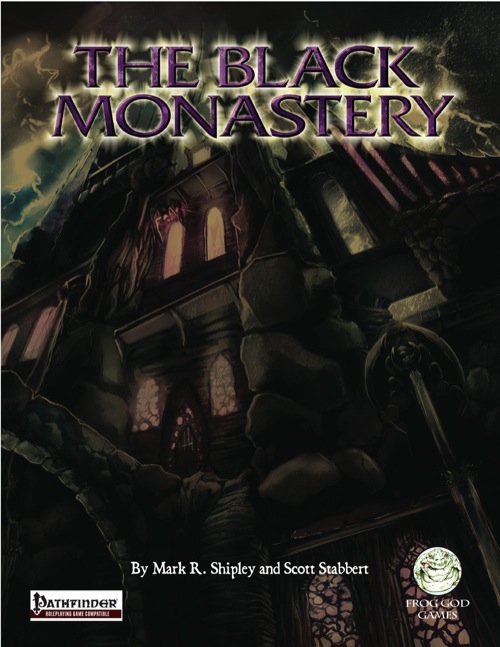
The Legend of the Black Monastery Two centuries have passed since the terrible events associated with the hideous cult known as the Black Brotherhood. Only scholars and story-tellers remember now how the kingdom was nearly laid to waste and the Black Monastery rose to grandeur and fell into haunted ruins. The Brothers first appeared as an order of benevolent priests and humble monks in black robes who followed a creed of kindness to the poor and service to the kingdom. Their rules called for humility and self denial. Other religious orders had no quarrel with their theology or their behavior. Their ranks grew as many commoners and nobles were drawn to the order by its good reputation. The first headquarters for the order was a campsite, located in a forest near the edge of the realm. The Brothers said that their poverty and dedication to service allowed them no resources for more grand accommodations. Members of the Black Brotherhood built chapels in caves or constructed small temples on common land near villages. They said that these rustic shrines allowed them to be near the people they served. Services held by the Brothers at these locations attracted large numbers of common people, who supported the Black Brotherhood with alms. Within 50 years of their first appearance, the Black Brotherhood had a number of larger temples and abbeys around the kingdom. Wealthy patrons endowed them with lands and buildings in order to buy favor and further the work of the Brothers. The lands they gained were slowly expanded as the order’s influence grew. Many merchants willed part of their fortunes to the Black Brotherhood, allowing the order to expand their work even further. The Brothers became bankers, loaning money and becoming partners in trade throughout the kingdom. Within 200 years of their founding, the order was wealthy and influential, with chapters throughout the kingdom and spreading into nearby realms. With their order well-established, the Black Brotherhood received royal permission to build a grand monastery in the hill country north of the kingdom’s center. Their abbot, a cousin of the king, asked for the royal grant of a specific hilltop called the Hill of Mornay. This hill was already crowned by ancient ruins that the monks proposed to clear away. Because it was land not wanted for agriculture, the king was happy to grant the request. He even donated money to build the monastery and encouraged others to contribute. With funds from around the realm, the Brothers completed their new monastery within a decade. It was a grand, sprawling edifice built of black stone and called the Black Monastery. From the very beginning, there were some who said that the Black Brotherhood was not what it seemed. There were always hints of corruption and moral lapses among the Brothers, but no more than any other religious order. There were some who told stories of greed, gluttony and depravity among the monks, but these tales did not weaken the order’s reputation during their early years. All of that changed with the construction of the Black Monastery. Within two decades of the Black Monastery’s completion, locals began to speak of troubling events there. Sometimes, Brothers made strange demands. They began to cheat farmers of their crops. They loaned money at ruinous rates, taking the property of anyone who could not pay. They pressured or even threatened wealthy patrons, extorting money in larger and larger amounts. Everywhere, the Black Brotherhood grew stronger, prouder and more aggressive. And there was more… People began to disappear. The farmers who worked the monastery lands reported that some people who went out at night, or who went off by themselves, did not return. It started with individuals…people without influential families…but soon the terror and loss spread to even to noble households. Some said that the people who disappeared had been taken into the Black Monastery, and the place slowly gained an evil reputation. Tenant farmers began moving away from the region, seeking safety at the loss of their fields. Slowly, even the king began to sense that the night was full of new terrors. Across the kingdom, reports began to come in telling of hauntings and the depredations of monsters. Flocks of dead birds fell from clear skies, onto villages and city streets. Fish died by thousands in their streams. Citizens reported stillborn babies and monstrous births. Crops failed. Fields were full of stunted plants. Crimes of all types grew common as incidents of madness spread everywhere. Word spread that the center of these dark portents was the Black Monastery, where many said the brothers practiced necromancy and human sacrifice. It was feared that the Black Brotherhood no longer worshipped gods of light and had turned to the service of the Dark God. These terrors came to a head when the Black Brotherhood dared to threaten the king himself. Realizing his peril, the king moved to dispossess and disband the Black Brother hood. He ordered their shrines, abbeys and lands seized. He had Brothers arrested for real and imagined crimes. He also ordered investigations into the Black Monastery and the order’s highest ranking members. The Black Brotherhood did not go quietly. Conflict between the order and the crown broke into violence when the Brothers incited their followers to riot across the kingdom. There were disturbances everywhere, including several attempts to assassinate the king by blades and by dark sorcery. It became clear to everyone that the Black Brotherhood was far more than just another religious order. Once knives were drawn, the conflict grew into open war between the crown and the Brothers. The Black Brotherhood had exceeded their grasp. Their followers were crushed in the streets by mounted knights. Brothers were rounded up and arrested. Many of them were executed. Armed supporters of the Black Brotherhood, backed by arcane and divine magic, were defeated and slaughtered. The Brothers were driven back to their final hilltop fortress – the Black Monastery. They were besieged by the king’s army, trapped and waiting for the king’s forces to break in and end the war. The final assault on the Black Monastery ended in victory and disaster. The king’s army took the hilltop, driving the last of the black-robed monks into the monastery itself. The soldiers were met by more than just men. There were monsters and fiends defending the monastery. There was a terrible slaughter on both sides. In many places the dead rose up to fight again. The battle continued from afternoon into night, lit by flames and magical energy. The Black Monastery was never actually taken. The king’s forces drove the last of their foul enemies back inside the monastery gates. Battering rams and war machines were hauled up the hill to crush their way inside. But before the king’s men could take the final stronghold, the Black Brotherhood immolated themselves in magical fire. Green flames roared up from the monastery, engulfing many of the king’s men as well. As survivors watched, the Black Monastery burned away, stones, gates, towers and all. There was a lurid green flare that lit the countryside. There was a scream of torment from a thousand human voices. There was a roar of falling masonry and splitting wood. Smoke and dust obscured the hilltop. The Black Monastery collapsed in upon itself and disappeared. Only ashes drifted down where the great structure had stood. All that was left of the Black Monastery was its foundations and debris-choked dungeons cut into the stones beneath. The war was over. The Black Brotherhood was destroyed. But the Black Monastery was not gone forever. Over nearly two centuries since its destruction, the Black Monastery has returned from time to time to haunt the Hill of Mornay. Impossible as it seems, there have been at least five incidents in which witnesses have reported finding the Hill of Mornay once again crowned with black walls and slate-roofed towers. In every case, the manifestation of this revenant of the Black Monastery has been accompanied by widespread reports of madness, crime and social unrest in the kingdom. Sometimes, the monastery has appeared only for a night. The last two times, the monastery reappeared atop the hill for as long as three months…each appearance longer than the first. There are tales of adventurers daring to enter the Black Monastery. Some went to look for treasure. Others went to battle whatever evil still lived inside. There are stories of lucky and brave explorers who have survived the horrors, returning with riches from the fabled hordes of the Black Brotherhood. It is enough to drive men mad with greed – enough to lure more each time to dare to enter the Black Monastery.

In the aftermath of the Assault on Precinct Four, an Azorius precognitive mage has a terrible vision regarding the strange relic known as the felicity triskelion. To discover the truth behind this mysterious artifact, the party must travel to Precinct Three to seek an audience with the Selesnya Conclave. Are they ready to learn the truth?

The Last Point is a prison and outpost of the Corrive Empire, a realm ruled by a cruel green dragon named Lady Corrive. The Corrivians are well known for their hatred of magic users, and their extensive slave trade industry. A forest realm with coasts on three sides and mountains running through the center, Corrive is rich with a variety of resources. However, the rocky northern coast is out of the way of their navy and relies heavily on hired ships to help transport various goods including prisoners and slaves to isolated outposts, training centers, and slave colonies. The northwest coast of Corrive is rocky and many parts of it are elevated, making it isolated from much of the mainland. The Last Point is a recycling center where captives meant for death row who are either deemed “not important enough” to execute publicly or “too disgraceful” to execute publicly are sent to be tortured and then killed. The place seems to operate on sort of a “well, we have too many so some have to go now” policy. The Last Point has no official deadlines for killing.

People in the Blight begin to awaken at night burning with an all-too-real fire. Most of them die horribly, spouses or lovers staring in shocked horror at their sudden death throes in the grip of consuming flames. A few of the truly unlucky actually manage to survive -- if living in such a state can be called survival. There seems to be no rhyme or reason in the victims of these incinerating dreams, as those among the high and low fall victim to its touch, and the locals each pray that he or she will not be next. Now no one dares to sleep. By renowned author and creator of the Blight, Richard Pett, The Crucible is a 7th-level stand-alone adventure of urban horror set in his own crooked city of the Blight. This adventure may not be suitable for children below the age of 13.
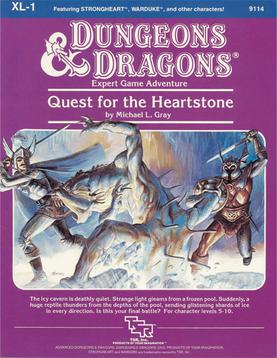
The King is dead! And the queen is in trouble. She has chosen you to find the fabled heartstone, which is buried somewhere deep in the Mountains of Ice. Is the gem I the hands of the corrupt Master Thief? Has he harnessed its powers for his own vile purposes? Or does it lie unguarded in the frozen ranges to the north, which teem with horrible creatures? This is your kind of quest! Quest for the Heartstone is a combined wilderness/dungeon adventure designed to be compatible with the Advanced Dungeons & Dragons Action Toys from LJN Toys, Ltd. and the Advanced Dungeons & Dragons Fantasy Adventure Figures from TSR, Inc. The adventure also includes complete maps, new monsters and players' illustrations. Will the heartstone be the key to peace in the kingdom? By her majesty's request... it's up to you to find out! TSR 9114

Break in. Do the job. Survive the fallout. In a city so vast as Pindus-on-Isles, if you want to get ahead, you need to cozy up with someone powerful. And do something dangerous. When Hope the Fixer shows up at your door with a job from an anonymous employer, the pay is good enough. Are you? Seems there’s a thief holed up in a Wizard’s Egg, a stone laboratory suspended high on a tower. The anonymous employer wants the stolen goods trashed. It’s in Lightmill though. Those glittering skyscrapers are no place for basegels like you. Get your disguise together. Hope’s got the hippogriffs. It’s destruction time.

Odyssey of the Dragonlords is heavily inspired by stories from ancient Greek mythology. As we designed the campaign, we sought to include ideas from many different sources: The Odyssey, The Iliad, Jason and the Argonauts, The Oresteia, and others. However, Thylea is not ancient Greece. You will not find Zeus, Athena, or Apollo among the gods. As you explore Thylea, you will encounter familiar tropes, monsters, and treasures from Greek mythology—but the rules are different here. Mortals have only recently come to these lands. The world of Thylea blends high fantasy with the trappings of ancient history. Elves, dwarves, and halflings now live alongside minotaurs, centaurs, and satyrs. Our goal is to make your party feel like heroes from one of the greatest stories ever told—but the ultimate end of that story is entirely within your power. Your players will make choices that forever change the world of Thylea. As the gamemaster, we encourage you to embrace this idea and run with it. How will your players reshape history—and what does it mean to be a hero?
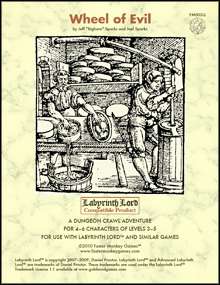
It’s up to your brave heroes to fight off the invading kobolds and save… the cheese?? Well, a job’s a job, and things underground are seldom what they seem. Wheel of Evil is a 16-page adventure for old-school characters of levels 3 to 5, plus a full-color cover, classic maps, and handouts. Compatible with Labyrinth Lord™ and similar games, including the Advanced Edition Companion. "Wheel of Evil" is part of the Eastern Valnwall setting, based on the Known Lands in Labyrinth Lord™! This adventure blends traditional dungeon crawling with unique elements of horror and intrigue, set against the backdrop of a seemingly mundane task turned deadly by the influence of a hidden evil.

Moonless Night is an adventure module composed of short adventures which are compatible with both the first and second editions of the Advanced Dungeons and Dragons game. The adventures are designed with novice players and dungeon masters (DMs) in mind; more experienced gamers may find the action too scripted, the dangers too forgiving, and the plot too linear for their tastes. In such a case, the DM is encouraged to expand, revise, and delete as necessary.