Nothing stirs in St. Anton. Through the alleys and streets, along castle walls, the town lies in a dreamlike lull. Moonlight shines upon the cobblestone paths winding lazily up and down the small hills. Sagging balconies and arching trees bow idly over the quiet streets. Evils is Afoot The Baron has descended into insanity, an eldritch creature stalks the streets, and clouds of despair gather over the townspeople. St. Anton needs brave heroes to unravel its mystery, and restore her fire.
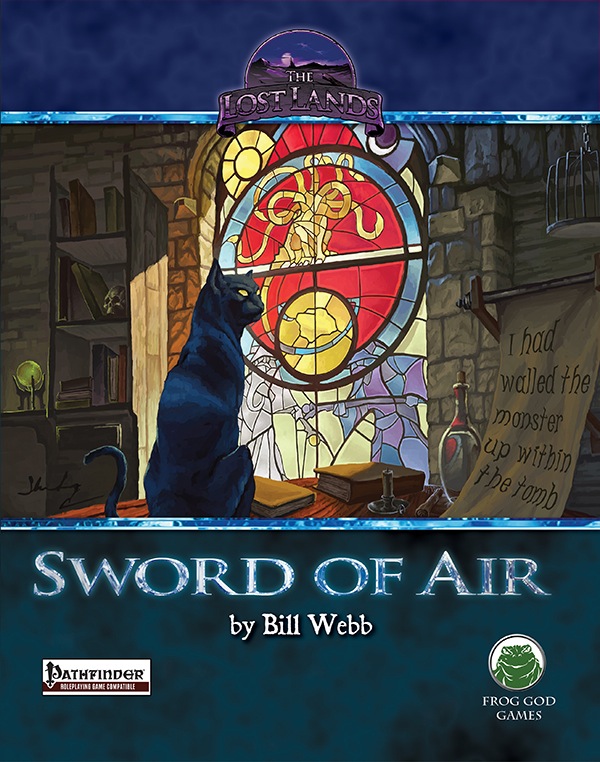
What is the Lost Lands? The Lost Lands is the home campaign world of Necromancer Game's and Frog God Game's own Bill Webb. This campaign has been continuously running since 1977. Many of the adventures published by Necromancer Games and Frog God Games are directly inspired by this campaign. They have evolved over the decades, and more material continues to flow from it as the dice keep rolling. Sages and wizards of legend speak of the Lost Lands—many of the players who have lived and died in Bill's campaign over the years now have a place in history (in the books). Frac Cher the dwarf, Flail the Great, Bannor the Paladin, Speigle the Mage, and Helman the Halfling are well known to the fans of Bill's work. This is the game world, and these are the adventures in which the players of these famous characters lived and died. Hundreds of players over the past 35 years have experienced the thrills and terrors of this world. The Sword of Air is the centerpiece of the Lost Lands. Currently, this epic tome consists of several parts: 1. The Hel’s Temple Dungeon—kind of like Tomb of Horrors on crack. This six-level, trap-and-puzzle infested dungeon formed the basis of Bill's game through his high school and college years. Clark Peterson’s very own Bannor the Paladin spent several real life months in the place, and, sadly, finished the objective. This is where the fragments of the fabled Sword of Air can be found…perhaps. 2. The Wilderness of the Lost Lands extending to the humanoid-infested Deepfells Mountains and providing detail about the nearby Wizard’s Wall. This so-called “wall” was raised by the archmages Margon and Alycthron harnessing the Spirit of the Stoneheart Mountains to raise the land itself, creating a massive escarpment to block invaders from the Haunted Steppes. These archmages are actual player characters from the early 1980s who live on in the legends of the Lost Lands. Over 70 unique encounter areas are detailed, and each one is a mini-adventure in itself. New wilderness areas may be added based on bonus goals described below! 3. The Ruined City of Tsen. Legend has it the city was destroyed by a falling meteor. This place forms an aboveground dungeon area the size of a city, with over 100 detailed encounter areas. It’s a very dark place…even at noon. 4. The Wizard’s Feud—This campaign-style adventure pits the players in a long-running series of intrigues and battles between two archmages. Which side will they take? Their actions all play into the overall quest, and could well determine which side wins. Law and Chaos are not always what they seem, and if the wrong decisions are made, the entire ordeal could fail. Remember, one of the wizards WANTS Tsathogga to win. 5. New monsters, new demons, new spells, and new rules for various aspects of play. 6. The Tower of Bells. This dungeon is the result of the workshop Bill ran at PaizoCon 2013, where the participants assisted him in building an old-school dungeon. Visit the tower and discover the secrets of the “artist” within. Beware: those entering may never come out!
In what became known as the Age of Madness, an astral lich calling himself the Crimson Hand descended from the sea of stars, setting his fell gaze upon Gaea. Her red moon he made both his temple and his phylactery, and from there he sought to enslave those who would be ruled and devour those who would not. The Ancients of the four corners of Gaea united their knowledge against this threat, constructing a colossal golem, and inscribing the four POWER WORDS upon four scrolls. These scrolls they fed to the colossus, who ascended to the crimson moon in an instant. The sages of the realm watched as the flashes of battle signaled in the night sky, ending as the crimson moon itself split in half. The lich and the colossus were destroyed, and the Age of Madness was ended. Millennia have passed, and now a new threat rises from the netherworld. The four POWER WORDS have been forgotten, lost among the shattered remnants of the moon. The sages have once again united what remains of their power, this time to teleport a paltry handful of crusaders to retrieve the lost scrolls before the world is doomed.

The Tale of The Haunted Ravine is a Hex Crawl Adventure of Exploration that can be used for any game system but was designed for use with D&D 5e. A Hex crawl map and random roll tables are used to create surprising encounters and mysteries for your players to interact with. Wild necrotic magic, magical mutations, undead, lost souls, and demons all cloaked in a fog fog-choked landscape; forsaken by the gods and scarred by the battle fought here long ago. Will your adventurers survive and escape the Haunted Ravine? Or will they join the legions of cursed souls imprisoned in this corrupted land?

The last of his line, Baron Paytro NeMoren has left his dark secret sealed for decades in the family's underground vault. Now, years after his death, a group of stalwart heroes has gathered according to the baron's final wishes. At last, the seal will be broken and the secrets of the vault revealed. Can all sins be forgiven? The adventure is designed to kick-off a campaign, as it provides for an interesting way to get the party together. Instead of meeting at a tavern or being recruited by the local militia, each party member starts with a key to the NeMoren's vault, a key that was handed down by a friend or given as a gift for some good deed peformed in the past. The executor of the estate has gathered together all of the key-holders so that they could claim the contents of the vault. The vault can only be opened with all of the keys in unison. The vault is protected by a number of minor traps and tricks, but it also became the final resting place for the Baron's ex-lover, Lisette, and her brothers--all three of whom had attempted to blackmail the Baron. They were buried alive and are now undead. To complicate matters, a young umber hulk made its way to the vault, leaving some crude tunnels that were later exploited by hobgoblins coming from another surface entrance. The party will need to deal with the hobgoblins, the undead, the traps, and possibly the young umber hulk. There is a side-plot of poisoned groundwater in the nearby town that the party can also resolve by clearing out the undead and properly disposing of the putrid corpses leaking into the groundwater from the vault. Produced by Fiery Dragon Productions

People in the Blight begin to awaken at night burning with an all-too-real fire. Most of them die horribly, spouses or lovers staring in shocked horror at their sudden death throes in the grip of consuming flames. A few of the truly unlucky actually manage to survive -- if living in such a state can be called survival. There seems to be no rhyme or reason in the victims of these incinerating dreams, as those among the high and low fall victim to its touch, and the locals each pray that he or she will not be next. Now no one dares to sleep. By renowned author and creator of the Blight, Richard Pett, The Crucible is a 7th-level stand-alone adventure of urban horror set in his own crooked city of the Blight. This adventure may not be suitable for children below the age of 13.

Things are not right at Du Sharid Manor. Months ago, a deranged parish priest and his most devout followers formed a heretical cult. These self-proclaimed “Seekers of the White Heart” chose the desolate Wild Hills to practice their secret rites; but the strange goings on at the Wild Hills did not escape the prying eyes of the more pious villagers who set out to confront the cultists. Once there, the villagers witnessed something terrifying and unexpected. Since the events of that night, the cultists have vanished, but the remaining serfs of Du Sharid now live in constant paranoia. Your party has been hired by the local bishop to to learn the truth about what happened at Du Sharid Manor. For use with Swords & Wizardry (or the like) and designed for the experienced Referee, Jewel of the Lunar Rift is a first-level campaign-starter and an introduction to the Messoria setting. Included as a bonus are campaign journals from the author's own sessions.

Eurich Gunshoff IV, Count of Kleaves, is beset by powerful enemies. The King to the north has laid waste his holdings beyond the Tot River and even now threatens the river castles. Only the coming winter holds him at bay, giving the Count time, if only a little, to muster his strength. Long have the people of Kleaves worshiped the gods of the south, and it is to these people that he turns, striking a bargain with the powerful King of Kaymor. In exchange for a precious gift the Kayomarese promise to aid Eurich and his people, but it is Eurich’s charge to deliver the prize. He can spare few troops, and with spies all about he cannot be too careful. The prize he sets in a wagon in a caravan and as escort he calls upon those who dwell upon the fringes of society, adventurers who seek fame, gold and glory. They are charged to cross the wilderness and deliver the wagons safely. But the road is fraught with danger. Walls of stone block the road and winter upon the open plains carries dangers beyond the biting cold. But more than stone and frost, the end promises fire without comfort. Designed in 3 parts Giant’s Rapture offers overland travel, dungeon, and intrigue and pits the character’s wits against the open road and one another.
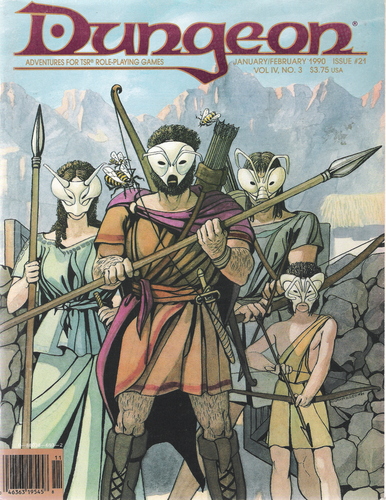
From the magazine: "'That's right," said the druid. "You must steal the giant's cauldron - without harming him in the slightest.'" The adventurers are sent on a mission to reclaim the legendary Cauldron of Plenty for a celtic inspired kingdom. This magic item is kept by an intelligent Verbeeg called the Bolg Mor. A secondary goal is to discover the command words for the cauldron in the cave system. There is a curse on the cauldron, stating that violence breeds violence; he who slays the owner of the cauldron and steals the device will also fall prey to acts of violence. Players are encouraged to attempt to roleplay and negotiate with the villain to gain the cauldron.

Beneath the roots of a silver elm, there lies a sidereal prison… Vaz’kin’rai is a one-session adventure for the 5th Edition of the world’s most popular roleplaying game, which sees 1st level heroes venture beneath the village of Dur to uncover the secrets of a mysterious cosmic vault. What will the heroes find within? And what price might they pay for uncovering it? Featuring: Two bespoke creature statblocks, including a Paragon Creature! Four new magic items! Five premade characters suitable for playing through Vaz’kin’rai! A host of original artwork by Izzy Collins, Emma Durno, and Robin Baxter! A fully supported hook, as well as suggestions for others and how to develop the storylines and themes the adventure introduces into a larger game! A selection of free companion Sonoria – audio ambiences and sound effects you can use to bring the adventure to life sonically! Vaz’kin’rai comes embedded in an original campaign setting, but is self-contained enough that it can be sited easily in most other campaign settings with minimal effort. A selection of deities and lineage origins are also provided in the appendices to help fit characters within Vaz’kin’rai’s setting as presented. Go forth, and see what lurks within the vault of Vaz’kin’rai… Published by Animancer

Lurking in the drowning folly that is the aristocratic enclave of the Sinks, the horrific Asylum, shunned by a citizenry terrified of the revelations it may contain, is where the nobles of the Blight bury their living secrets. But when too many overseers are killed, and in ways more gruesome than even the brutality of that location might evoke, someone must enter to investigate. Those who do soon learn that life — if it can be called that within its walls of that bleak place — is even worse than they feared and the truths that nestle within its inmates are far more distressing than mere madness.

Deep in the wooded wilderness, the village of Grimmsgate is an outpost town on a seldom-traveled trail, right at the edge of nowhere. The village’s half-ruined temple of Law, dilapidated inn, drunken blacksmith, exiled trader and a few fur-trappers are enough to keep the bloody-minded denizens of the dark forest at bay, but nobody really expects the village to still be there in another ten years. The woods have become too dangerous for the trappers who once caught animals for fur, and merchants no longer travel the poorly-maintained road. What great evil and what fabulous treasures are to be found in these lands? A brave band of adventurers might make their fortunes here. Or perhaps they might never return… Grimmsgate is an introductory adventure for the Swords & Wizardry tabletop roleplaying game. The Swords & Wizardry rules are needed to play this adventure.

You are aromantic, and your best friend is aromantic. There’s only one thing to do: go and fight a dragon. Two Aromantics Spend an Entire Day Doing Everything Except Experiencing Romantic Attraction is an unapologetically no-romo single-player adventure for a level 4 character. It should run for approximately 3-5 hours. This adventure requires at least some knowledge as to what it means to be aromantic. There are many useful resources available online for those unfamiliar with this term.

The Notorious Goblin crime boss Krenko has escaped confinement in the Udzeo prison under suspicious circumstances. Now he plots to reestablish control over his criminal enterprise, raising the spector of a goblin gang war that could jeapordize the tenuous peace among the guilds. You must find Krenko and secure him before all-out war ensues! An introductory adventure.

Fresh-faced and more than a little hung-over our newly graduated mage of the great Dunromin College of Magic and his friends step into the tea-room next to the Porter’s Lodge and ask for something for a headache. Within minutes they find themselves accosted by the smiling figure of Malcolm Darkstar, Bursar of the College and owner of the tea-rooms, keen to ask them a favour… This is an introductory level set of scenarios designed to take a starting-level party on their first exciting adventures; The Lost Son; The Return of the Cauldron of Millent and the Murder at the Red Barn

The Fall of Blackbottom is an adventure for the Draw Steel roleplaying game for 1st-level heroes. It’s intended for four to six players, including the Director. This fast-paced, high-stakes adventure assumes that players have moderate experience with the Draw Steel system and the game’s core rulebooks. The Fall of Blackbottom begins on a calm morning at the Drunken Fool, a three-story inn renowned for its baths and jaunty atmosphere. When Ajax’s siege plunges the city into chaos, the heroes are instructed by a member of the Chain of Acheron to lead civilians to a safehouse where the Chain will regroup and help the helpless flee the city. When the heroes arrive at the safehouse, however, it becomes clear that no one is coming to help. What’s more, one or more of them are wanted by Ajax, known to the Overlord by name. Their lives—and the lives of everyone they’ve saved—now rest solely on their shoulders.
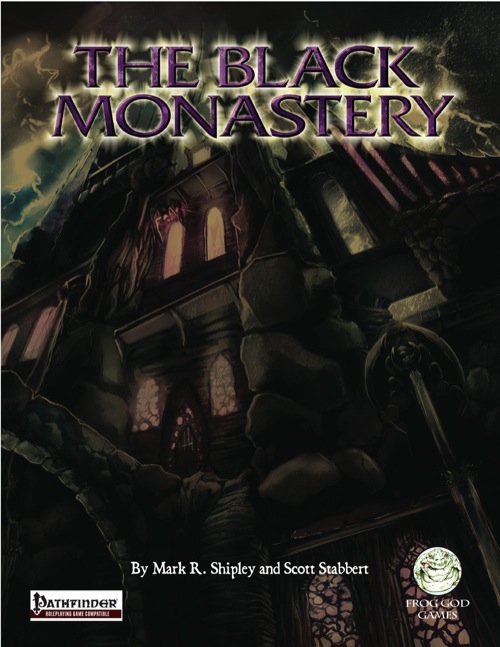
The Legend of the Black Monastery Two centuries have passed since the terrible events associated with the hideous cult known as the Black Brotherhood. Only scholars and story-tellers remember now how the kingdom was nearly laid to waste and the Black Monastery rose to grandeur and fell into haunted ruins. The Brothers first appeared as an order of benevolent priests and humble monks in black robes who followed a creed of kindness to the poor and service to the kingdom. Their rules called for humility and self denial. Other religious orders had no quarrel with their theology or their behavior. Their ranks grew as many commoners and nobles were drawn to the order by its good reputation. The first headquarters for the order was a campsite, located in a forest near the edge of the realm. The Brothers said that their poverty and dedication to service allowed them no resources for more grand accommodations. Members of the Black Brotherhood built chapels in caves or constructed small temples on common land near villages. They said that these rustic shrines allowed them to be near the people they served. Services held by the Brothers at these locations attracted large numbers of common people, who supported the Black Brotherhood with alms. Within 50 years of their first appearance, the Black Brotherhood had a number of larger temples and abbeys around the kingdom. Wealthy patrons endowed them with lands and buildings in order to buy favor and further the work of the Brothers. The lands they gained were slowly expanded as the order’s influence grew. Many merchants willed part of their fortunes to the Black Brotherhood, allowing the order to expand their work even further. The Brothers became bankers, loaning money and becoming partners in trade throughout the kingdom. Within 200 years of their founding, the order was wealthy and influential, with chapters throughout the kingdom and spreading into nearby realms. With their order well-established, the Black Brotherhood received royal permission to build a grand monastery in the hill country north of the kingdom’s center. Their abbot, a cousin of the king, asked for the royal grant of a specific hilltop called the Hill of Mornay. This hill was already crowned by ancient ruins that the monks proposed to clear away. Because it was land not wanted for agriculture, the king was happy to grant the request. He even donated money to build the monastery and encouraged others to contribute. With funds from around the realm, the Brothers completed their new monastery within a decade. It was a grand, sprawling edifice built of black stone and called the Black Monastery. From the very beginning, there were some who said that the Black Brotherhood was not what it seemed. There were always hints of corruption and moral lapses among the Brothers, but no more than any other religious order. There were some who told stories of greed, gluttony and depravity among the monks, but these tales did not weaken the order’s reputation during their early years. All of that changed with the construction of the Black Monastery. Within two decades of the Black Monastery’s completion, locals began to speak of troubling events there. Sometimes, Brothers made strange demands. They began to cheat farmers of their crops. They loaned money at ruinous rates, taking the property of anyone who could not pay. They pressured or even threatened wealthy patrons, extorting money in larger and larger amounts. Everywhere, the Black Brotherhood grew stronger, prouder and more aggressive. And there was more… People began to disappear. The farmers who worked the monastery lands reported that some people who went out at night, or who went off by themselves, did not return. It started with individuals…people without influential families…but soon the terror and loss spread to even to noble households. Some said that the people who disappeared had been taken into the Black Monastery, and the place slowly gained an evil reputation. Tenant farmers began moving away from the region, seeking safety at the loss of their fields. Slowly, even the king began to sense that the night was full of new terrors. Across the kingdom, reports began to come in telling of hauntings and the depredations of monsters. Flocks of dead birds fell from clear skies, onto villages and city streets. Fish died by thousands in their streams. Citizens reported stillborn babies and monstrous births. Crops failed. Fields were full of stunted plants. Crimes of all types grew common as incidents of madness spread everywhere. Word spread that the center of these dark portents was the Black Monastery, where many said the brothers practiced necromancy and human sacrifice. It was feared that the Black Brotherhood no longer worshipped gods of light and had turned to the service of the Dark God. These terrors came to a head when the Black Brotherhood dared to threaten the king himself. Realizing his peril, the king moved to dispossess and disband the Black Brother hood. He ordered their shrines, abbeys and lands seized. He had Brothers arrested for real and imagined crimes. He also ordered investigations into the Black Monastery and the order’s highest ranking members. The Black Brotherhood did not go quietly. Conflict between the order and the crown broke into violence when the Brothers incited their followers to riot across the kingdom. There were disturbances everywhere, including several attempts to assassinate the king by blades and by dark sorcery. It became clear to everyone that the Black Brotherhood was far more than just another religious order. Once knives were drawn, the conflict grew into open war between the crown and the Brothers. The Black Brotherhood had exceeded their grasp. Their followers were crushed in the streets by mounted knights. Brothers were rounded up and arrested. Many of them were executed. Armed supporters of the Black Brotherhood, backed by arcane and divine magic, were defeated and slaughtered. The Brothers were driven back to their final hilltop fortress – the Black Monastery. They were besieged by the king’s army, trapped and waiting for the king’s forces to break in and end the war. The final assault on the Black Monastery ended in victory and disaster. The king’s army took the hilltop, driving the last of the black-robed monks into the monastery itself. The soldiers were met by more than just men. There were monsters and fiends defending the monastery. There was a terrible slaughter on both sides. In many places the dead rose up to fight again. The battle continued from afternoon into night, lit by flames and magical energy. The Black Monastery was never actually taken. The king’s forces drove the last of their foul enemies back inside the monastery gates. Battering rams and war machines were hauled up the hill to crush their way inside. But before the king’s men could take the final stronghold, the Black Brotherhood immolated themselves in magical fire. Green flames roared up from the monastery, engulfing many of the king’s men as well. As survivors watched, the Black Monastery burned away, stones, gates, towers and all. There was a lurid green flare that lit the countryside. There was a scream of torment from a thousand human voices. There was a roar of falling masonry and splitting wood. Smoke and dust obscured the hilltop. The Black Monastery collapsed in upon itself and disappeared. Only ashes drifted down where the great structure had stood. All that was left of the Black Monastery was its foundations and debris-choked dungeons cut into the stones beneath. The war was over. The Black Brotherhood was destroyed. But the Black Monastery was not gone forever. Over nearly two centuries since its destruction, the Black Monastery has returned from time to time to haunt the Hill of Mornay. Impossible as it seems, there have been at least five incidents in which witnesses have reported finding the Hill of Mornay once again crowned with black walls and slate-roofed towers. In every case, the manifestation of this revenant of the Black Monastery has been accompanied by widespread reports of madness, crime and social unrest in the kingdom. Sometimes, the monastery has appeared only for a night. The last two times, the monastery reappeared atop the hill for as long as three months…each appearance longer than the first. There are tales of adventurers daring to enter the Black Monastery. Some went to look for treasure. Others went to battle whatever evil still lived inside. There are stories of lucky and brave explorers who have survived the horrors, returning with riches from the fabled hordes of the Black Brotherhood. It is enough to drive men mad with greed – enough to lure more each time to dare to enter the Black Monastery.

A city of burgeoning technology beset upon by intrigue and insurrection, Samon has been a thorn in Emperor Hitoshi's side since suffering in the rebellion against the Kengen Occupation, its wounds still fresh on the minds of its citizens. It is not beneath the notice of Hakaisuru Bengoshi however, and the adventurers are ordered by one such official to make certain that the Tazuki Rail company's doings are not curtailed by its increasingly aggressive laborers and their shadowy union, the Fangs. Little do they know that the bite of the fangs carries a far deadlier poison than any worker's ire! What you’ll find in Mists of Akuma: Fangs of Revenge: A complex cast of 20 NPCs beautifully illustrated by Nathanael Batchelor interwoven in an impressive tale of deceit, false trails, intrigue, and lethal adversaries The city of Samon, a settlement in the northern prefecture of Hakaisuru and home to Soburin’s most prosperous railroad company Four maps by cartographer Mike Myler: an isometric view of Samon, an isometric map of the Tazuki Rail Offices, a combat map of the Chujiang Gardens, and a combat map of the Tazuki Rail Basement The dangerous Mists of Akuma and the new misted condition The hengeyokai race and kitsune, nezumi, usagi, and (new!) hebi (snake) subraces The adeddo-oni and true hebi templates as well as a coterie of statblocks: adeddo-oni hunchling, adeddo-oni mage, adeddo-oni ninja, adeddo-oni samurai, factory worker, nuwa the brute (a true hebi), wajdet the charlatan (a true hebi), the many-faceted hengeyokai ninja, and the hebikontorora snake woman
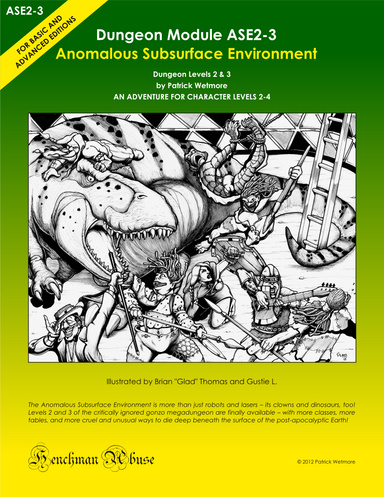
"The Anomalous Subsurface Environment is more than just robots and lasers – it's clowns and dinosaurs, too! Levels 2 and 3 of the critically ignored gonzo megadungeon are finally available – with more classes, more tables, and more cruel and unusual ways to die deep beneath the surface of the post-apocalyptic Earth!" "ASE2-3 – Anomalous Subsurface Environment" expands upon the ASE1 module, exploring the second and third levels of a vast underground complex in a unique post-apocalyptic setting blending fantasy, science fiction, and bizarre elements. Extensive list of bizarre and unique items and monsters. Written for Labyrinth Lord
The insurgent agent Adan, a spy in Alvedara, came across plans for an upcoming assault on Bodrun, the largest remaining dwarven clanhold in the South. Though the dwarves were unknown to him, this Sarcosan rebel decided that he must do his best to get word to these allies in the mountains. He stole the plans and abandoned his cover identity, fleeing east along the Eren and hoping to find succor in the Forest of the Sahi before his trek into the Kaladruns. He didn’t make it that far. A legate spyhunter was on his tail within hours of his departure, and with his stronger mount and divinatory magic, was sure to run him to ground on the Horse Plains of Erenhead. Adan hoped to throw off the scent of his tracker in the town of Malima, where he had contacts and might be able to wait out the legate in a safehouse. Unfortunately, the situation in Malima had worsened since Adan had last been there, and it had become a place of exile for Alvedarans with the plague. It was a question of choosing the lesser of two evils: plague and possible death in Malima, or torture, betrayal, and certain death at the hands of the legate. Adan chose to hide in Malima, but contracted the plague while hiding from his pursuers. Though unable to contact the outside world, Adan sent his familiar, a raven, eastward in the hopes that it would reach a dwarven settlement that could send agents to aid him. The raven made it to the Hagaran Observatory in the Forest of the Sahi, where the PCs have been assisting the sages of the observatory. Midnight Runner Up - Gen Con 2005