
The Candy Isle - home to a confectionary shore, saccharine jungles, and a chocolate volcano, it epitomizes the phrase "sweet but deadly." The PCs must avoid gummy tribesmen and other weird, sugary dangers to retrieve the apotheosis of all sweets, the Confection Perfection!
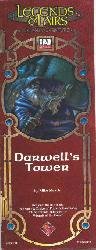
Darwell Umbruskor has long been known around town as an eccentric but ultimately harmless old sage. From what you've heard, he keeps odd hours, rarely speaks a word to anyone, and lets no one enter his tower save for a few servants. Though quiet and mysterious, Darwell has done nothing to around undue suspicion. Sir Jeffers, a crusading warrior who just made your acquaintance, claims otherwise. According to evidence he recently came across, Darwell Umbruskor is both a necromancer and a dedicated priest of an evil power. Published by Fantasy Flight Games

Condemned to death! You are a criminal in the Cauldron, a maximum security prison in the city of Capital. Only the worst criminals are kept here, and you are the worst of the worst. You’re due to be hanged tomorrow, but you were taken out of your cell today, fitted with a collar that looks an awful lot like a war dog collar, and taken to meet a mysterious figure. He offers you a deal. Undertake a top secret mission in exchange for your freedom. Your record, even your identity deleted if that’s what you want. The only catch? IT’S SUICIDE. Misbehave? And you’ll find out what those collars do. The Condemned is a Draw Steel adventure for 3rd-level heroes. Actually, no, for 3rd-level protagonists! Designed for three to six players, plus the director. This fast-paced, high-stakes adventure assumes the players have moderate experience with the Draw Steel system and the game’s core rulebooks. Protagonists can expect to earn up to 12 victories across the course of the adventure. Because The Condemned involves a team of original heroes, and does not take place within the continuity of your normal home campaign, players are encouraged to create new (villains) protagonists just for this adventure. We also include a healthy variety of original pre-generated characters with unique and interesting backstories. Put them in front of your players and watch them get excited! They may want to keep playing them once the adventure is through. Assuming they survive!

The Last Point is a prison and outpost of the Corrive Empire, a realm ruled by a cruel green dragon named Lady Corrive. The Corrivians are well known for their hatred of magic users, and their extensive slave trade industry. A forest realm with coasts on three sides and mountains running through the center, Corrive is rich with a variety of resources. However, the rocky northern coast is out of the way of their navy and relies heavily on hired ships to help transport various goods including prisoners and slaves to isolated outposts, training centers, and slave colonies. The northwest coast of Corrive is rocky and many parts of it are elevated, making it isolated from much of the mainland. The Last Point is a recycling center where captives meant for death row who are either deemed “not important enough” to execute publicly or “too disgraceful” to execute publicly are sent to be tortured and then killed. The place seems to operate on sort of a “well, we have too many so some have to go now” policy. The Last Point has no official deadlines for killing.

A prison escape for an unlikely group of heroes turns into a race for an ancient relic sought by the Legion of Dusk. Can you brave the unknown and capture the treasure before the enemy does? This Dungeons & Dragons adventure is set on the plane of Ixalan from Magic: The Gathering. It uses 4th-level characters provided with the adventure.
Get ready to Draw Steel like a Viking! Apotheosis is a norse-inspired adventure designed for a group of three to six 1st-level heroes, set in the fictional world of Orm, where the players help to create the pantheon! Plot Hook: There has been tension for generations between two neighbouring regions in the country of Kvysia: Kjalwick on the north-west coast, and Oruma on the north coast. It is common for the two regions to raid back and forth until another uneasy truce is called. This time, though, the Orumians have gone too far... What's included: - A 1st-level adventure lasting two, maybe three, 4 hour sessions. Heroes can expect to earn between 6-8 Victories. - A forked adventure! Depending on if the heroes win or lose their first encounter, the adventure goes one of two ways. Two groups may experience completely different endings! - Custom Rival statblocks, for before they become the heroes' real Rivals. Descriptions of each provided to help bring them to life through roleplay! - Eight encounters, including a seafaring montage and a potential negotiation (if the heroes are charismatic enough!). Adjustments for between 3-6 heroes are included. - Encounter sheets, custom maps and statblocks for each of the encounters! Designed in a way to make best use of Draw Steel's mechanics in interesting and fun ways, for both the Director and the players. - Custom Retainers and modified titles to suit the adventure. - Printable, lightweight documents designed for online or pen & pencil play.

It's a frigid New Year's Eve, and the heroes gather near midnight in a small condemned tavern wihtin the Free City-State of Gate Pass. Located in the mountain pass which separates two hostile nations. Gate Pass has been neutral since the end of their last war. That neutrality is about to be put to the test, as a scourge comes for the city from the nearby empire of Ragesia. By now, every magic-user in Gate Pass knows of the Scourge. The Emperor of Ragesia died barely a month ago, and a witch named Leska has moved to cementer herself as the next empress. Leska leads the Ragesian Inquisitors, clerics specialized in countermagic and has decreed ass disloyal mages to be tracked down and killed to prevent future threats to the empire. Their first target is Gate Pass, whose neutrality has long been viewed as an insult to the nation's honor. This is the first of twelve adventures in the War of the Burning Sky adventure path from E.N. Publishing.
:strip_icc()/pic2633965.jpg)
Discovering a once-hidden passage in the Purple Planet’s Ancestor Peaks, the PCs enter the tomb of the Immortal Kahl. The party must survive deadly chambers fraught with alien life and technologies while unraveling the tomb’s mysteries. Ultimately, the party faces a choice unlike any encountered before, and a reward which will change them forever.

Guilds Town is in the middle of Dravens, a province of the realm of Shrave. 50 years ago, the neighboring dwarven province of Kiernard rebelled and tried to overthrow the green dragon Shrave who rules the realm. They failed and their province was dissolved. Dwarves who left the province mostly fled to Dravens, and are called Nards as both a racial slur and a stigma of their people’s dishonor. Guilds Town are the ones really in control of the province and are the current opposition of the Dravens nobility. In recent times, corruption and crime in the city have risen to new heights as 4 cults compete for control of the city and their citizens. Published by NaturalCrit

The Frozen Necromancer is a three-part adventure for Fifth Edition that takes player characters from levels 1 to 4. This adventure is the first in a storyline of four modules called The Demonplague that can be used as an entire campaign that takes characters from level 1 to 20. The entire adventure (or just pieces, characters, or encounters from The Frozen Necromancer) can be dropped into any fantasy setting with minimal changes
The all-new Player's Guide for ZEITGEIST: The Gears of Revolution! This Player's Guide is a whopping 60 pages of FREE material for players planning on delving into the ZEITGEIST adventure path for 5th Edition. The free Player’s Guide is designed for players of the ZEITGEIST adventure path, and contains background information and character options. This Player's Guide is divided into five separate sections for easy printing and disssemination at the gaming table. 1. Characters. Deva and Eladrin races; Docker, Eschatologist, Gunsmith, Martial Scientist, Skyseer, Spirit Medium, Technologist, Vekeshi Mystic, Yerasol Veteran character themes; salary and requisitions. 2. Equipment. Explosive alchemicals, firearms, ship of the RPHC, prestige rules, and stats for allied officers. 3. The City of Flint. City districts, the military, the Royal Homeland Constabulary. 4. Setting Overview. Languages and accents, details of the countries Risur, and Ber; fey and the mortal realms. 5. Setting Overview (contd). Details of the countries Crysillyir, Danor, Drakr, Elfaivar; plus the border states and Malice Lands, planets and planes, key religions. ZEITGEIST is a critically acclaimed adventure path from EN Publishing, brought to you by the same people who created the War of the Burning Sky campaign saga and featuring the same level of intriguing plot, memorable NPCs , and a strong, immersive storyline. In the ZEITGEIST campaign saga, your characters serve in the Homeland Constabulary of the nation of Risur, protecting the country and its citizens from foreign threats lurking within Risur's borders. During missions of espionage and assassination, your duty will be to root out hostile spies and pursue international conspiracies. As you learn more of your homeland's own secrets, however, your loyalties may be tested, may even be turned, and you may find that it is you whose hand controls the gears of the turning age. This FREE 60-page guide introduces players to the ZEITGEIST adventure path, with background information, character options, maps, and more. This Player's Guide is completely free. You are welcome to distribute it amongst your friends.
Two Days to Live! Welcome to Om Amarna, and the annual Horse Festival. It is a time of celebration, drinking, haggling, and thanksgiving. Celebrate while you can, because soon the peace will be shattered. And in its wake will come danger, suspicion, and tragedy. In this first adventure in the cursed land of Tieros, beginning characters will be forced to work together in a race against time to find critical answers in a crowded, diverse, and paranoid city. Answers that will satisfy the Dark Guard and the Cult of Justice. Answers that will save their own necks from the gallows. The Sword of Justice introduces Tieros, a land cursed by the acts of an ancient hero, bound by common fate, and diverse in culture and belief. In this adventure characters will become familiar with an exotic new PC race, the dangers of practicing magic in Tieros, the fanatical Cult of Justice who worships Law itself, and the ubiquitous Dark Guard, the military power that protects and enforces peace. Will you survive your first adventure in Tieros, or will it claim your life? Published by MonkeyGod Enterprises
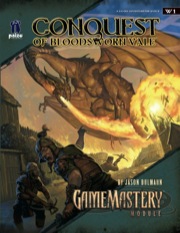
Fallow and abandoned for years, Bloodsworn Vale has long been a dangerous wood separating two kingdoms. A recent call-to-arms asks adventurers from around the world to establish a trade route through this dark and forboding forest.
What's happened to the Pearl Tower -- an ancient lighthouse built to warn ships away from a treacherous reef? Ships are disappearing, and the busy part of the trading season is just about to start. Could someone have taken over the lighthouse and wrecked the ships?
In ancient times, the area now known as the Dyrgalas Fens was home to a flourishing civilization of nature worshippers who wrested a living from the forest around them, built open-air temples, and generally did well. Over the centuries, a series of natural disasters (some say a series of foolish magical experiments) led to a rising water table and turned the forest into a vast swamp. As the water rose, most of the people left. Today, a few stalwart humans remain in the fens, living off the land through hunting, fishing, trapping, and even some agriculture. In addition to these honest folk, the Dyrgalas has some less savory residents, including both black and green dragons, trolls, hags, escaped criminals, and a host of lycanthropes. Most of these creatures prey on travelers foolish or unlucky enough to enter the fen, and sometimes raid both inside and outside the fen. This adventure, intended for characters of levels 6 to 8, deals with one group of raiders who make their lair in the Dyrgalas. A weretiger called Gavriil has formed a group of assorted lycanthropes into a band of cunning brigands. The lycanthropes favorite caper involves infiltrating a merchant caravan while posing as travelers, merchants, or swords for hire, then attacking it from within. Gavriil and his servants also take on kidnappings, murder for hire, and any other unsavory tasks that come their way.

Built high on cliffs overlooking the confluence of two rivers, Gurthap Keep was a bastion of strength and a haven for the Cult of the Red God. Here, priests of old sacrificed over the tomb of long dead Kha M Thir, honoring him for his long service to the Red God. They added bastions to the keep, walls, a temple and barracks. From there they terrorized the surrounding country, raiding the villages of Alice, Greenbriar and Ends Meet until at last the rangers gathered against the Cult and overthrew it. They drove them from their walls and those they did not slay, fled into the Darkenfold to the south. The castle has sat thus ever since, a grim testament to the gods of the old world. The forest has consumed it and only the memories of men keep it alive. But within its abandoned walls lie the shadows of yesteryear. For the tomb of Kah M Thir was never found and the secrets of the priests of the Red God never fully revealed.
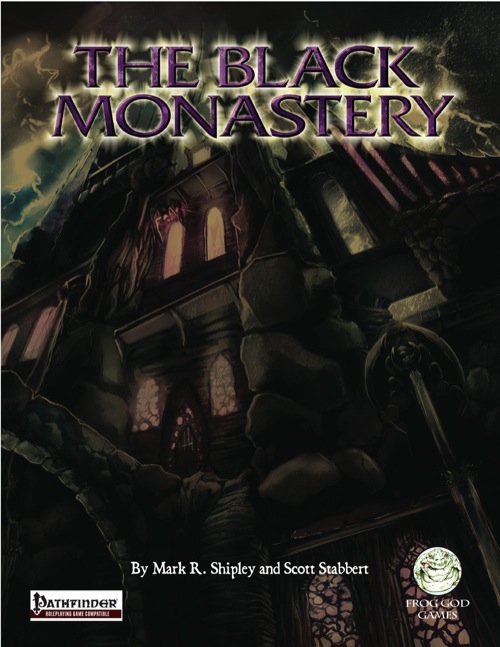
The Legend of the Black Monastery Two centuries have passed since the terrible events associated with the hideous cult known as the Black Brotherhood. Only scholars and story-tellers remember now how the kingdom was nearly laid to waste and the Black Monastery rose to grandeur and fell into haunted ruins. The Brothers first appeared as an order of benevolent priests and humble monks in black robes who followed a creed of kindness to the poor and service to the kingdom. Their rules called for humility and self denial. Other religious orders had no quarrel with their theology or their behavior. Their ranks grew as many commoners and nobles were drawn to the order by its good reputation. The first headquarters for the order was a campsite, located in a forest near the edge of the realm. The Brothers said that their poverty and dedication to service allowed them no resources for more grand accommodations. Members of the Black Brotherhood built chapels in caves or constructed small temples on common land near villages. They said that these rustic shrines allowed them to be near the people they served. Services held by the Brothers at these locations attracted large numbers of common people, who supported the Black Brotherhood with alms. Within 50 years of their first appearance, the Black Brotherhood had a number of larger temples and abbeys around the kingdom. Wealthy patrons endowed them with lands and buildings in order to buy favor and further the work of the Brothers. The lands they gained were slowly expanded as the order’s influence grew. Many merchants willed part of their fortunes to the Black Brotherhood, allowing the order to expand their work even further. The Brothers became bankers, loaning money and becoming partners in trade throughout the kingdom. Within 200 years of their founding, the order was wealthy and influential, with chapters throughout the kingdom and spreading into nearby realms. With their order well-established, the Black Brotherhood received royal permission to build a grand monastery in the hill country north of the kingdom’s center. Their abbot, a cousin of the king, asked for the royal grant of a specific hilltop called the Hill of Mornay. This hill was already crowned by ancient ruins that the monks proposed to clear away. Because it was land not wanted for agriculture, the king was happy to grant the request. He even donated money to build the monastery and encouraged others to contribute. With funds from around the realm, the Brothers completed their new monastery within a decade. It was a grand, sprawling edifice built of black stone and called the Black Monastery. From the very beginning, there were some who said that the Black Brotherhood was not what it seemed. There were always hints of corruption and moral lapses among the Brothers, but no more than any other religious order. There were some who told stories of greed, gluttony and depravity among the monks, but these tales did not weaken the order’s reputation during their early years. All of that changed with the construction of the Black Monastery. Within two decades of the Black Monastery’s completion, locals began to speak of troubling events there. Sometimes, Brothers made strange demands. They began to cheat farmers of their crops. They loaned money at ruinous rates, taking the property of anyone who could not pay. They pressured or even threatened wealthy patrons, extorting money in larger and larger amounts. Everywhere, the Black Brotherhood grew stronger, prouder and more aggressive. And there was more… People began to disappear. The farmers who worked the monastery lands reported that some people who went out at night, or who went off by themselves, did not return. It started with individuals…people without influential families…but soon the terror and loss spread to even to noble households. Some said that the people who disappeared had been taken into the Black Monastery, and the place slowly gained an evil reputation. Tenant farmers began moving away from the region, seeking safety at the loss of their fields. Slowly, even the king began to sense that the night was full of new terrors. Across the kingdom, reports began to come in telling of hauntings and the depredations of monsters. Flocks of dead birds fell from clear skies, onto villages and city streets. Fish died by thousands in their streams. Citizens reported stillborn babies and monstrous births. Crops failed. Fields were full of stunted plants. Crimes of all types grew common as incidents of madness spread everywhere. Word spread that the center of these dark portents was the Black Monastery, where many said the brothers practiced necromancy and human sacrifice. It was feared that the Black Brotherhood no longer worshipped gods of light and had turned to the service of the Dark God. These terrors came to a head when the Black Brotherhood dared to threaten the king himself. Realizing his peril, the king moved to dispossess and disband the Black Brother hood. He ordered their shrines, abbeys and lands seized. He had Brothers arrested for real and imagined crimes. He also ordered investigations into the Black Monastery and the order’s highest ranking members. The Black Brotherhood did not go quietly. Conflict between the order and the crown broke into violence when the Brothers incited their followers to riot across the kingdom. There were disturbances everywhere, including several attempts to assassinate the king by blades and by dark sorcery. It became clear to everyone that the Black Brotherhood was far more than just another religious order. Once knives were drawn, the conflict grew into open war between the crown and the Brothers. The Black Brotherhood had exceeded their grasp. Their followers were crushed in the streets by mounted knights. Brothers were rounded up and arrested. Many of them were executed. Armed supporters of the Black Brotherhood, backed by arcane and divine magic, were defeated and slaughtered. The Brothers were driven back to their final hilltop fortress – the Black Monastery. They were besieged by the king’s army, trapped and waiting for the king’s forces to break in and end the war. The final assault on the Black Monastery ended in victory and disaster. The king’s army took the hilltop, driving the last of the black-robed monks into the monastery itself. The soldiers were met by more than just men. There were monsters and fiends defending the monastery. There was a terrible slaughter on both sides. In many places the dead rose up to fight again. The battle continued from afternoon into night, lit by flames and magical energy. The Black Monastery was never actually taken. The king’s forces drove the last of their foul enemies back inside the monastery gates. Battering rams and war machines were hauled up the hill to crush their way inside. But before the king’s men could take the final stronghold, the Black Brotherhood immolated themselves in magical fire. Green flames roared up from the monastery, engulfing many of the king’s men as well. As survivors watched, the Black Monastery burned away, stones, gates, towers and all. There was a lurid green flare that lit the countryside. There was a scream of torment from a thousand human voices. There was a roar of falling masonry and splitting wood. Smoke and dust obscured the hilltop. The Black Monastery collapsed in upon itself and disappeared. Only ashes drifted down where the great structure had stood. All that was left of the Black Monastery was its foundations and debris-choked dungeons cut into the stones beneath. The war was over. The Black Brotherhood was destroyed. But the Black Monastery was not gone forever. Over nearly two centuries since its destruction, the Black Monastery has returned from time to time to haunt the Hill of Mornay. Impossible as it seems, there have been at least five incidents in which witnesses have reported finding the Hill of Mornay once again crowned with black walls and slate-roofed towers. In every case, the manifestation of this revenant of the Black Monastery has been accompanied by widespread reports of madness, crime and social unrest in the kingdom. Sometimes, the monastery has appeared only for a night. The last two times, the monastery reappeared atop the hill for as long as three months…each appearance longer than the first. There are tales of adventurers daring to enter the Black Monastery. Some went to look for treasure. Others went to battle whatever evil still lived inside. There are stories of lucky and brave explorers who have survived the horrors, returning with riches from the fabled hordes of the Black Brotherhood. It is enough to drive men mad with greed – enough to lure more each time to dare to enter the Black Monastery.
Characters track the kidnapped Evanna to a goblin outpost with a dungeon underneath. They must successfully infiltrate the stronghold to rescue her and get out, before the goblins can mount a counter offensive against them.
Sewers of the Underguild is an adventure designed for characters of at least 11th level, and characters up to 15th level will find plenty of challenges. Hidden within these narrow passages and filth-filled channels is a guild of vampiric rogues, led by their master Sangre and his aide, a nycaloth called Ankoz. Deadly traps abound, so a skillful rogue will be a lifesaver. Because of the high likelihood of desperate combat with numerous vampiric and monstrous opponents, it is suggested that a cleric and at least two fighters be prepared to beat back the many watchdog monsters the guild employs. You can hide the locales in Sewers of the Underguild in any ruin or location that fits your campaign purposes. A thriving metropolis that just happens to have a large crime and vampire problem would fit the bill nicely. In the Lost Lands campaign setting of Frog God Games, the Underguild is located in the sewers beneath the ruins of Curgantium, the ancient imperial capital of lost Hyperboria. Located at the edge of the modern Kingdom of Foere, the Underguild still finds itself located centrally enough to pull the strings of its weblike network running throughout the former lands of the Hyperborian Empire.

The ancestral swords of a powerful lord have been stolen! In the dark of night, on the eve of battle, a shadowy figure crept into Lord Kunemura's chamber and made off with the most potent symbols of his power and lineage. Worse, Lord Kunemura had declared war on his old enemy, Lord Shotokami. The imminent battle will be decisive, and the future of Lord Kunemura's lands and family hang in the balance.