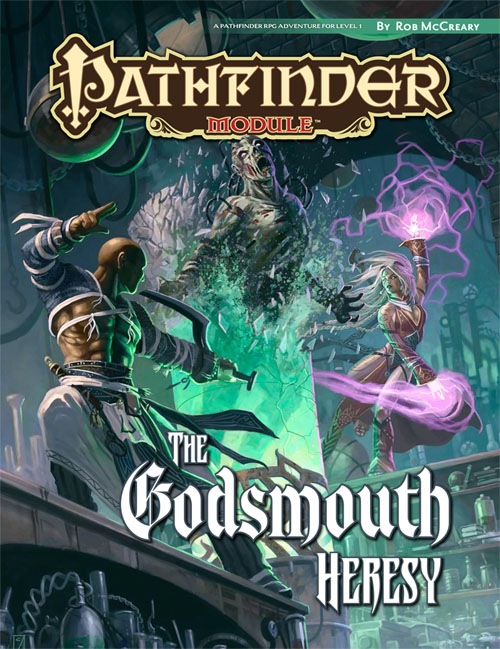
Deep below the anarchic city of Kaer Maga, someone—or something—has begun stealing corpses from the city’s most prestigious tomb, the Godsmouth Ossuary. Fearing the worst, the clerics of Pharasma in charge of maintaining the crypts quietly call for aid, not wanting to risk their own members in combating whatever horrors may have crept in from the tunnels and hidden chambers of the legendary Undercity. Beneath the infamous crypt lies a temple from an ancient empire devoted to sin, and a former Pharasmin cleric whose weathered his goddess’s wrath to create an army of undead minions, their dead flesh standing ready to support his heretical plans.
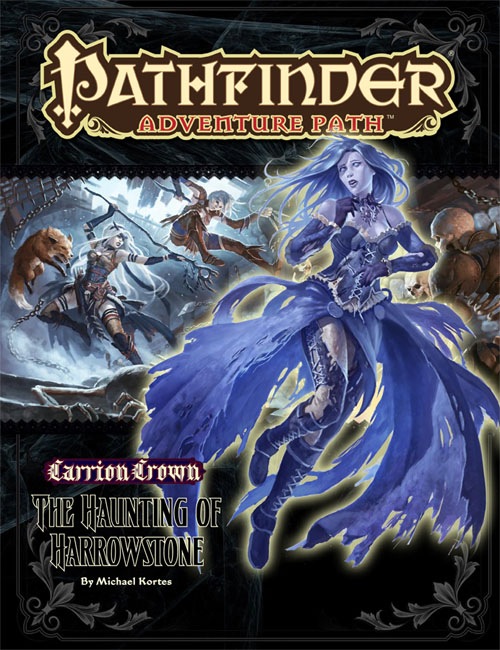
When Harrowstone Prison burned to the ground, prisoners, guards, and a host of vicious madmen met a terrifying end. In the years since, the nearby town of Ravengro has shunned the fire-scarred ruins, telling tales of unquiet spirits that wander abandoned cellblocks. But when a mysterious evil disturbs Harrowstone’s tenuous spiritual balance, a ghostly prison riot commences that threatens to consume the nearby village in madness and flames. Can the adventurers discover the secrets of Harrowstone and quell a rebellion of the dead? Or will they be the spirit-prison’s next inmates?
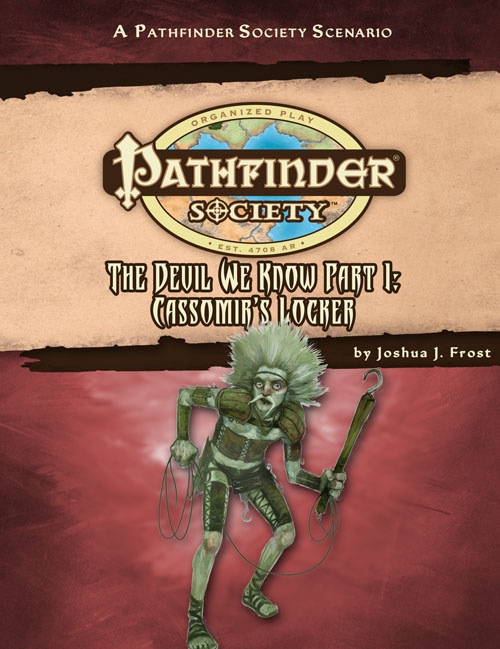
Part 2 of the "The Devil We Know" campaign arc. Cassomir's Locker is a Pathfinder Society Scenario designed for 1st to 7th level characters (Tiers: 1–2, 3–4, and 6–7). The Pathfinder Society dispatches you to the catacombs called Cassomir's Locker to find the source of a rat cult breeding monstrous vermin. After clearing Cassomir's dank sewers and delving into the dirty dungeons below, will you find the artifact that powers Cassomir's Locker or bring about the destruction of Taldor's most important port?
The adventurer is hired by Dawson Beam, the sheriff of the City of Verdant Reach, to investigate a gang of thugs that call themselves the “Rats of the Reach”. This is the second adventure in the 1-on-1 Mini-Dungeon series, but can also be utilized as a standalone adventure. Published by AAW Games.
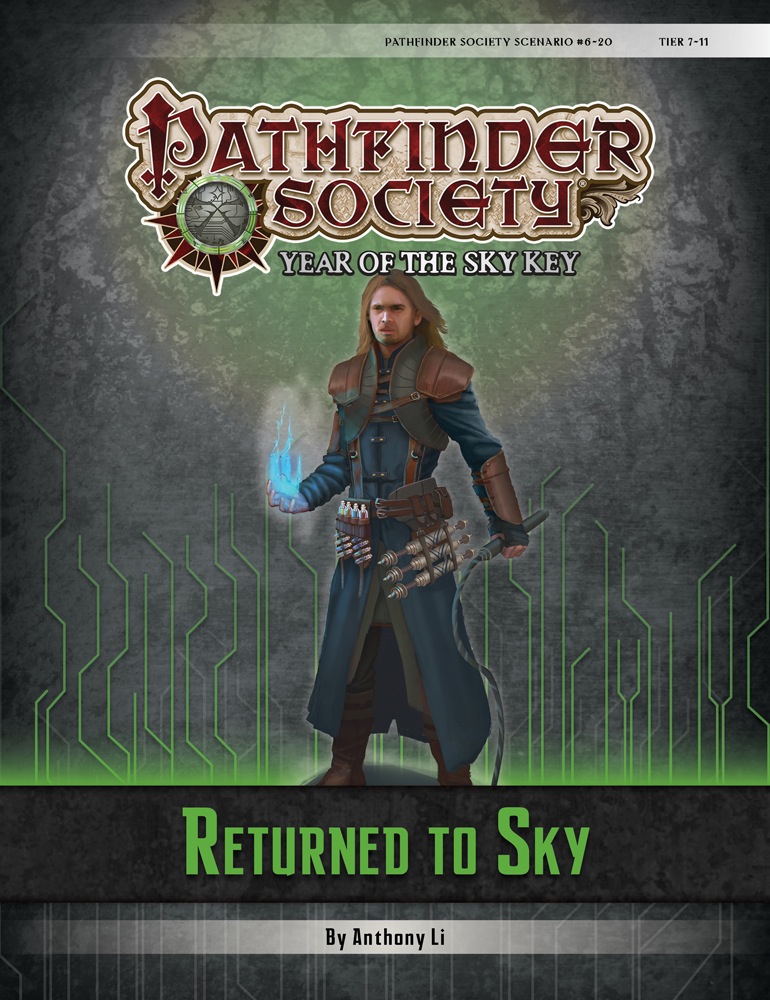
Part of a Numerian relic once thought scattered to the winds has found its way back to the savage land of super-science, and the Pathfinder Society must track down the component if they are to unlock the device’s secrets. Clues point to the economic hub Chesed, where only the descendants of a shattered clan can share where their revered ancestor buried the strange artifact. Can the PCs brave the troubled city, evade the vigilant agents of the Technic League, and survive a trip into the Numerian wastes? Content in “Returned to Sky” contributes directly to the Year of the Sky Key metaplot as well as the ongoing storyline of the Exchange, Liberty’s Edge, and Silver Crusade factions.
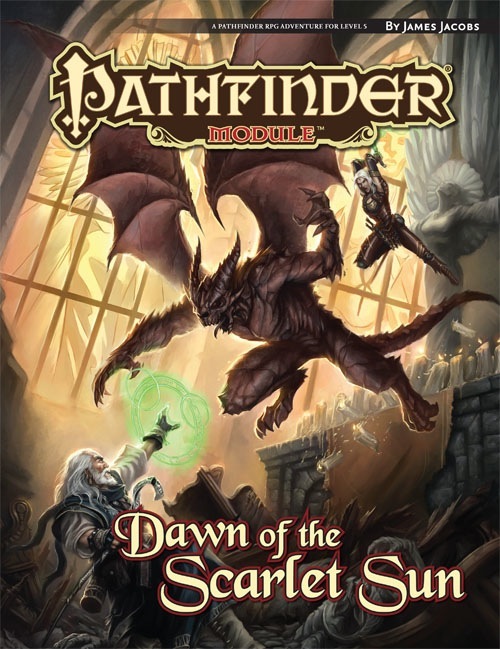
The coastal city of Magnimar is no stranger to crime, yet recently, a series of murders has sent a chill through the early morning streets. Someone—or something—is stalking and killing worshipers of Sarenrae, the goddess of the sun. The city guard is prepared to ambush the murderer, but they need help—help of the kind that adventurers are so good at providing. What is the sinister truth behind these violent acts?
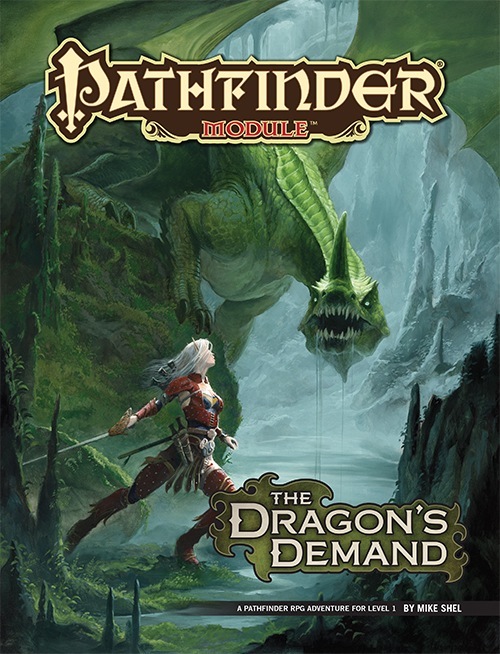
Founded by a famous dragonslayer, the small town of Belhaim has become a sleepy rural community just off the beaten path, a settlement where everyone knows everyone and strangers are the talk of the town. But when Belhaim’s peace and quiet is shattered by the sudden collapse of the last standing tower of its founder’s castle, things quickly bloom out of control. Why were there bodies of kobolds amid the rubble? What’s the sinister secret behind the strange sounds of flapping wings in the night? And what’s happened to local wizard Balthus Hunclay, who’s not answering knocks on his door? The collapsed tower had long been an eyesore to the cantankerous old man—could he have had something to do with its destruction? And what of the rumors of strange stirrings in nearby Dragonfen? Has Belhaim’s ancient draconic nemesis returned?
A desperate refugee emerges from the earth's depths in shadow-cloaked Nidal with an urgent pleas. A new faction in the subterranean dark folk city of Lyrudrada -- a wicked cult called the Reborn -- seeks a fabled artifact called the Cradle of Night. Vanished demigods of the Shadow Plane once used this artifact to craft the elusive caligni race, and the Reborn want to use it to shroud the world in darkness once more. Cursed with the stain of shadow, the heroes must battle their way through the tomb of an ancient horselord chieftain before descending to Lyrudrada. Plots and schemes run rampant in this city riven with political upheavals and back-alley bloodshed, and the heroes must collect allies and information to confront the Reborn in their fortified fane. With the mysterious masters of the caligni race arrayed against them, can the heroes hope to shed their shadowy curse and claim the Cradle of Night?
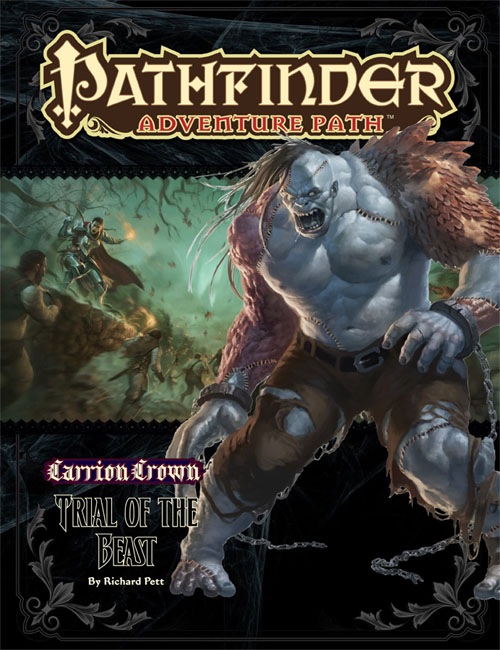
Evil Stitched to Evil The rampaging abomination known as the Beast of Lepidstadt has been captured! Yet rather than destroy the monster for its countless murders and untold crimes, the city council demands the creature receive a fair trial. Upon traveling to Lepidstadt, the adventurers find themselves caught up in the anger and investigations surrounding the Beast’s judgment. Soon it’s up to them to discover whether the legendary monster is truly a killer or merely the instrument of some greater evil—and either way, whether it’s too dangerous to be allowed to survive. This volume of Pathfinder Adventure Path continues the Carrion Crown Adventure Path and includes: • “Trial of the Beast,” a Pathfinder RPG adventure for 4th-level characters, by Richard Pett. • An investigation into the secret society called the Esoteric Order of the Palatine Eye, by Brandon Hodge. • Revelations on the faith of Pharasma, goddess of birth, death, and fate, by Sean K Reynolds. • Terror upon terror for Laurel Cylphra in the Pathfinder’s Journal, by F. Wesley Schneider. • Four exciting and deadly new monsters, by Rob McCreary, Patrick Renie, and Sean K Reynolds.

Lord Dragle was set to auction off his most recent discovery, the Shroud of Olindor. The elven relic was certain to make Dragle a wealthy man. Such a pity he had to die. But the plot surrounding Dragle’s death is far more layered than it appears. It is up to the player character to discover the hidden motives and ultimately recover the Shroud of Olindor. Part 2 of the Olindor Trilogy.
When strange reports of misty undead spread through Absalom, you and your fellow Pathfinders are dispatched to the half-drowned district of Puddles. Notoriously rough, the drooling addicts, flesh panderers, and quick-handed knifers of Puddles are the least of your worries. The night's tide brings with it an ancient armada of some long-forgotten war and you are the only thing between their mist-shrouded ghost fleet and Absalom's utter oblivion.
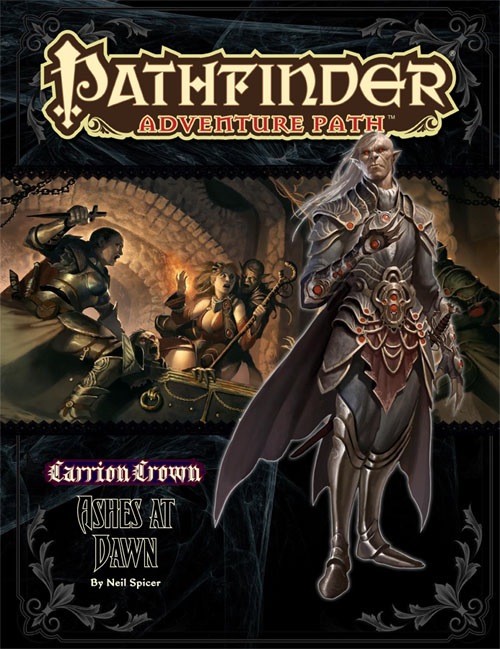
Part 5 of the Carrion Crown Adventure Path takes place in Ustalav's capital Caliphas. The heroes are in the city to follow the trail of evidence left by the neromantic cult The Whispering Way and strengthen their bonds with the mysterious Order of the Palantine Eye. Whilst in the city, they uncover a string of murders. When they discover that all the victims were vampires, they descend into the underground vampire city and have the possibility to form a tentative alliance with the vampire clans. If they help solve the murders, the vampire lord promises to help them on their quest. What role do the deadly necromancers have in the undead murders plaguing Caliphas? What secret grudge exists between the cult and the rulers of the night? And will the heroes be able to save the capital without sacrificing their very souls? This book includes: - “Ashes at Dawn,” a Pathfinder RPG adventure for 11th-level characters, by Neil Spicer - A gazetteer of fog-haunted Caliphas, the mysterious and deadly capital of Ustalav, by F. Wesley Schneider - A terrifying look into the blasphemous church of Urgathoa, goddess of gluttony, disease, and the undead, by Sean K Reynolds - Laurel Cylphra’s attempt to steal a soul stealer in the Pathfinder’s Journal, by F. Wesley Schneider - Six new monsters by Crystal Frasier, Patrick Renie, and Sean K Reynolds
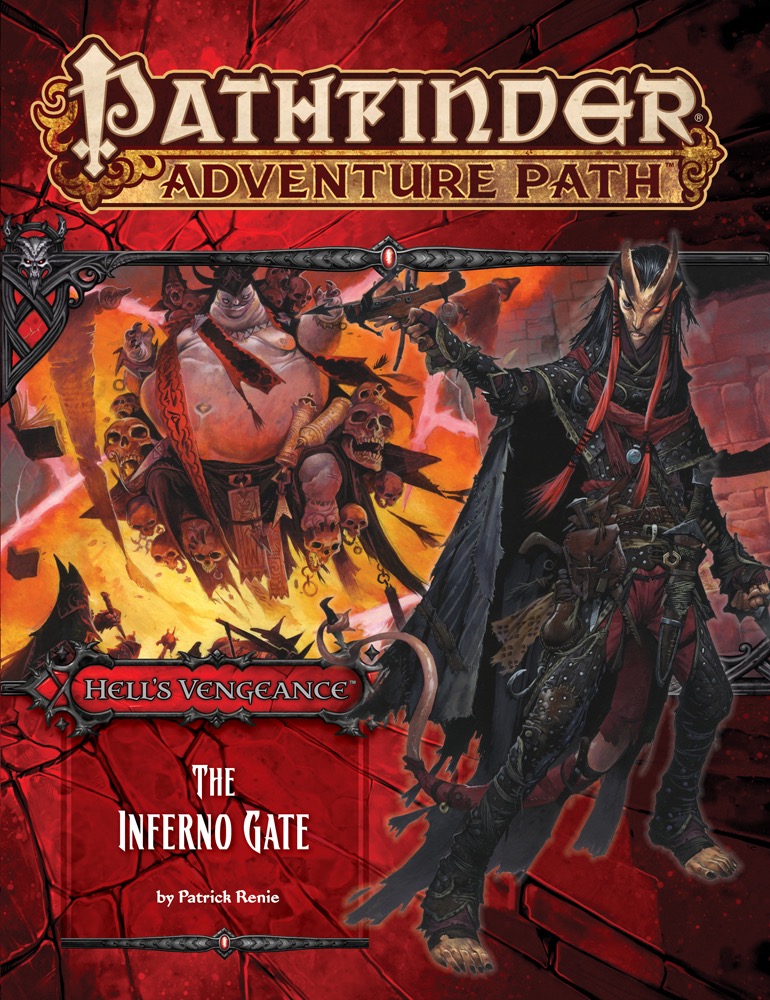
The Thrice-Damned House of Thrune wants to seal the Inferno Gate, an uncontrolled portal to Hell, and the villainous adventurers are called to accomplish the task. To acquire the components and perform the ritual, they must first face down a hellspawn thieves' guild, the Hellknight Order of the Pike, and the knights of the Glorious Reclamation and their celestial allies. But before they can complete the ritual, the characters may be forced to examine their options—is closing the gate the best plan for the future? Will the villains obey their orders to close the gate to Hell—or might they make a deal with a devil for control of the portal? Or will they only become the latest in a long line of sacrifices to the Inferno Gate?
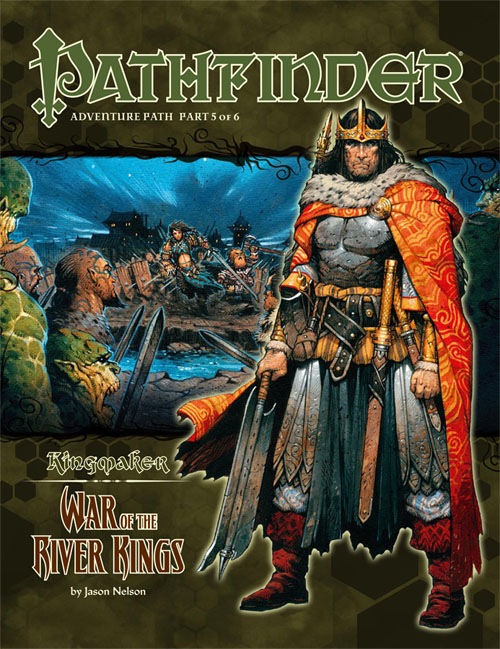
Can two kings truly trust one another? King Irovetti, ruler of Pitax and potential rival to the leaders of the eastern Stolen Lands, opens his gates and hospitality to the lords of that realm. Within his city of shallow indulgences and crude decadence, he hosts a tournament ostensibly meant to foster friendship and peace, but fraught with dangers all its own. Is the King of Pitax’s good will sincere, or does he harbor a more sinister goal? And are the PCs fated to gain an opponent who commands not only a nation, but allies from a deadly other realm?
The Lonely Coast’s most remote village, Oakhurst broods under the dark boughs of the Tangled Woods. Rumours of incest, murder and vile rites during the black of night surround its insular citizens. It is a place most wise people avoid as the very air seems inhospitable to strangers. Yet in the rumours is a grain of truth, for something dark does indeed stir in the shadow haunted trees and hunched homes of Oakhurst. An ancient evil, hungry with the thirst for blood, awakens from its eons long sleep. As disappearances mount and the Lonely Coast can no longer turn a blind eye to the blight that is Oakhurst, heroes are called upon to investigate the foul rumours and mysteries that plague the village. As the search for the truth intensifies, they may find themselves the next victims of a rising, bloodthirsty evil. Can they survive Against the Cult of the Bat God? Although designed for The Lonely Coast, a free mini-campaign setting available from Raging Swan Press, Against the Cult of the Bat God is simple to insert into almost any GM's home campaign.
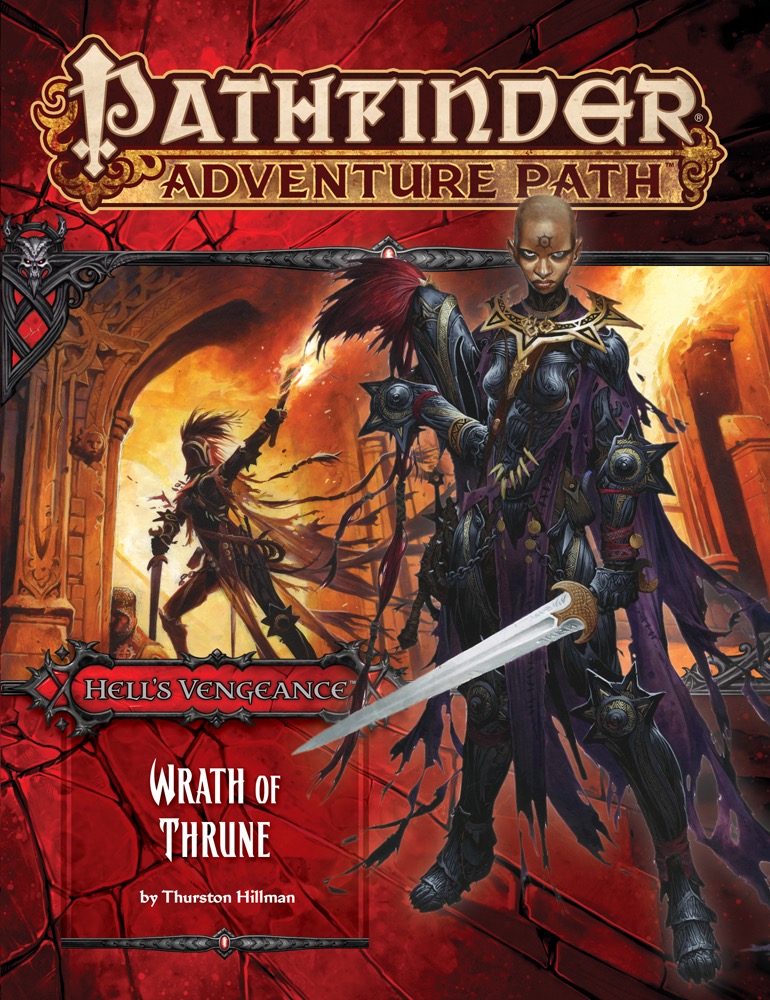
The knightly order known as the Glorious Reclamation continues its crusade against diabolic Cheliax, conquering the town of Kantaria, where the goddess Iomedae once ruled as a mortal. The villainous adventurers, now official agents of House Thrune, must retake the town, depriving the knights of a valuable holy site. Can the evil characters earn greater infamy and prestige by dealing the Glorious Reclamation a serious defeat in their most substantial territorial gain so far, or will the knights' rebellion continue unchecked across Cheliax?
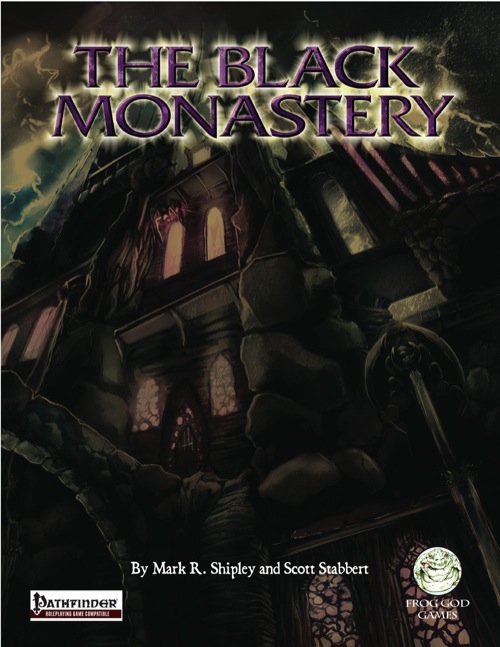
The Legend of the Black Monastery Two centuries have passed since the terrible events associated with the hideous cult known as the Black Brotherhood. Only scholars and story-tellers remember now how the kingdom was nearly laid to waste and the Black Monastery rose to grandeur and fell into haunted ruins. The Brothers first appeared as an order of benevolent priests and humble monks in black robes who followed a creed of kindness to the poor and service to the kingdom. Their rules called for humility and self denial. Other religious orders had no quarrel with their theology or their behavior. Their ranks grew as many commoners and nobles were drawn to the order by its good reputation. The first headquarters for the order was a campsite, located in a forest near the edge of the realm. The Brothers said that their poverty and dedication to service allowed them no resources for more grand accommodations. Members of the Black Brotherhood built chapels in caves or constructed small temples on common land near villages. They said that these rustic shrines allowed them to be near the people they served. Services held by the Brothers at these locations attracted large numbers of common people, who supported the Black Brotherhood with alms. Within 50 years of their first appearance, the Black Brotherhood had a number of larger temples and abbeys around the kingdom. Wealthy patrons endowed them with lands and buildings in order to buy favor and further the work of the Brothers. The lands they gained were slowly expanded as the order’s influence grew. Many merchants willed part of their fortunes to the Black Brotherhood, allowing the order to expand their work even further. The Brothers became bankers, loaning money and becoming partners in trade throughout the kingdom. Within 200 years of their founding, the order was wealthy and influential, with chapters throughout the kingdom and spreading into nearby realms. With their order well-established, the Black Brotherhood received royal permission to build a grand monastery in the hill country north of the kingdom’s center. Their abbot, a cousin of the king, asked for the royal grant of a specific hilltop called the Hill of Mornay. This hill was already crowned by ancient ruins that the monks proposed to clear away. Because it was land not wanted for agriculture, the king was happy to grant the request. He even donated money to build the monastery and encouraged others to contribute. With funds from around the realm, the Brothers completed their new monastery within a decade. It was a grand, sprawling edifice built of black stone and called the Black Monastery. From the very beginning, there were some who said that the Black Brotherhood was not what it seemed. There were always hints of corruption and moral lapses among the Brothers, but no more than any other religious order. There were some who told stories of greed, gluttony and depravity among the monks, but these tales did not weaken the order’s reputation during their early years. All of that changed with the construction of the Black Monastery. Within two decades of the Black Monastery’s completion, locals began to speak of troubling events there. Sometimes, Brothers made strange demands. They began to cheat farmers of their crops. They loaned money at ruinous rates, taking the property of anyone who could not pay. They pressured or even threatened wealthy patrons, extorting money in larger and larger amounts. Everywhere, the Black Brotherhood grew stronger, prouder and more aggressive. And there was more… People began to disappear. The farmers who worked the monastery lands reported that some people who went out at night, or who went off by themselves, did not return. It started with individuals…people without influential families…but soon the terror and loss spread to even to noble households. Some said that the people who disappeared had been taken into the Black Monastery, and the place slowly gained an evil reputation. Tenant farmers began moving away from the region, seeking safety at the loss of their fields. Slowly, even the king began to sense that the night was full of new terrors. Across the kingdom, reports began to come in telling of hauntings and the depredations of monsters. Flocks of dead birds fell from clear skies, onto villages and city streets. Fish died by thousands in their streams. Citizens reported stillborn babies and monstrous births. Crops failed. Fields were full of stunted plants. Crimes of all types grew common as incidents of madness spread everywhere. Word spread that the center of these dark portents was the Black Monastery, where many said the brothers practiced necromancy and human sacrifice. It was feared that the Black Brotherhood no longer worshipped gods of light and had turned to the service of the Dark God. These terrors came to a head when the Black Brotherhood dared to threaten the king himself. Realizing his peril, the king moved to dispossess and disband the Black Brother hood. He ordered their shrines, abbeys and lands seized. He had Brothers arrested for real and imagined crimes. He also ordered investigations into the Black Monastery and the order’s highest ranking members. The Black Brotherhood did not go quietly. Conflict between the order and the crown broke into violence when the Brothers incited their followers to riot across the kingdom. There were disturbances everywhere, including several attempts to assassinate the king by blades and by dark sorcery. It became clear to everyone that the Black Brotherhood was far more than just another religious order. Once knives were drawn, the conflict grew into open war between the crown and the Brothers. The Black Brotherhood had exceeded their grasp. Their followers were crushed in the streets by mounted knights. Brothers were rounded up and arrested. Many of them were executed. Armed supporters of the Black Brotherhood, backed by arcane and divine magic, were defeated and slaughtered. The Brothers were driven back to their final hilltop fortress – the Black Monastery. They were besieged by the king’s army, trapped and waiting for the king’s forces to break in and end the war. The final assault on the Black Monastery ended in victory and disaster. The king’s army took the hilltop, driving the last of the black-robed monks into the monastery itself. The soldiers were met by more than just men. There were monsters and fiends defending the monastery. There was a terrible slaughter on both sides. In many places the dead rose up to fight again. The battle continued from afternoon into night, lit by flames and magical energy. The Black Monastery was never actually taken. The king’s forces drove the last of their foul enemies back inside the monastery gates. Battering rams and war machines were hauled up the hill to crush their way inside. But before the king’s men could take the final stronghold, the Black Brotherhood immolated themselves in magical fire. Green flames roared up from the monastery, engulfing many of the king’s men as well. As survivors watched, the Black Monastery burned away, stones, gates, towers and all. There was a lurid green flare that lit the countryside. There was a scream of torment from a thousand human voices. There was a roar of falling masonry and splitting wood. Smoke and dust obscured the hilltop. The Black Monastery collapsed in upon itself and disappeared. Only ashes drifted down where the great structure had stood. All that was left of the Black Monastery was its foundations and debris-choked dungeons cut into the stones beneath. The war was over. The Black Brotherhood was destroyed. But the Black Monastery was not gone forever. Over nearly two centuries since its destruction, the Black Monastery has returned from time to time to haunt the Hill of Mornay. Impossible as it seems, there have been at least five incidents in which witnesses have reported finding the Hill of Mornay once again crowned with black walls and slate-roofed towers. In every case, the manifestation of this revenant of the Black Monastery has been accompanied by widespread reports of madness, crime and social unrest in the kingdom. Sometimes, the monastery has appeared only for a night. The last two times, the monastery reappeared atop the hill for as long as three months…each appearance longer than the first. There are tales of adventurers daring to enter the Black Monastery. Some went to look for treasure. Others went to battle whatever evil still lived inside. There are stories of lucky and brave explorers who have survived the horrors, returning with riches from the fabled hordes of the Black Brotherhood. It is enough to drive men mad with greed – enough to lure more each time to dare to enter the Black Monastery.
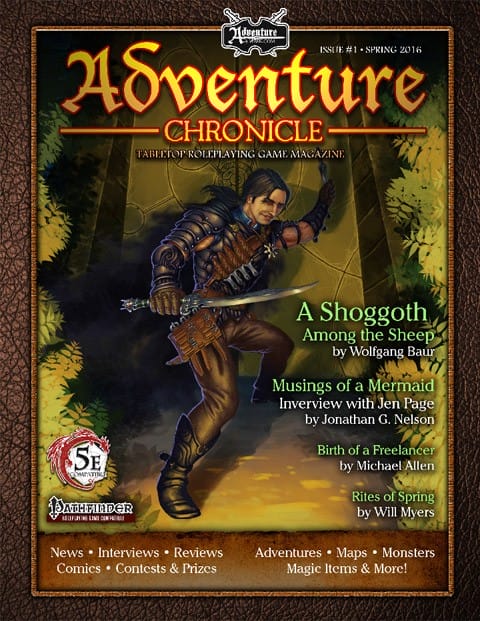
Necromancer Lintu practices undead-focused magic, avant-garde taxidermy, and is one of the most intelligent, successful, and evil people in Morsain. Outwardly helpful about undead, he's a psychotic serial killer happily "sourcing raw materials" himself.
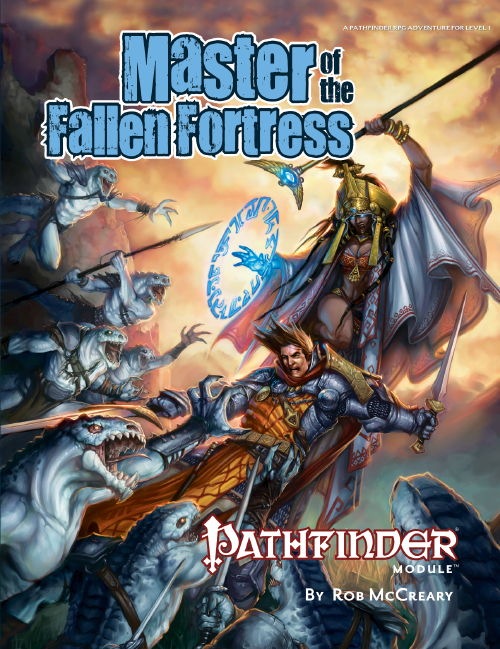
The ruined siege castles outside Absalom have long beckoned adventurers looking to make a name for themselves. Now an earthquake has cracked open one of these fabled ruins, and its lost mysteries and fantastic treasures lie exposed for the first time in centuries. But the tower's empty halls once more echo with living footfalls, and a new master has claimed the Fallen Fortress as his own.

Sometimes its better not to know... Citizens are turning up in the city in catatonic states, alive but devoid of personality. Are they the victims of an illness or disease, or is there something more sinister at work? Encountering one of these poor souls, the characters are drawn into an investigation of politics and treachery, seedy underworld dealings and rooftop chases, culminating in a fiery conclusion. Can they discover the cause of this epidemic before it’s too late?