
Come visit the acid fantasy mini-sandbox of the Misty Isles, a hellish pocket plane that's brutally displaced a bucolic paradise. Marvel at its massive grub-ridges, shake at the body horror of its protein vats—and watch as your players dynamically unleash the Anti-Chaos Index through their own in-game actions. Misty Isles of the Eld is a stand-alone sequel to Slumbering Ursine Dunes and Fever-Dreaming Marlinko. It contains: Four dungeons. The Vat Complex (with its menacing sealed off-west wing, body-horrific industrial process and pocket dimensions), the flying god-prison Monument Five, the meth-fruit Plantation House and Colonel Zogg's Pagoda Bunker. Full “extra-planar” pointcrawl. The wilderness crawl spreads over one main isle and two smaller islets subdivided by massive, movable grubs. An “Anti-Chaos Index.” Through their actions the players shape the very reality of the Isles. Sometimes for the better, sometimes for the worst, but always for the weird. A slew of new otherwordly monsters. A large collection of bizarre technological Eldish artifacts and treasure. Includes a random generator for miscellaneous artifacts picked up. A new psionicist player class, the Psychonaut, with a soft scifi twist. Including its own powers and mutations.
An adventure for the Midnight campaign setting from Fantasy Flight Games. The adventurers make contact with the Baden's Bluff underground to investigate a pair of recent murders. This adventure emphasizes information gathering and deduction, rather than combat.

Written in celebration of Swords and Wizardry Appreciation Day 2017, Return to Fel’Valashar picks up where Dungeons of Fel’Valashar left off. In this book is a collection of mini dungeon adventures with a small region called Fel’Valashar that they take place within. Each of these adventures is written in such a way that they don’t have any ties to each other or to Fel’Valashar. This means you can easily drop them into your own world with no fuss. Includes: Details of the south-western region of Fel’Valashar. Four mini dungeon adventures. New monsters. New magic items.
The all-new Player's Guide for ZEITGEIST: The Gears of Revolution! This Player's Guide is a whopping 60 pages of FREE material for players planning on delving into the ZEITGEIST adventure path for 5th Edition. The free Player’s Guide is designed for players of the ZEITGEIST adventure path, and contains background information and character options. This Player's Guide is divided into five separate sections for easy printing and disssemination at the gaming table. 1. Characters. Deva and Eladrin races; Docker, Eschatologist, Gunsmith, Martial Scientist, Skyseer, Spirit Medium, Technologist, Vekeshi Mystic, Yerasol Veteran character themes; salary and requisitions. 2. Equipment. Explosive alchemicals, firearms, ship of the RPHC, prestige rules, and stats for allied officers. 3. The City of Flint. City districts, the military, the Royal Homeland Constabulary. 4. Setting Overview. Languages and accents, details of the countries Risur, and Ber; fey and the mortal realms. 5. Setting Overview (contd). Details of the countries Crysillyir, Danor, Drakr, Elfaivar; plus the border states and Malice Lands, planets and planes, key religions. ZEITGEIST is a critically acclaimed adventure path from EN Publishing, brought to you by the same people who created the War of the Burning Sky campaign saga and featuring the same level of intriguing plot, memorable NPCs , and a strong, immersive storyline. In the ZEITGEIST campaign saga, your characters serve in the Homeland Constabulary of the nation of Risur, protecting the country and its citizens from foreign threats lurking within Risur's borders. During missions of espionage and assassination, your duty will be to root out hostile spies and pursue international conspiracies. As you learn more of your homeland's own secrets, however, your loyalties may be tested, may even be turned, and you may find that it is you whose hand controls the gears of the turning age. This FREE 60-page guide introduces players to the ZEITGEIST adventure path, with background information, character options, maps, and more. This Player's Guide is completely free. You are welcome to distribute it amongst your friends.
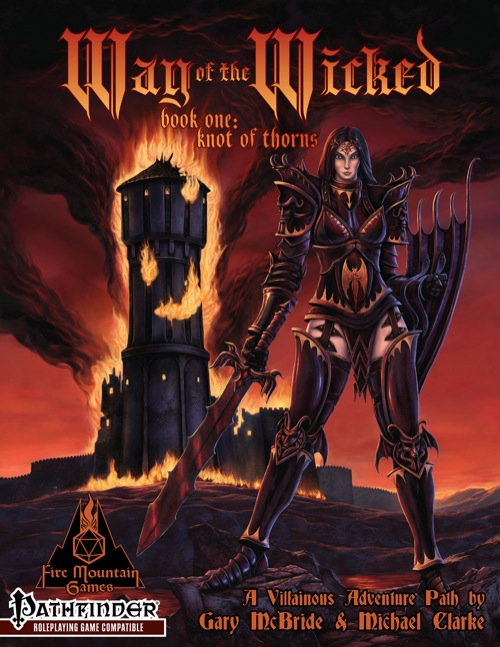
BE THE BAD GUY! The Kingdom of Talingarde is the most noble, virtuous, peaceful nation in the known world. Herein is the story of how you burned this insipid paradise to the ground. It's only fair. They burned you first. They condemned you for your wicked deeds. They branded you. They shipped you to the worst prison in the kingdom. In three days, you die. In three days, the do-gooders pray they'll be rid of you. They've given you three days. The fools, that's more than you need to break out. And then, it will be their turn to face the fire. Published by Fire Mountain Games.
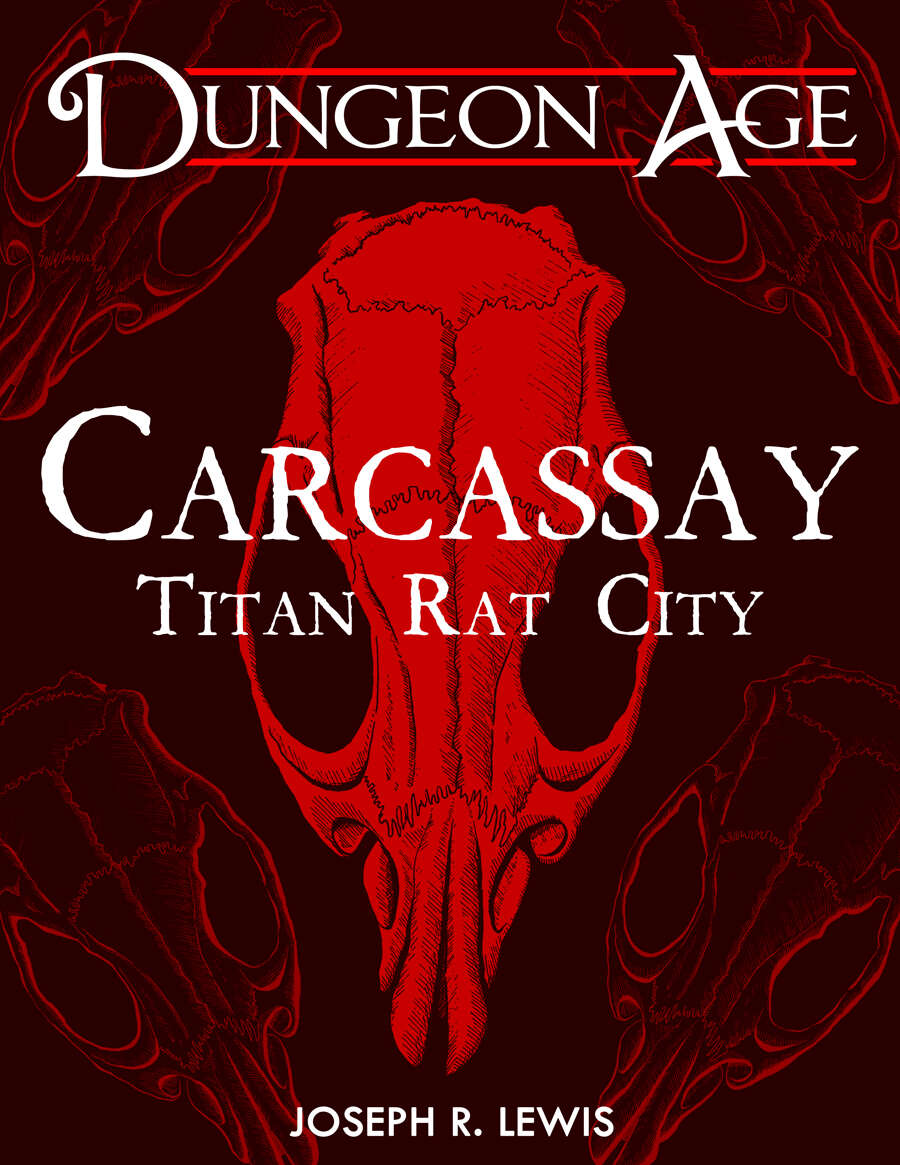
The ancient world of Harth withers beneath its dying sun…but it’s not dead yet. Welcome to the strange and dangerous city of Carcassay, huddled below the skeleton of a titan rat, sprawling above the ruins of countless dead civilizations. This is where folk come to find wealth, power, revenge, secrets, oblivion… and everything in between. Carcassay is a sandbox city adventure. There are many locations to explore in, around, and under the city. Players can explore any place at any time, and may radically reshape the city’s politics, economy, religions, and physical existence. There are standard dungeons stacked under the city, and GMs are encouraged to keep adding more dungeons… all the way down. Tone. It leans more toward low fantasy or sword-and-sorcery. Most shops look like real shops. Most people look like real people. But strange and horrible things lurk everywhere as soon as you start to scratch the surface. This is my Lankhmar. Carcassay is a vast, bizarre city. It has over 100 locations where you can meet Chaos cultists, Lawful knights, retired adventurers, shopkeepers, brewers, musicians, artists, scientists, hermits, royalty, beggars, doctors, space vampires, eldritch horrors, machine priests, crab colonists, mushroom farmers, mummies, assassins, and diplomats from distant lands… and the moon. And every one of them has goods or services to sell, and a quest (or three) to offer. What sort of quests? Fetch a relic, assassinate a rival, find a relative, steal a soul, implant an agent, cure a disease, stop a riot, solve a murder that hasn’t happened yet, hunt a thief, locate a shrine… the list goes on. And for every Quest, there is a specific Reward: money, weapons, relics, Chaos mutations, exclusive memberships, information, Angelic miracles… the list goes on. This is a place where you can make a lot of money, but also where you can spend that money on interesting goods and services. Factions? We have a few. Seven Chaos cults, five knightly orders, two mercenary companies, four wealthy families, six (seven!) Corpse Lords, foreign diplomats, rival innkeepers, rival tavern owners, plus all the dungeon-delving gangs currently mucking about underground. When you grow weary of all the adventures at ground level, there are three classic dungeons buried under the city to explore. This book contains months (if not years) of campaigning. Enjoy the Chaos.
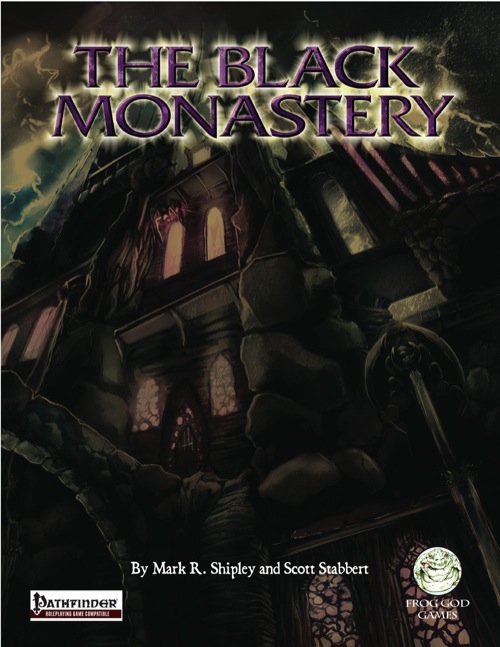
The Legend of the Black Monastery Two centuries have passed since the terrible events associated with the hideous cult known as the Black Brotherhood. Only scholars and story-tellers remember now how the kingdom was nearly laid to waste and the Black Monastery rose to grandeur and fell into haunted ruins. The Brothers first appeared as an order of benevolent priests and humble monks in black robes who followed a creed of kindness to the poor and service to the kingdom. Their rules called for humility and self denial. Other religious orders had no quarrel with their theology or their behavior. Their ranks grew as many commoners and nobles were drawn to the order by its good reputation. The first headquarters for the order was a campsite, located in a forest near the edge of the realm. The Brothers said that their poverty and dedication to service allowed them no resources for more grand accommodations. Members of the Black Brotherhood built chapels in caves or constructed small temples on common land near villages. They said that these rustic shrines allowed them to be near the people they served. Services held by the Brothers at these locations attracted large numbers of common people, who supported the Black Brotherhood with alms. Within 50 years of their first appearance, the Black Brotherhood had a number of larger temples and abbeys around the kingdom. Wealthy patrons endowed them with lands and buildings in order to buy favor and further the work of the Brothers. The lands they gained were slowly expanded as the order’s influence grew. Many merchants willed part of their fortunes to the Black Brotherhood, allowing the order to expand their work even further. The Brothers became bankers, loaning money and becoming partners in trade throughout the kingdom. Within 200 years of their founding, the order was wealthy and influential, with chapters throughout the kingdom and spreading into nearby realms. With their order well-established, the Black Brotherhood received royal permission to build a grand monastery in the hill country north of the kingdom’s center. Their abbot, a cousin of the king, asked for the royal grant of a specific hilltop called the Hill of Mornay. This hill was already crowned by ancient ruins that the monks proposed to clear away. Because it was land not wanted for agriculture, the king was happy to grant the request. He even donated money to build the monastery and encouraged others to contribute. With funds from around the realm, the Brothers completed their new monastery within a decade. It was a grand, sprawling edifice built of black stone and called the Black Monastery. From the very beginning, there were some who said that the Black Brotherhood was not what it seemed. There were always hints of corruption and moral lapses among the Brothers, but no more than any other religious order. There were some who told stories of greed, gluttony and depravity among the monks, but these tales did not weaken the order’s reputation during their early years. All of that changed with the construction of the Black Monastery. Within two decades of the Black Monastery’s completion, locals began to speak of troubling events there. Sometimes, Brothers made strange demands. They began to cheat farmers of their crops. They loaned money at ruinous rates, taking the property of anyone who could not pay. They pressured or even threatened wealthy patrons, extorting money in larger and larger amounts. Everywhere, the Black Brotherhood grew stronger, prouder and more aggressive. And there was more… People began to disappear. The farmers who worked the monastery lands reported that some people who went out at night, or who went off by themselves, did not return. It started with individuals…people without influential families…but soon the terror and loss spread to even to noble households. Some said that the people who disappeared had been taken into the Black Monastery, and the place slowly gained an evil reputation. Tenant farmers began moving away from the region, seeking safety at the loss of their fields. Slowly, even the king began to sense that the night was full of new terrors. Across the kingdom, reports began to come in telling of hauntings and the depredations of monsters. Flocks of dead birds fell from clear skies, onto villages and city streets. Fish died by thousands in their streams. Citizens reported stillborn babies and monstrous births. Crops failed. Fields were full of stunted plants. Crimes of all types grew common as incidents of madness spread everywhere. Word spread that the center of these dark portents was the Black Monastery, where many said the brothers practiced necromancy and human sacrifice. It was feared that the Black Brotherhood no longer worshipped gods of light and had turned to the service of the Dark God. These terrors came to a head when the Black Brotherhood dared to threaten the king himself. Realizing his peril, the king moved to dispossess and disband the Black Brother hood. He ordered their shrines, abbeys and lands seized. He had Brothers arrested for real and imagined crimes. He also ordered investigations into the Black Monastery and the order’s highest ranking members. The Black Brotherhood did not go quietly. Conflict between the order and the crown broke into violence when the Brothers incited their followers to riot across the kingdom. There were disturbances everywhere, including several attempts to assassinate the king by blades and by dark sorcery. It became clear to everyone that the Black Brotherhood was far more than just another religious order. Once knives were drawn, the conflict grew into open war between the crown and the Brothers. The Black Brotherhood had exceeded their grasp. Their followers were crushed in the streets by mounted knights. Brothers were rounded up and arrested. Many of them were executed. Armed supporters of the Black Brotherhood, backed by arcane and divine magic, were defeated and slaughtered. The Brothers were driven back to their final hilltop fortress – the Black Monastery. They were besieged by the king’s army, trapped and waiting for the king’s forces to break in and end the war. The final assault on the Black Monastery ended in victory and disaster. The king’s army took the hilltop, driving the last of the black-robed monks into the monastery itself. The soldiers were met by more than just men. There were monsters and fiends defending the monastery. There was a terrible slaughter on both sides. In many places the dead rose up to fight again. The battle continued from afternoon into night, lit by flames and magical energy. The Black Monastery was never actually taken. The king’s forces drove the last of their foul enemies back inside the monastery gates. Battering rams and war machines were hauled up the hill to crush their way inside. But before the king’s men could take the final stronghold, the Black Brotherhood immolated themselves in magical fire. Green flames roared up from the monastery, engulfing many of the king’s men as well. As survivors watched, the Black Monastery burned away, stones, gates, towers and all. There was a lurid green flare that lit the countryside. There was a scream of torment from a thousand human voices. There was a roar of falling masonry and splitting wood. Smoke and dust obscured the hilltop. The Black Monastery collapsed in upon itself and disappeared. Only ashes drifted down where the great structure had stood. All that was left of the Black Monastery was its foundations and debris-choked dungeons cut into the stones beneath. The war was over. The Black Brotherhood was destroyed. But the Black Monastery was not gone forever. Over nearly two centuries since its destruction, the Black Monastery has returned from time to time to haunt the Hill of Mornay. Impossible as it seems, there have been at least five incidents in which witnesses have reported finding the Hill of Mornay once again crowned with black walls and slate-roofed towers. In every case, the manifestation of this revenant of the Black Monastery has been accompanied by widespread reports of madness, crime and social unrest in the kingdom. Sometimes, the monastery has appeared only for a night. The last two times, the monastery reappeared atop the hill for as long as three months…each appearance longer than the first. There are tales of adventurers daring to enter the Black Monastery. Some went to look for treasure. Others went to battle whatever evil still lived inside. There are stories of lucky and brave explorers who have survived the horrors, returning with riches from the fabled hordes of the Black Brotherhood. It is enough to drive men mad with greed – enough to lure more each time to dare to enter the Black Monastery.

The village of Gyles has been taken over by Ajax's forces, but after weeks of occupation, the War Dogs are becoming impatient with its newly appointed ruler. They weren’t made for watching over a bunch of villagers, they were made for action! The heroes arrive, seeing the devastation these monsters have caused and lives they’ve ruined, and realize they can offer them just what they need. Will they turn their Ground Commander against his master, or will they stand and fight them all, against impossible odds?
"A legend has circulated through the Barony of Loup-Montagne for hundreds of years concerning the order of inheritance for the title of baron. The legend holds that if the title is passed to someone who is not the eldest heir, the spirits of the forest will lash out against the people of the barony." Players will find themselves investigating a mystery in the small, superstitious town of Roulune. "As is normal in a gothic horror tale, the true situation in Roulune is different from what it seems. Figuring out the real story and the real connections between people will be key to the player characters’ success in this adventure." "This adventure is meant for characters of levels 4 to 6. The default setting is the Barony of Loup-Montagne, but any remote, heavily wooded principality with highly superstitious residents will do."
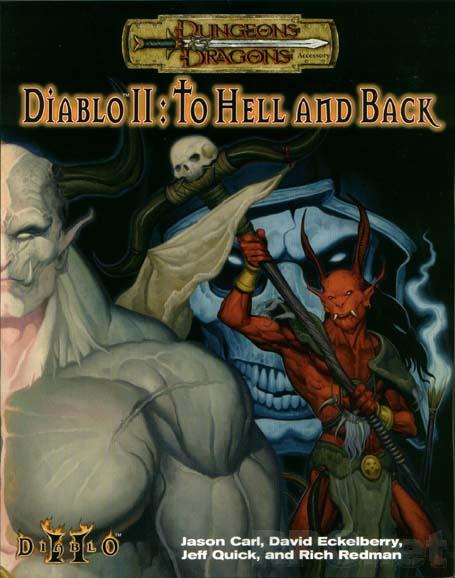
Bringing Diablo II to the tabletop. The legendary Diablo and Diablo II computer games come to life with the release of the tabletop Diablo II: To Hell & Back roleplaying adventure. All a player needs is the Dungeons & Dragons(r) Player's Handbook (0786915501-8/00) to accompany the Diablo II game. Every level and all 4 acts of the computer game are represented in the tabletop mega-adventure, which will also include 64 pages of monsters, information for levels 1-30, and over 60 maps!
The Pyramid of Amra is a challenging adventure designed for characters of at least 12th level. Due to the nature and numbers of undead enemies (vampires), having a cleric on hand with the ability to cast raise dead and greater restoration is advisable. The PCs should be rounded out with a wizard or sorcerer and a pair of front-line fighters. In this adventure, the PCs travel to the Pyramid of Amra and the ancient Monastery of Night, where they face one of the most dangerous of opponents they are likely to meet, C’nosretep the Champion of Set.

A city of burgeoning technology beset upon by intrigue and insurrection, Samon has been a thorn in Emperor Hitoshi's side since suffering in the rebellion against the Kengen Occupation, its wounds still fresh on the minds of its citizens. It is not beneath the notice of Hakaisuru Bengoshi however, and the adventurers are ordered by one such official to make certain that the Tazuki Rail company's doings are not curtailed by its increasingly aggressive laborers and their shadowy union, the Fangs. Little do they know that the bite of the fangs carries a far deadlier poison than any worker's ire! What you’ll find in Mists of Akuma: Fangs of Revenge: A complex cast of 20 NPCs beautifully illustrated by Nathanael Batchelor interwoven in an impressive tale of deceit, false trails, intrigue, and lethal adversaries The city of Samon, a settlement in the northern prefecture of Hakaisuru and home to Soburin’s most prosperous railroad company Four maps by cartographer Mike Myler: an isometric view of Samon, an isometric map of the Tazuki Rail Offices, a combat map of the Chujiang Gardens, and a combat map of the Tazuki Rail Basement The dangerous Mists of Akuma and the new misted condition The hengeyokai race and kitsune, nezumi, usagi, and (new!) hebi (snake) subraces The adeddo-oni and true hebi templates as well as a coterie of statblocks: adeddo-oni hunchling, adeddo-oni mage, adeddo-oni ninja, adeddo-oni samurai, factory worker, nuwa the brute (a true hebi), wajdet the charlatan (a true hebi), the many-faceted hengeyokai ninja, and the hebikontorora snake woman

His name is Conan, and no man can stand before him in battle." "Conan the Conqueror" by Robert E. Howard In an age long ago, there existed a hero - Conan. With fiery will, he slashed his name across the ancient lands of Hyboria. It was a time when bravery, trickery, and magic decided men's fates, and a steel sword could make the difference between life and death. For the daring, strong, and clever, there were fortunes to find and lands to rule. Travel back to this with Conan and his companions, Juma, Valeria, and Nestor. Travel back to defeat the dark horrors of his land! TSR 9123
Many years ago a brutal bugbear chieftain united the goblinoid tribes of the Meirlara Forest and nearly wiped out all traces of the elves there within. A stroke of chance fate turned the tide and the dreaded bugbear warlord Spragnokk was defeated. His loyal kin hid his body away in a sealed chamber and then the world forgot about Spragnokk... until now. Now his bloodline continues, and they have plans to resurrect their fallen "great chieftain," to bring ruin and revenge upon the elves that handed them defeat decades past. The goblinoid tribes have once more been gathered, and their bloody revenge is imminent, except fate has yet once more placed new champions to stand in their way. They just don't realize it yet.

The companions find adventure outside Lake-town and are given the chance to discover why even the hardiest of adventurers shun the forest of Mirkwood and its depths. In the process, they go and see Elves, meet a crazed hermit, and stumble into a wood of ancient and angry trees. Published by Cubicle7
Create your own Critical Role campaigns with this sourcebook for the world's greatest roleplaying game! Explorer’s Guide to Wildemount provides everything you need to play Dungeons & Dragons on the continent of Wildemount (set within the world of Exandria)—a land of war, betrayal, and swashbuckling adventure. Comprised of four regions, Wildemount provides endless potential for adventure in a land of brewing conflict and incredible magic. Rising tensions boil over into all-out war between the politically dubious Dwendalian Empire and the light-worshiping wastefolk of Xhorhas, supplying a vibrant backdrop for any D&D campaign to explore. Uncover a trove of new options usable in any D&D game, featuring subclasses, spells, magic items, monsters, and more, rooted in the adventures of Critical Role—such as Vestiges of Divergence and the possibility manipulating magic of dunamancy. Start a campaign in any of Wildemount’s regions using a variety of introductory adventures, dozens of regional plot seeds, and the heroic chronicle system—a way to create character backstories rooted in Wildemount. Explore every corner of Wildemount and discover mysteries revealed for the first time by Critical Role Dungeon Master, Matthew Mercer. Includes: Frozen Sick: https://www.adventurelookup.com/adventures/frozen-sick Unwelcome Spirits: https://www.adventurelookup.com/adventures/unwelcome-spirits Tide of Retribution: https://www.adventurelookup.com/adventures/tide-of-retribution Dangerous Designs: https://www.adventurelookup.com/adventures/dangerous-designs
Men always seek the blood of monsters. Some spill it to avenge their massacred families. Others swim through an ocean of gore to find treasures worth the envy of kings. A few know blood can be a priceless treasure in and of itself. Alchemy has long used the lifeblood of monstrosities as arcane fuel, and of all the legendary beasts, the blood of the gorgon holds the most secrets. Few know the blood's darkest lore, its ability to draw out the monster within every soul. Those who drink gorgon's blood are forever changed, and the darkest horrors of their mind unleashed. The heroes hunt a deadly murderer who stalks the streets of the Free City of Zobeck after nightfall, and cross blades with a guild of monsters who rule the city from below. Lucky heroes might risk no more than their lives. Unlucky heroes must wager their souls in a game where monsters and men dance close enough to share their blood and their fate.
Ancient port city on the edge of a desert. The city is stratified by social class and some of the slaves have formed a cannibal cult to Kthulhu. City + hexcrawl + dungeon. The Anthropophagi of Xambaala™ takes players into an action-packed realm of adventure: the mythical world of Hyperborea, a sword-and-sorcery campaign setting inspired by the fantastic fiction of Robert E. Howard, H.P. Lovecraft, Clark Ashton Smith, and others. This adventure is inspired by Robert E. Howard’s “The Man-Eaters of Zamboula” and by various short tales of H.P. Lovecraft and Clark Ashton Smith. It is designed for use with Astonishing Swordsmen & Sorcerers of Hyperborea ™(AS&SH™), a role-playing game descended from the original 1974 fantasy wargame and miniatures campaign rules as conceived by E. Gary Gygax and Dave Arneson. AS&SH is compatible with most traditional fantasy role-playing games (c. 1974 to 1999) and their modern simulacra, such as OSRIC™ and Swords & Wizardry™. This work is both a setting and an adventure. The setting describes the town of Xambaala, noting key people, locations, and local lore. The adventure proper provides players with a variety of environments and the several factions fighting over them for their own goals. With a bit of skill and luck, stalwart adventurers may emerge richer and maybe wiser. The situation that will develop in Xambaala will be determined by the players’ choices.

Summoned by a coven of foul witches, the adventurers are bid through the Black Gate and across the multiverse, in pursuit of the crown of the fallen Horned King. There, in the icebound gloom of Thrice-Tenth Kingdom, they must pit their wits and brawn against his dread servants. His sullen citadel looms above the darksome woods and elfin ice caves, ruling over the mystic kingdom. Do you dare to ascend the throne of bones and declare yourself master of the Wild Hunt? Whatever your answer, the land beyond the Black Gate is sure to present a grim challenge for the even the hardiest of adventurers!
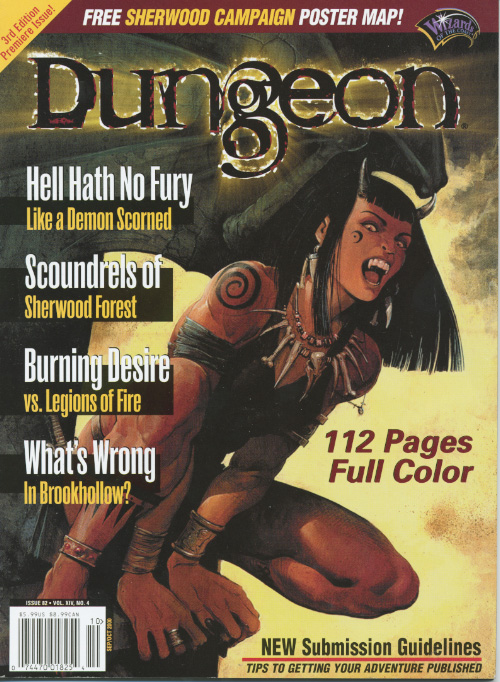
Where's Robin Hood When You Need Him? The Sheriff of Nottingham and the outlaws of Sherwood Forest share a common enemy. Will an unlikely alliance end this newest threat to the land? Pgs. 42-67